In oil and gas drilling operations, well control equipment is a crucial line of defense for ensuring downhole safety and preventing accidents such as blowouts. A malfunction in well control equipment is like a breach in this defense, potentially leading to serious safety accidents, causing casualties, environmental pollution, and significant economic losses. Therefore, taking swift and accurate measures when well control equipment malfunctions is of paramount importance.
Initial Malfunction Assessment and Reporting
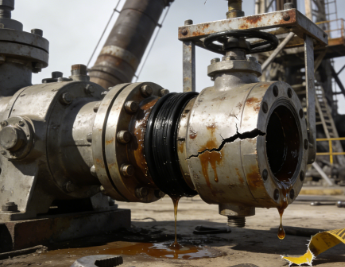
When an abnormality is detected in well control equipment, on-site personnel should remain calm and use their experience and expertise to make an initial assessment of the malfunction. For example, observe whether there are signs of leakage in the blowout preventer assembly, whether the pressure gauge readings fluctuate abnormally, and whether the valves in the choke manifold open smoothly. After the initial assessment, a detailed and accurate report should be immediately made to the on-site supervisor, including the name, location, specific symptoms of the malfunctioning equipment, and the initially diagnosed cause of the malfunction. Upon receiving the report, the on-site supervisor should promptly report to the superior authority and simultaneously activate the emergency response plan, notifying relevant maintenance personnel and emergency rescue teams to prepare for the incident.
On-site Safety Protection and Isolation
While waiting for maintenance personnel to arrive, it is essential to implement on-site safety protection and isolation measures. The area surrounding the malfunctioning well control equipment should be clearly marked with warning signs and cordoned off to prevent unauthorized personnel from entering and to prevent the accident from escalating due to misoperation or unforeseen circumstances. Simultaneously, appropriate safety protection measures should be taken based on the type and severity of the malfunction. For example, if a blowout preventer (BOP) is leaking, ensure good ventilation in the leak area to prevent the accumulation of flammable gas and potential explosion; if the valve in the choke manifold cannot close properly, closely monitor wellhead pressure changes to prevent uncontrolled fluid outflow from the well.
Fault Diagnosis and Cause Analysis
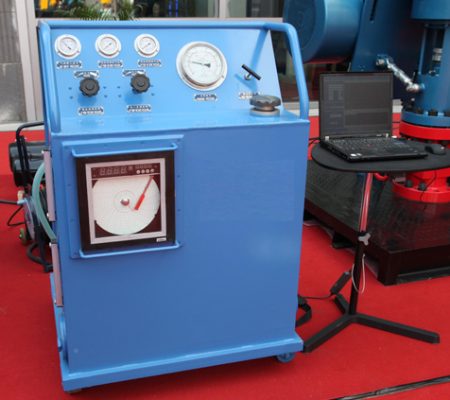
Upon arrival, maintenance personnel should use professional testing tools and techniques to conduct a comprehensive and detailed diagnosis of the malfunctioning equipment. This can be achieved through visual inspection, pressure testing, and non-destructive testing to determine the specific location and extent of the damage. For example, for damaged blowout preventer (BOP) seals, one can determine the cause by observing for leaks at the sealing points and using pressure testing equipment to check the sealing performance. For stuck valves in the throttling manifold, one can manually operate the valve to feel the opening and closing resistance, while simultaneously checking the internal structure of the valve for foreign object blockage or damaged components. After diagnosing the fault location, it is crucial to thoroughly analyze the cause of the fault: is it a quality issue with the equipment itself, wear and tear due to long-term use, or human factors such as improper operation or untimely maintenance? Only by accurately identifying the cause of the fault can targeted measures be taken to prevent recurrence.
Fault Handling and Repair
Based on the results of fault diagnosis and cause analysis, a detailed fault handling plan should be developed. For some simple faults, such as damaged seals or loose bolts, on-site replacement or tightening can be performed. When replacing seals, qualified products matching the original equipment specifications and models should be selected, and the installation requirements should be strictly followed to ensure good sealing performance. For more complex faults, such as hydraulic system failures in the BOP or damage to the internal structure of the throttling manifold valves, it may be necessary to disassemble the equipment and transport it back to the repair workshop for repair. During disassembly and transportation, proper protection measures must be taken to prevent secondary damage to the equipment. In the repair workshop, maintenance personnel must follow the repair process to comprehensively repair the equipment and conduct rigorous testing and trials to ensure its normal operation after repair.
Equipment Commissioning and Acceptance
After repairing the faulty equipment, it must be reinstalled in its original position and commissioned and accepted. During commissioning, the equipment must be started gradually according to the operating procedures, and all performance indicators must be checked to ensure they meet design requirements. For example, for blowout preventers, a switching test must be conducted to check the flexibility of opening and closing and the quality of sealing; for throttling manifolds, a pressure regulation test must be conducted to check the accuracy of pressure regulation and the stability of flow control. After successful commissioning, relevant personnel must conduct an acceptance test, including inspection of the equipment’s appearance, performance, and safety features. Only after passing acceptance can the equipment be put back into use.
Summary of Experience and Preventive Measures
After troubleshooting is completed, the entire troubleshooting process should be summarized, analyzing the problems and shortcomings encountered, and summarizing lessons learned. Meanwhile, corresponding preventative measures should be developed to address the causes of the malfunctions. This includes strengthening daily maintenance of well control equipment, conducting regular inspections and tests, and promptly identifying and eliminating potential safety hazards. Furthermore, training and education for operators should be enhanced to improve their operational skills and safety awareness, preventing equipment failures caused by improper operation.
Well control equipment malfunctions pose a significant challenge to drilling operations. However, by adhering to scientific procedures and methods, and by being meticulous and rigorous in every step—from fault diagnosis, safety protection, diagnostic analysis, repair, to commissioning and acceptance—and by continuously summarizing experience and implementing effective preventative measures, the impact of malfunctions on drilling operations can be minimized, ensuring the safe and smooth progress of downhole operations.