Well control equipment is core equipment in oil and gas exploration and development, ensuring wellbore safety and preventing blowouts. Its performance directly affects the safety of personnel and the stability of the ecological environment. Under complex geological conditions, the reliability of well control equipment needs to be achieved through scientific and standardized inspection and maintenance cycle management. This article will systematically outline the inspection and maintenance cycle standards for well control equipment from three dimensions: equipment type, operating scenario, and special working conditions.
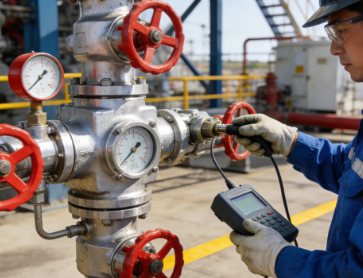
Inspection Cycle of Core Equipment
The inspection cycle for well control equipment follows the principle of ‘the higher the risk, the shorter the cycle,’ forming a differentiated management and control system:
Blowout Preventer (BOP) Assembly
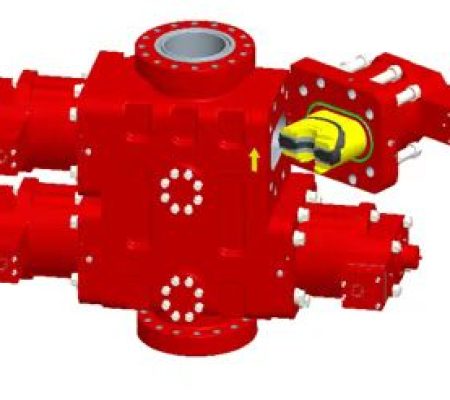
As the core barrier of the well control system, the blowout preventer assembly requires comprehensive inspection annually, covering key indicators such as sealing performance, pressure bearing capacity, and hydraulic system response speed. For example, gate blowout preventers must pass a pressure stabilization test at 1.5 times the working pressure, with a pressure drop not exceeding 0.5 MPa to be considered合格 (qualified); the cumulative usage time of the annular blowout preventer core must not exceed 50 hours or 10 opening and closing operations; exceeding these limits requires mandatory replacement. A drilling team nearly suffered a blowout during tripping out of the well due to failing to replace aging rubber cores in a timely manner, highlighting the importance of specialized inspections.
Choke and Kill Manifolds
Chopmanifolds require functional testing every 6 months, focusing on verifying valve opening and closing flexibility, manifold sealing, and pressure regulation accuracy. Kill manifolds also undergo a 6-month pressure testing cycle to ensure no leakage risk under high-pressure conditions. An oilfield previously experienced a pipe rupture during operation due to failure to promptly inspect its kill manifold, resulting in direct economic losses exceeding 2 million yuan, highlighting the necessity of periodic inspections.
Well Control Valves and Rubber Cores
Well control manifold valves undergo opening and closing flexibility checks every 3 months to prevent jamming that could lead to emergency response failure. Annular blowout preventer rubber cores, as consumable parts, must be inspected after each well operation, and replaced immediately if the cumulative usage time or number of opening and closing cycles exceeds the limit. A workover team experienced a seal failure during kill operations due to failing to replace aging rubber cores in a timely manner, ultimately leading to a blowout, demonstrating the urgency of dynamic maintenance.
Maintenance Cycle
The maintenance cycle for well control equipment needs to be dynamically adjusted according to the type of operation and risk level, forming a maintenance strategy of ‘frequent minor repairs, strict control of major repairs, and enhanced maintenance for special conditions’:
Routine Operation Maintenance
Minor well repairs, due to their short operation cycle and low risk, adopt a ‘one inspection per well’ maintenance model, focusing on checking the blowout preventer sealing surface, hydraulic pipeline connections, and pressure gauges on the remote control console. Major well repairs, due to their high operational complexity, require ‘weekly inspections’ after equipment installation, covering hydraulic system oil levels, filter blockage, and safety valve sensitivity. For example, in one major well repair, the failure to implement the weekly inspection system led to hydraulic oil contamination causing valve jamming, resulting in a 72-hour downtime for repairs.
Enhanced Maintenance for Special Conditions
Gas wells, due to high wellhead pressure and excessive hydrogen sulfide content, require a comprehensive overhaul every six months, focusing on testing the corrosion resistance of anti-sulfur seals and the reliability of emergency shut-off devices. Oil wells are overhauled annually, focusing on checking wear on the inner walls of manifolds and valve sealing performance. Wells subjected to well control operations, due to the extreme conditions they expose their equipment to, require immediate maintenance after completion. In one well, the blowout preventer (BOP) was not inspected promptly after well control, leading to equipment failure during a secondary well kick and ultimately a blowout accident.
Delayed Use Management
Under extreme environmental conditions or when equipment is in stable condition, well control equipment can be extended in use after professional evaluation, but the maximum extension period should not exceed 3 years. During the extension period, the inspection cycle should be shortened to every 6 months, and non-destructive testing items such as ultrasonic testing and magnetic particle testing should be added. On one offshore platform, the delayed use of the BOP resulted in the failure to strengthen inspections, leading to the undetected internal cracks in the rubber core and ultimately a well control accident, exposing the risks of delayed management.
Industry Practice
To improve the efficiency of well control equipment management, the industry is promoting the deep integration of ‘standardized processes + intelligent monitoring’:
Standardized Operating Processes
Based on industry standards, a three-tiered system of ‘daily inspection + monthly maintenance + annual overhaul’ has been established: daily inspections focus on appearance and basic parameters, monthly maintenance verifies functional integrity, and annual overhaul involves thorough disassembly and inspection.
Application of Intelligent Monitoring Technology
By installing pressure sensors, vibration analyzers, and temperature monitoring modules, real-time equipment operation data is collected and uploaded to a cloud platform. When hydraulic system pressure fluctuations exceed ±3% of the rated value or bearing temperature exceeds ambient temperature +40℃, the system automatically triggers an early warning and generates a maintenance work order. After applying this technology to an intelligent drilling platform, the equipment failure rate decreased by 60%, and maintenance costs decreased by 45%.
The inspection and maintenance cycle of well control equipment is the ‘lifeline’ for ensuring the safety of oil and gas operations. From the annual comprehensive inspection of blowout preventer (BOP) groups to the semi-annual functional testing of choke manifolds, from weekly maintenance of workover wells to intensive overhauls under special operating conditions, each cycle regulation embodies industry experience and lessons learned from accidents. Only by strictly implementing standards, dynamically adjusting strategies, and integrating intelligent technologies can a solid well control safety defense line be built, safeguarding energy development.