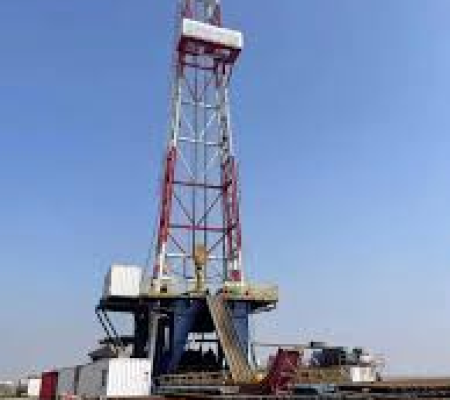
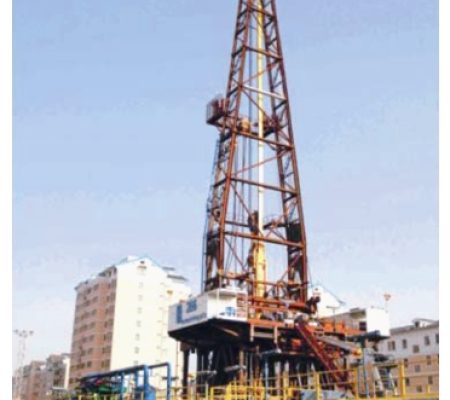
In drilling operations for oil and gas exploration and development, drilling fluid is like the ‘blood’ of the drilling project, playing a crucial role in cooling the drill bit, carrying cuttings, and balancing formation pressure. However, as the drilling process progresses, drilling fluid continuously mixes with impurities such as cuttings, clay, and decomposition products of drilling additives, becoming extremely ‘dirty.’ If these impurities are not removed in time, they will seriously affect the performance of the drilling fluid, thus hindering the smooth progress of drilling operations.

Vibrating Screen Screening
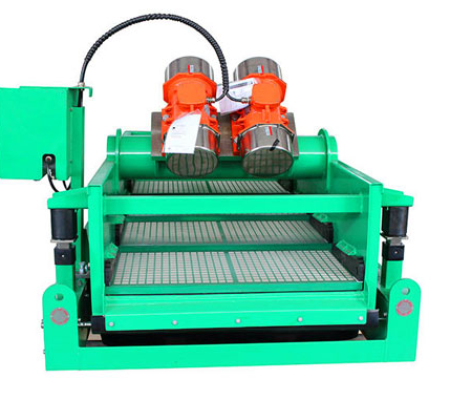
The vibrating screen is the first checkpoint in the drilling fluid purification process and one of the most basic and critical pieces of equipment. It mainly consists of a screen, a vibrator, and a screen box. When drilling fluid carrying a large amount of impurities returns from the wellhead, it first flows through the vibrating screen. The high-frequency vibration generated by the vibrator causes the drilling fluid on the screen to jump and tumble violently. During this process, larger solid particles such as cuttings and gravel cannot pass through the screen openings and are trapped on the screen. As the drilling fluid continues to flow, these large particles of impurities move along the screen surface towards the slag discharge port and are eventually discharged from the system. After initial screening by the vibrating screen, large particles of impurities in the drilling fluid are effectively separated, laying the foundation for subsequent purification steps.
Desander and Desilter
Although most of the large particles of impurities have been removed after treatment by the vibrating screen, the drilling fluid still contains some fine sand and mud particles with smaller diameters. This is where the desander and desilter come in. The working principle of the desander and desilter is based on centrifugal sedimentation. They are equipped with high-speed rotating hydrocyclones. When the drilling fluid enters the hydrocyclone at a certain pressure and speed, under the action of centrifugal force, the solid particles in the drilling fluid will have different trajectories due to their different densities. The denser fine sand and mud particles are subjected to greater centrifugal force, are thrown against the inner wall of the hydrocyclone, and flow downwards along the inner wall, eventually being discharged through the sand discharge port at the bottom; while the less dense drilling fluid flows upwards and flows out from the overflow port of the hydrocyclone to enter the next purification stage. Desanders are primarily used to remove particles with a diameter of 47-76 μm, while desilters can further remove even smaller mud particles (typically 7-47 μm). Through the treatment of desanders and desilters, fine particles in the drilling fluid are effectively removed, further improving its performance.
Centrifuge Separation
For some drilling operations with high requirements for drilling fluid performance, relying solely on vibrating screens, desanders, and desilters is insufficient to fully meet purification needs. In such cases, centrifuges are required for deep purification. A centrifuge is a device that uses the powerful centrifugal force generated by high-speed rotation to achieve solid-liquid separation. When the drilling fluid enters the centrifuge, within the high-speed rotating drum, the solid particles and liquid in the drilling fluid are subjected to different magnitudes of centrifugal force. Solid particles, due to their higher density, experience a greater centrifugal force and are thrown towards the inner wall of the drum, forming a solid phase layer; while the liquid, subjected to a smaller centrifugal force, remains inside the solid phase layer, forming a liquid phase layer. As the drum continues to rotate, the solid phase layer gradually thickens. When it reaches a certain thickness, the solid particles are discharged through a specialized slag removal device. The liquid phase layer flows out from the other end of the centrifuge and returns to the drilling fluid circulation system. The centrifuge can separate solid particles with smaller diameters (even down to 2-5 μm), greatly improving the purification level of the drilling fluid and making its performance more stable and reliable.
Chemical Treatment
In addition to the physical purification methods mentioned above, chemical treatment is also an indispensable part of the drilling fluid purification process. During drilling, the properties of the drilling fluid may change due to factors such as interaction with formation rocks, temperature and pressure variations, etc., causing indicators such as viscosity, shear stress, and filtration loss to fail to meet requirements. In this case, various chemical treatment agents need to be added to the drilling fluid to improve its performance. For example, adding filtration loss reducers can reduce the filtration loss of the drilling fluid and reduce damage to the formation; adding viscosity enhancers can increase the viscosity of the drilling fluid and improve its ability to carry cuttings; adding anti-collapse agents can prevent wellbore collapse and ensure drilling safety. Through proper chemical treatment, the performance of drilling fluid can be optimized to better meet the needs of drilling operations.
Purified Drilling Fluid
After treatment by a series of physical purification devices such as vibrating screens, desanders, desilters, and centrifuges, as well as adjustments with chemical treatment agents, the originally ‘dirty’ drilling fluid has finally undergone a remarkable transformation from ‘dirty’ to ‘clean.’ The purified drilling fluid has stable performance and can meet all the requirements of drilling operations. It returns to the drilling fluid circulation system, continuing to play an important role in cooling the drill bit, carrying cuttings, and balancing formation pressure, providing strong support for the smooth progress of drilling projects.
The entire purification process of drilling fluid from ‘dirty’ to ‘clean’ is a complex and meticulous system engineering project, involving the comprehensive application of various physical purification methods and chemical treatment technologies. Only through scientific and reasonable purification treatment can the drilling fluid maintain its good performance, laying a solid foundation for the efficient and safe conduct of oil and gas exploration and development.