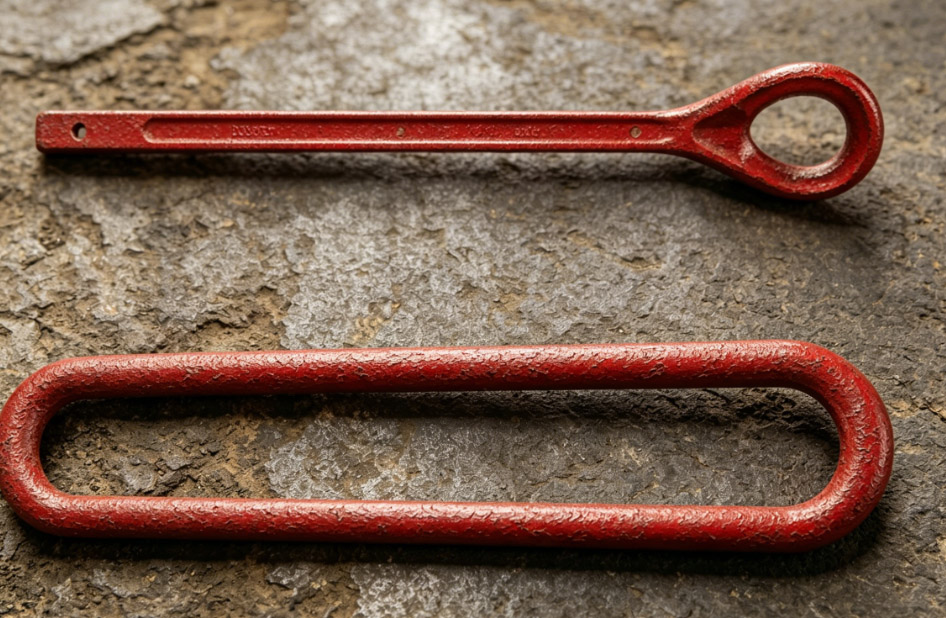
In oil and gas drilling operations, the hoisting and handling phases demand extremely high levels of equipment reliability; the failure of any connecting component could compromise overall operational safety and efficiency. As a critical load-bearing component within the hoisting system, the elevator link primarily serves to connect the elevator (pipe-handling tool) to the hoisting apparatus, undertaking the vital task of load transmission during wellhead operations. The structural design of elevator links emphasizes high strength and stability, enabling them to accommodate the demands of frequent hoisting under complex operating conditions. In practical application, these components not only influence the operational pace but also directly impact the level of safety during construction, playing an indispensable role within the overall drilling system.
Ensuring Reliable Load Transmission and Hoisting Safety
During the drilling hoisting process—characterized by heavy loads and complex operating conditions—connecting components are subjected to extremely rigorous demands.
(1) Elevator links establish a stable connection between the elevator and the hoisting system, facilitating uniform load distribution and preventing structural damage caused by stress concentrations.
(2) Their high-strength materials and structural design enable them to withstand the repetitive impact loads associated with hoisting, thereby enhancing the overall operational safety of the system.
This capacity for stable force transmission serves as a fundamental cornerstone for safety during wellhead operations.
Enhancing Hoisting System Stability and Mitigating Operational Risks
During frequent hoisting operations, system stability directly impacts construction efficiency.
- Through optimized structural design, elevator links ensure a more secure and reliable connection process, thereby minimizing the occurrence of loosening or unbalanced loading.
- Even under conditions of continuous, high-load operation, they maintain a stable state, effectively reducing the risk of equipment malfunction.
This inherent stability significantly enhances the controllability of field operations.
Adapting to Complex Conditions and Enhancing Equipment Versatility
Diverse drilling environments impose rigorous requirements regarding equipment adaptability.
(1) Elevator links possess excellent wear resistance and impact resistance, enabling them to operate stably in harsh environments characterized by high temperatures and high pressures.
(2) Available in various specifications, they can be paired with a wide range of elevators and hoisting systems, thereby enhancing equipment compatibility and operational flexibility.
This adaptability ensures that they can perform effectively across a broad spectrum of drilling scenarios.
Optimizing Operational Efficiency and Ensuring Continuous Construction Flow
During the drilling construction process, the continuity of operations plays a significant role in overall efficiency. The well-engineered structural design of elevator links streamlines the assembly, disassembly, and connection processes, thereby reducing the time required for auxiliary operations. Simultaneously, stable and reliable performance reduces the frequency of maintenance downtime, thereby enhancing overall operational continuity. This boost in efficiency contributes to the optimization of the entire hoisting workflow.
In practical drilling applications, the elevator link serves as more than just a simple connecting component; it is a critical element that safeguards the secure operation of the hoisting system. Engineered with a high-strength structure and designed for stable performance, it provides consistent and reliable support even under complex operating conditions, while simultaneously boosting overall operational efficiency. As drilling equipment continues to evolve toward greater efficiency and intelligence, the significance of such critical connecting components is steadily increasing, playing a fundamental and pivotal role within wellhead hoisting systems.