Mechanical seals are among the most critical sealing components in rotating equipment such as pumps, compressors, and reactors. Their function is to prevent media leakage and ensure long-term stable operation of the equipment. Many field maintenance personnel believe that “any model will do” or “just replace it with a new one if it breaks.” However, mechanical seals are highly precise components with strong matching requirements. Arbitrary replacement can easily lead to leaks, burnout, or even equipment damage.
What exactly is a mechanical seal?
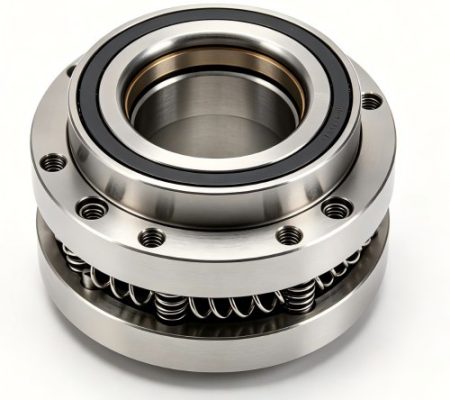
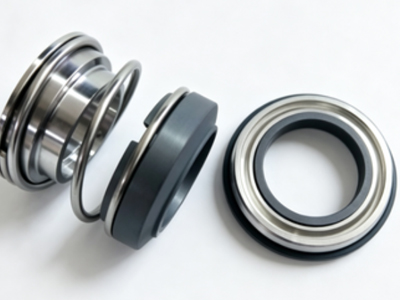
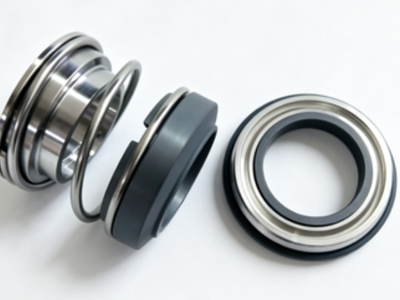
A mechanical seal is a precision device that relies on the tight fit between a rotating ring and a stationary ring to form a sealing surface. Spring force and media pressure maintain a micron-level fit between the two high-precision machined end faces, thereby achieving a seal between the rotating shaft and the stationary housing. It typically consists of a rotating ring, a stationary ring, a spring, an auxiliary sealing ring, and a shaft sleeve, each component with a specific fit. A mechanical seal is not simply “rubber ring + metal ring,” but a highly precise system engineering project. If the model or specification is arbitrarily changed, even if the appearance is similar, there may be complete mismatches in shaft diameter fit, spring pressure, and end face pressure, ultimately leading to leakage or dry-running damage.
Standard procedure for replacement
Replacing a mechanical seal may seem simple, but it actually requires strict adherence to a process; otherwise, secondary damage is highly likely.
· Shutdown and System Isolation
Before replacing the mechanical seal, the pump must be shut down, pressure released, and the medium emptied to ensure no pressure residue remains inside the pump chamber. Ignoring this step may result in media splashing or personnel injury during disassembly, and will also affect the cleanliness of the sealing surface.
· Disassembly and Inspection
After removing the old seal, it cannot be discarded directly. The cause of seal failure must be checked, such as whether it was caused by dry friction, particle wear, or misalignment during installation. Without analyzing the cause, even a new seal may fail again.
· Cleaning and Inspecting the Shaft Sleeve
The shaft surface, shaft sleeve, and sealing cavity must be thoroughly cleaned, and scratches or uneven wear must be checked. Even a tiny scratch can disrupt the seal’s fit.
· Installation and Alignment
When installing the new seal, assembly must strictly adhere to the clearance, compression, and positioning dimensions, while ensuring coaxiality; otherwise, uneven stress on the dynamic and static rings will occur.
· Trial Run and Monitoring
After installation, a low-speed trial run is required to observe for leaks, abnormal temperature rises, or vibration issues before gradually restoring normal operating conditions.
Why “Cannot be replaced casually”?
The core reason why mechanical seals cannot be replaced arbitrarily lies in their extremely high requirements for “precision matching.”
· End-face pressure must be precisely matched
The pressure ratio between the rotating and stationary rings is a key parameter affecting sealing performance. If the replacement model has a different spring force, it will result in excessively high or low pressure ratios. Excessive pressure can easily cause overheating and burnout, while insufficient pressure will prevent effective sealing.
· Differences in axial compensation capacity
Different mechanical seals have different compensation structures; some use a single spring, while others use multiple springs or bellows structures. Random replacement will lead to insufficient compensation capacity, resulting in leakage during axial vibration.
· Speed and operating condition compatibility issues
Mechanical seals are designed based on specific speed, pressure, and temperature ranges. Replacing with an incompatible model can easily lead to thermal deformation or even end-face cracking under high speed or high temperature conditions.
· Extremely High Installation Precision Requirements
Mechanical seals typically require coaxiality within 0.05mm; even slight deviations can lead to uneven wear. Different models have different structural dimensions, and forced replacement can easily disrupt the original precision system.
· Differences in Media Compatibility
Different seal designs are suitable for different media, such as corrosive liquids, media containing particles, or high-viscosity fluids. Arbitrarily changing materials or structures will accelerate seal failure.
How to Choose Materials Suitable for the Operating Conditions?
The choice of mechanical seal materials directly determines its service life, which is a key reason why it cannot be arbitrarily replaced.
· Selection of Dynamic and Static Ring Materials
Common materials include silicon carbide, tungsten carbide, and graphite. Silicon carbide is suitable for high-hardness, highly corrosive conditions, while graphite is suitable for media with better lubricity. Arbitrary replacement, such as replacing corrosion-resistant materials with ordinary graphite, will lead to rapid wear or even breakage.
· Auxiliary Sealing Materials
O-rings are typically made of fluororubber, nitrile rubber, or perfluororubber. Different materials have vastly different temperature and chemical resistance. Replacing with incompatible materials can lead to swelling, hardening, or loss of elasticity.
· Materials for Metal Structural Components
Springs, bushings, etc., are typically made of stainless steel or special alloys. If the material strength is insufficient, it is prone to deformation under high pressure, affecting overall sealing performance.
· Operating Conditions Determine Material Combinations
In high-temperature, high-pressure, highly corrosive, or particulate-containing media environments, customized material matching is essential; “generic replacements” are not acceptable.
Frequently Asked Questions
Q: Why can’t I just buy a “same size” mechanical seal and replace it if it’s broken?
A: Because mechanical seals involve more than just size; they also include spring pressure, dynamic and static ring materials, structural design, and other parameters. Even with the same dimensions, different internal structures will prevent proper sealing.
Q: What are the consequences of temporarily replacing with a different model?
A: Immediate leakage, end face burning, shaft wear, or even pump body damage may occur, potentially leading to complete machine shutdown.
Q: Can I replace only the rubber ring without replacing the entire seal?
A: Generally, it’s not recommended, because rubber ring aging is often accompanied by end face wear, and replacing only a part cannot guarantee overall sealing performance.
A mechanical seal may seem like a small part, but it’s actually a highly precise system component. Its performance depends on the overall operation of materials, structure, installation accuracy, and operating conditions, not simply on whether it can be installed and used. Randomly changing the model or material, even if the appearance is the same, can lead to completely different internal stresses, friction conditions, or corrosion resistance, resulting in leaks, overheating, or even equipment damage. Many field problems are not due to poor seal quality, but rather to “changing to the wrong model” or “installing it incorrectly.” Therefore, when replacing a mechanical seal, it’s essential to select the model according to the original design parameters and match it to the actual operating conditions, not just based on size or price. The correct approach is to first analyze the cause of failure, then select a sealing product with the corresponding structure and materials, and strictly follow the installation specifications. This ensures long-term stable operation of the equipment and reduces downtime and maintenance costs.