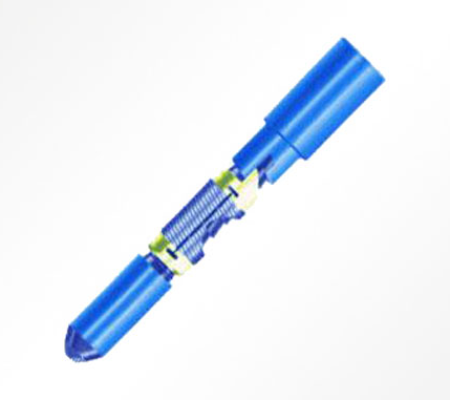
Float valves (Sub) play a crucial unidirectional control role in downhole drilling and fluid control systems. Abnormal operation can easily affect overall circulation stability and operational safety. Due to prolonged exposure to high pressure, impacting fluids, and complex downhole environments, their internal structure, sealing condition, and pressure response can change, leading to various types of faults. Understanding common problems helps in quickly assessing equipment status and taking appropriate measures.

Valve Body Sticking Leading to Insensitive Operation
Valve body sticking typically manifests as unsmooth opening or closing, or even an inability to respond to pressure changes. This problem is often related to impurities affecting the internal structure or long-term wear, and may also be related to solid particles carried by the fluid. When the resistance of moving parts increases, the valve body cannot complete the displacement action under normal pressure conditions, thus affecting the overall fluid control effect.
Seal Failure Causing Backflow Risk
The sealing system is the core structure of the float valve (Sub) to prevent backflow. Aging or damage can easily lead to leakage or reverse flow problems. Seal failure manifests differently under different operating conditions; sometimes it is a slight leak, and sometimes it is a significant backflow phenomenon. In high-pressure environments, even minor sealing defects can be amplified, affecting system stability.
Structural Wear Affects Operational Stability
During long-term use, the internal components of the float valve (Sub) are subjected to erosion and friction, gradually leading to wear.
- Fluid erosion causes gradual loss of surface materials.
- Solid particles accelerate local structural erosion.
- Increased clearance between moving parts affects fitting accuracy.
- Long-term high-pressure operation accelerates fatigue damage.
- Accumulated wear reduces overall sealing performance.
These changes gradually weaken equipment performance, slowing down response or reducing control accuracy.
Abnormal Pressure Response Leads to Control Failure
The float valve (Sub) relies on pressure changes to open and close. Abnormal pressure response can lead to control failure. This abnormality may manifest as delayed opening, inability to close, or incomplete operation. Common causes include internal channel blockage, deterioration of elastic element performance, and unstable system pressure fluctuations. When the pressure signal cannot be transmitted normally, the valve’s operating logic will also be affected.
Installation Deviations Causing Operational Abnormalities
The quality of installation significantly affects the operating state of the float valve (Sub). If there are misalignments or uneven tightening during installation, abnormalities may gradually manifest during operation. For example, uneven stress may restrict valve movement, or inconsistent pressure on the sealing surface may lead to leakage risks. Installation errors may not be noticeable initially, but they can easily amplify problems after continuous operation. Therefore, standardizing the installation process is crucial for reducing malfunctions.