The answer is no. While mechanical seals all appear to be sealing components mounted on the pump shaft, the requirements for mechanical seals vary greatly depending on the pump type, the medium, and the pressure and speed conditions. Centrifugal pumps, sewage pumps, hot oil pumps, chemical pumps, multistage pumps, and slurry pumps may all use mechanical seals, but this doesn’t mean they can share the same model, material, or structure. What truly determines whether a seal can be used is not its appearance, but whether it matches the pump’s structure, operating conditions, medium, temperature, pressure, and vibration.
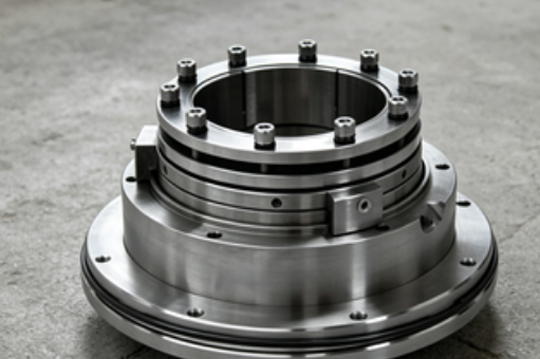
Why can’t mechanical seals be “one-size-fits-all”?
The core function of a mechanical seal is to prevent leakage of the medium between the shaft and the pump body when the pump shaft rotates. It relies on the contact between the end faces of the rotating and stationary rings to form a sealing surface, belonging to a precision friction pair. While it may appear to be just one part, it is actually a component determined by the pump body, shaft system, medium, and operating conditions; it’s not a simple standard screw. Different pumps operate differently, and their sealing environments naturally differ as well. For example, centrifugal pumps operate relatively smoothly, and the media are mostly clean liquids, so mechanical seals can use a more conventional structure. However, slurry pumps and sewage pumps often contain particles and impurities, making the sealing surfaces more prone to wear. Hot oil pumps operate at high temperatures, causing ordinary rubber parts to age and fail. Multistage pumps have high pressures, requiring seals to withstand greater specific pressures, making ordinary structures prone to leakage. In other words, a mechanical seal isn’t simply a matter of “it fits,” but must be adapted to the pump’s actual operating conditions. Using the same mechanical seal for all pumps might allow them to operate in the short term, but problems such as leakage, overheating, accelerated wear, increased vibration, and even sudden failure often arise. While seemingly saving selection time, it actually leads to higher maintenance costs and downtime risks.
How should mechanical seals be matched to pump types?
The correct usage process for mechanical seals begins not with installation, but with selection. Many seal failures stem from “incorrect initial selection,” not from improper installation later.
- Differentiate Pump Types Different pump types correspond to different operating conditions
Centrifugal pumps are typically suited to conventional single-end mechanical seals; multistage pumps, due to pressure superposition, often require balanced seals; sewage pumps and slurry pumps, containing particles, often require wear-resistant structures; hot oil pumps require high-temperature resistant materials and more stable compensation methods. Determining the pump type is the first step in selection.
- Analyze Media Characteristics
Whether the medium is clean water, oil, acid/alkali solution, solvent, or slurry containing particles determines the materials for the sealing face, auxiliary sealing rings, and metal components. For example, highly corrosive media cannot use ordinary rubber; media containing particles cannot only consider sealing performance but also wear resistance and erosion resistance. Without knowing the media properties, it’s difficult to select the right mechanical seal.
- Adjust Operating Parameters
Speed, pressure, temperature, shaft diameter, shaft runout, and start/stop frequency all affect the lifespan of the mechanical seal. Even among centrifugal pumps, the sealing requirements for low-temperature clean water pumps and high-temperature chemical pumps are completely different. The more complex the parameters, the less you can simply apply the same model.
- Determining the Installation Method
Mechanical seals come in various structures, including single-end-face, double-end-face, cartridge-type, non-carrier-type, balanced, and unbalanced types. Different pumps require different installation methods. Improper installation selection can lead to seal failure even if the seal itself is functioning correctly, due to misalignment, incorrect preload, or insufficient axial compensation.
Why do the same mechanical seals perform differently on different pumps?
The universality of a mechanical seal depends on its adaptability to the technical environment of different pumps. What truly affects seal lifespan is not just whether the dimensions are the same, but deeper technical conditions.
- Different Pressure Environments, Different End-Face Stress
Mechanical seals rely on end-face pressure to form a seal, but the pressure cannot be too high or too low. Ordinary pumps experience relatively small pressure variations, while multistage pumps, boiler feed pumps, and booster pumps often have higher pressures. If the specific pressure design of the mechanical seal is mismatched, high pressure will excessively tighten the end face, leading to overheating, wear, and burnout; low pressure will result in a failure to seal, causing leakage. Therefore, the same mechanical seal cannot automatically adapt to all pressure levels.
- Different Speeds, Different Frictional Heat and Lubrication Conditions
High-speed pumps are more sensitive to the frictional heat of mechanical seals. The higher the speed, the more friction occurs on the end face per unit time, resulting in greater heat and making it more difficult to stabilize the liquid film. If the sealing material, end face roughness, and cooling method are mismatched, dry friction or thermal cracking can occur. Low-speed pumps, although having lower heat loads, may experience frequent start-stop cycles and intermittent impacts, making them unsuitable for simply using high-speed pump seals.
- Different Shaft Vibrations and Eccentricities Lead to Different Seal Wear
Different pumps have different shaft rigidity, impeller balance, and installation precision. Slight shaft vibration can cause uneven wear on the mechanical seal end face. Clean water centrifugal pumps generally have less vibration, resulting in relatively stable seal operation; however, large-flow sewage pumps, long-shaft pumps, and vertical pumps often exhibit more pronounced axial movement and radial runout, requiring seals with stronger compensation capabilities.
- Different Media Lubricity Leads to Different Seal Surface Conditions
Some media are inherently lubricating, such as oils; others have almost no lubricity, such as clean water, solvents, and slurries containing particles. Whether a stable liquid film can form on the end face of a mechanical seal is directly related to the properties of the medium. If a seal suitable for oil is directly installed on a pump carrying media with a high tendency for dry friction, the end face will wear quickly.
- Different maintenance environments require different structural adaptations
On-site installation conditions, maintenance capabilities, and downtime also affect the selection. Some pumps are suitable for cartridge mechanical seals, which facilitate installation and reduce errors; others, due to limited space, require specific structures. Ignoring these practical conditions can lead to additional risks even if the seal itself performs well, due to assembly difficulties.
Why can’t materials be uniformly standardized?
The material is the most easily overlooked yet most crucial factor in determining whether a mechanical seal can be universally used. Different pump operating conditions have significantly different material requirements.
- Dynamic and static ring materials cannot be universally used
Common dynamic and static ring materials include silicon carbide, tungsten carbide, graphite, and ceramics. For clean liquids and low-particulate media, a more conventional combination can be chosen; for media containing particles, highly abrasive, or high-pressure conditions, more wear-resistant materials are often required; for highly corrosive conditions, materials with stronger chemical resistance should be prioritized. 1. If all pumps use the same ring material, they will either lack wear resistance, corrosion resistance, or impact resistance.
- Auxiliary sealing ring materials must be selected according to temperature and medium
Auxiliary seals such as O-rings and lip rings commonly use fluororubber, nitrile rubber, perfluororubber, or PTFE. The materials used in ordinary temperature water pumps and high-temperature hot oil pumps are completely different. At excessively high temperatures, ordinary rubber will harden, crack, and lose elasticity; corrosive media will cause the material to swell and age. Although the auxiliary sealing ring is small, its failure will cause the entire mechanical seal to leak.
- The strength and corrosion resistance of metal structural components must be considered
Metal components such as springs, glands, bushings, and retaining rings cannot simply be “fixed.” High-temperature pumps require better heat resistance, highly corrosive pumps require stronger corrosion resistance, and high-speed pumps require higher strength and dimensional stability. Inappropriate materials will result in insufficient elasticity, deformation, corrosion, or fatigue fracture.
- Don’t just look at the unit price of materials; consider service life as well
Choosing cheaper mechanical seal materials does not necessarily mean lower overall cost. Because choosing the wrong material can lead to frequent downtime, pump disassembly, and parts replacement, ultimately increasing overall costs. The truly rational material selection is to ensure the seal operates stably within the corresponding pump type, not to pursue “using the same materials for all pumps.”
Common Questions
Since mechanical seals are not universally compatible, why do some suppliers claim their “universal” models are also usable?
The term “universal” usually only refers to its broad coverage of dimensions, installation interfaces, or common specifications; it doesn’t mean it’s truly suitable for all pump types and operating conditions. Often, this statement is more like “wide applicability” than “complete universality.”
For a simple example, a clean water centrifugal pump and a high-temperature hot oil pump may both use mechanical seals of similar dimensions, but the former prioritizes general wear resistance and basic sealing, while the latter requires high-temperature resistant materials, stable end-face compensation, and stricter thermal deformation control. A seal that fits the design doesn’t guarantee stable operation. What truly determines long-term usability is the compatibility of pressure, temperature, medium, vibration, and installation conditions, not just whether the model name is similar.
Mechanical seals are not universal components that can be used on all pumps; they are more like custom-designed parts tailored to different pumps. This is because each pump operates in a different environment: some have high pressure, some high temperature, some handle contaminated media, some operate at high speeds, and some experience significant vibration. If any one of these conditions is unsuitable, the mechanical seal may experience problems such as overheating, leakage, rapid wear, and shortened lifespan. Therefore, determining whether a mechanical seal is universally compatible cannot be based solely on its size or whether the mounting holes are the same. It requires considering the pump type, media, temperature, pressure, speed, and on-site maintenance conditions. The truly reliable approach is to first understand the pump’s operating conditions and then select a mechanical seal with the appropriate structure and materials. This will result in more stable equipment and fewer maintenance requirements.