Drilling well control equipment is a crucial safety system used in oil and gas drilling to control bottom hole pressure and prevent blowouts. Its safety level classification directly relates to well control capabilities, equipment reliability, and emergency response capabilities under high-risk conditions. Therefore, a higher safety level means the equipment can withstand greater wellhead pressure, has stronger sealing capabilities, and more comprehensive redundancy design.
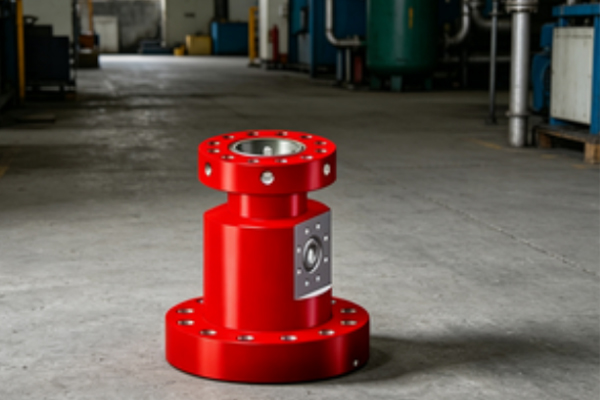
What exactly is the safety level of well control equipment?
The safety level of well control equipment is a classification standard for the entire well control system based on wellhead pressure level, risk level, and equipment pressure-bearing capacity. It is typically used to guide equipment selection, design, manufacturing, and field application. During drilling, underground formation pressure may change; if not controlled in time, a blowout may occur. Well control equipment is precisely the system used to “shut down the pressure,” including core equipment such as blowout preventers (BOPs), choke and kill manifolds, and control systems. Safety level classification is essentially an assessment of the ability to withstand higher-risk operating conditions, usually directly linked to rated operating pressures (e.g., 2000psi, 3000psi, 5000psi, 10000psi, 15000psi, etc.).
Level Classification:
Low Level: Suitable for shallow wells and low-pressure formations
Medium Level: Suitable for conventional oil and gas wells
High Level: Suitable for high-pressure, high-gas-content, or deep well conditions
Ultra-High Level: Suitable for ultra-deep wells and abnormally high-pressure wells. The higher the safety level, the more complex the equipment structure and the more stringent the requirements for materials, seals, and control systems.
How is the safety level of well control equipment implemented?
The safety level of well control equipment is not just a “nominal parameter,” but a comprehensive control system that runs through the entire process of design, manufacturing, testing, and field use.
- Level Determination in the Design Phase
During the design phase, engineers determine the target safety level of the well control equipment based on well depth, formation pressure predictions, mud density, drilling fluid properties, and regional geological data. For example, in high-pressure gas field areas, a higher-level blowout preventer system would be directly selected. This stage determines the basic pressure-bearing capacity of the equipment.
- Pressure Grading Control During Manufacturing
During manufacturing, different safety levels correspond to different structural thicknesses, sealing structures, and reinforcement designs. For example, high-level blowout preventers (BOPs) employ thicker shells, more complex sealing structures, and redundant shear function designs. Simultaneously, rigorous non-destructive testing and pressure testing must be conducted during manufacturing.
- Field Installation and System Matching
When well control equipment is installed in the field, it needs to be fully matched with the wellhead equipment, choke and kill manifold, and control system. Equipment of different safety levels cannot be used interchangeably, otherwise, a “system bottleneck” will be created. For example, if a high-pressure BOP is paired with a low-pressure control system, the overall safety level will be lowered.
- Dynamic Monitoring During Operation
During drilling, well control equipment needs to continuously monitor pressure changes, hydraulic system status, and sealing performance. Once the set safety range is exceeded, emergency procedures must be activated immediately.
How is the safety level reflected in the equipment?
The safety level of well control equipment is not just a number, but is reflected through structural design, material properties, and system redundancy.
Rated Operating Pressure Determines Basic Safety Rating:
Blowout preventer (BOP) safety ratings are typically determined by their rated operating pressure, such as 2000 psi, 5000 psi, 10000 psi, and 15000 psi. Higher pressure ratings require thicker housings, stronger bolts, and more stringent sealing system requirements. The pressure rating affects not only strength but also the overall structural design.
Sealing System Rating Determines Well Control Reliability:
The sealing system is the most critical component of well control equipment, including gate seals and annular BOP cores. Different safety ratings correspond to different sealing materials and structural designs. High-level equipment typically employs multi-layered sealing structures to ensure reliable sealing even under high pressure, gas-containing, or sulfur-containing conditions.
Redundancy Enhances Safety Rating:
High-level well control equipment typically features multiple redundancy designs, such as dual hydraulic systems, backup control circuits, and multi-stage shear gates. These designs aim to maintain well control capability even in the event of a single system failure. Lower-level equipment may only possess basic functions.
Structural Strength and Fatigue Life Control:
Well control equipment is subjected to high-pressure impacts for extended periods, therefore, both instantaneous strength and fatigue life must be considered. High-grade equipment employs higher-strength materials and more stringent stress distribution designs to prevent fatigue cracking during long-term use.
Control System Response Level:
Well control systems (such as hydraulic control consoles) also vary in level. High-grade systems offer faster response times, greater redundancy, and automatic monitoring and remote control capabilities to address the risk of sudden blowouts.
Different Safety Levels Correspond to Different Material Systems
Materials are one of the core factors determining the safety level of well control equipment, especially in high-pressure, high-temperature, and high-sulfur environments.
- Shell Material
Lower-grade equipment typically uses ordinary high-strength alloy steel, while high-grade blowout preventers use high-strength low-alloy steel or high-toughness steel that has undergone special heat treatment to ensure that brittle fracture does not occur under high pressure.
- Sealing Material System
Well control equipment seals typically use high-performance elastomer materials:
NBR (Nitrile Butadiene Rubber): For general operating conditions
HNBR (Hydrogenated Nitrile Butadiene Rubber): For medium to high pressure operating conditions
FKM (Fluororubber): For high temperature and high pressure operating conditions
FFKM (Fluororubber): For extreme corrosion operating conditions
The higher the safety level, the more stringent the requirements for the temperature, pressure, and corrosion resistance of the sealing materials.
- Metal Structural Component Materials
For critical components such as gates, pistons, and bolts, high-level equipment typically uses high-strength alloy steel or sulfur-resistant materials (such as the Inconel series) to resist corrosive media such as H₂S.
- Hydraulic and Control System Materials
High-level systems typically use high-pressure resistant stainless steel for hydraulic pipelines and control valves, and incorporate explosion-proof and corrosion-resistant designs to ensure stable operation in extreme environments.
Frequently Asked Questions
Is a higher safety level always better for well control equipment?
No. Many people mistakenly believe that a higher safety level equates to greater safety, but in reality, well control equipment must be matched to the well conditions. Using ultra-high safety rating equipment in low-pressure shallow wells is not only costly but can also lead to slower system response, increased maintenance complexity, and even reduced operational efficiency. The correct approach is to design the equipment to match the well depth, formation pressure prediction, media characteristics, and risk level.
The safety rating of drilling control equipment is essentially a standard used to determine the level of risk a set of equipment can withstand. It is not a single indicator but a comprehensive system determined by pressure rating, structural strength, sealing capability, material properties, and control system. During drilling, conditions vary greatly between wells; some wells have low pressure and low risk, while others may be high-pressure gas formations or even sulfur-containing environments. If the equipment is selected too low a level, it may be unable to control the wellhead pressure; if it is selected too high a level, it will result in wasted costs and operational complexity. Therefore, the core of the safety rating is not “the higher the better,” but “whether it is appropriate.” Only by rationally selecting the rating based on geological conditions during the design phase and strictly adhering to standards during manufacturing, installation, and operation can the well control system truly function effectively.