Mechanical seal failure is usually not sudden, but rather a process that gradually evolves from minor anomalies into serious malfunctions. In actual industrial operation, if these “warning signs” can be identified in advance, major problems such as pump shutdown, media leakage, and even shaft damage can be avoided.
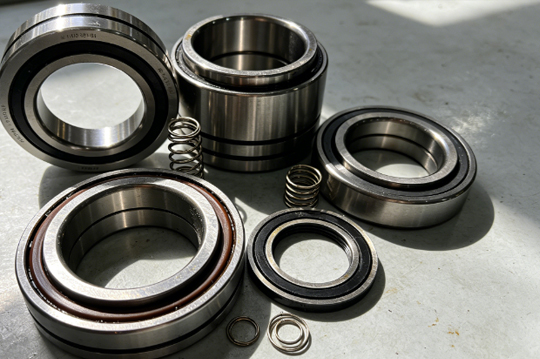
What are the warning signs of mechanical seal failure?
The warning signs of mechanical seal failure are essentially the external and internal abnormal phenomena exhibited during the transition of the sealing system from a “stable lubrication state” to a “boundary lubrication or even dry friction state.” These signals typically include changes in leakage, temperature increases, increased vibration, and abnormal operating sounds. Under normal operating conditions, mechanical seals rely on an extremely thin liquid film to achieve isolation between the dynamic and static rings, resulting in very stable and controllable friction. However, when the liquid film thickness becomes thinner or unevenly distributed, localized contact occurs at the end faces, leading to heat accumulation and increased wear. This change does not immediately lead to failure but gradually amplifies, forming a monitorable abnormal trend. Therefore, “failure warning” is not a single point of failure, but a set of continuously changing operating characteristics. By observing these characteristics, it is possible to determine in advance whether the sealing condition has entered a dangerous range.
How to detect early warning signals?
In industrial settings, the condition of mechanical seals is typically managed through a four-step process: monitoring, analysis, judgment, and intervention.
Monitoring Phase:
Basic operational data is acquired using temperature sensors, vibration sensors, and leak observation ports. This includes monitoring the seal cavity temperature, pump vibration levels, and the presence of dripping.
Data Analysis Phase:
Current operational data is compared with historical normal operating conditions. If a sustained, slow rise in temperature, a shift in vibration frequency, or a gradual increase in leakage is observed, it indicates that the system has deviated from a stable state.
Judgment Phase:
The system needs to be assessed in conjunction with operating conditions (such as media type, pressure changes, and speed changes) to determine whether the abnormality is caused by the seal, rather than other system problems such as bearing or pipeline fluctuations.
Intervention Phase:
Measures are taken based on the severity of the abnormality, such as adjusting the flushing system, reducing the load, or shutting down for maintenance, to prevent the failure from escalating.
Specific Early Warning Signal Manifestations
Multiple identifiable technical signals typically appear before mechanical seal failure. These signals often appear progressively, rather than occurring at a single point.
Leakage Change Signal: Under normal conditions, mechanical seals allow for a very small amount of “lubricating leakage” to form a liquid film. However, a sudden increase in leakage from a stable state or a sustained, slow rise often indicates end-face wear or sealing failure. The transition from “misty leakage” to “dripping or even linear leakage” is typically a critical stage before failure.
Temperature Anomaly Signals: The sealing end face relies on liquid film lubrication. Insufficient lubrication leads to rapid accumulation of frictional heat, causing the sealing cavity temperature to rise. A sustained, slow rise of 5°C–15°C without changes in operating conditions usually indicates that the end face has entered an unstable frictional state.
Vibration and Noise Signals: When the end face experiences uneven stress or uneven wear, the pump shaft will produce slight periodic vibrations, accompanied by “friction sounds,” “whistling sounds,” or intermittent abnormal noises. These signals usually indicate localized contact between the dynamic and static rings.
Pressure and Flow Fluctuation Signals: Abnormal fluctuations in the flushing system or sealing cavity pressure indicate that the liquid film structure may be damaged, and the sealing state is becoming unbalanced.
Media Change Signals: For example, crystallization, increased particle count, or thickening of the medium directly affect the end-face lubrication conditions, accelerating the failure process.
Why do early warnings occur?
The timing of warning signals from mechanical seals is closely related to their selection and design. If the material selection is inappropriate or the structural design is mismatched with the operating conditions, even if the equipment operates normally initially, it may quickly enter a pre-failure state. For example, in particulate media, if ordinary carbon-graphite end-face materials are still used, abrasive particles will penetrate and scratch the end face, leading to premature leakage and temperature rise signals. In high-temperature conditions, if heat-resistant elastic materials are not selected, the O-rings will age, resulting in decreased compensation capacity and uneven end-face pressure. Furthermore, an inappropriate flushing scheme is also a significant factor. Without effective flushing or cooling, the heat from the end face cannot be dissipated in time, gradually leading to temperature rise warnings. For high-risk media, dual-end-face sealing and isolation fluid systems can often significantly reduce the frequency of warnings. Therefore, proper selection not only affects lifespan but also directly determines the timing and intensity of warning signals.
Common Questions
Q: Does a slight leak in a mechanical seal necessarily require immediate shutdown?
Not necessarily. A slight, stable leak is considered normal lubrication behavior under certain operating conditions. However, if leakage continues to increase, accompanied by rising temperature or increased vibration, it indicates that the sealing condition is deteriorating, and inspection or load reduction should be arranged as soon as possible.
Mechanical seal failure does not happen suddenly, but is a gradual process, like the equipment “sending out early warning signals.” These signals may manifest as slight leakage, increased temperature, increased vibration, or changes in operating sound. Often, timely detection of these changes can prevent more serious damage. For pump systems, the mechanical seal is like the “last line of defense.” When it begins to malfunction, it often means that the internal lubrication condition or stress structure has changed. If early assessments are made by monitoring data such as temperature, leakage, and vibration, measures can be taken before the failure escalates, such as adjusting the flushing system, reducing the load, or performing maintenance. Most mechanical seal failures are not “sudden breakdowns,” but rather the result of “accumulated, ignored warnings.” Therefore, understanding these signals and establishing a habit of regular monitoring is crucial for extending equipment life and reducing maintenance costs. With proper management, mechanical seals can maintain stable operation for a long period, providing reliable protection for the entire pump system.