Mechanical seals are one of the most critical dynamic sealing components in rotating equipment such as pumps and compressors. Their service life directly affects equipment operating stability and maintenance costs. Many field problems are not caused by “poor seal quality,” but rather by improper operating condition matching, installation errors, or non-standard operation management, which lead to premature consumption of seal life.
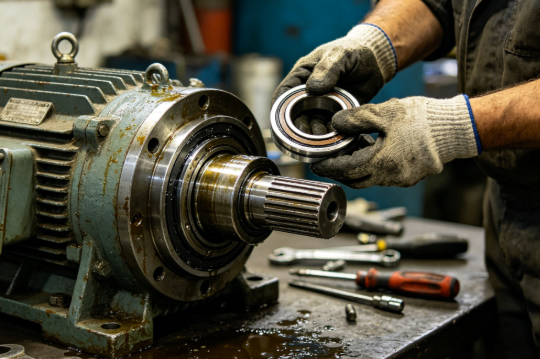
What Determines the Service Life of Mechanical Seals?
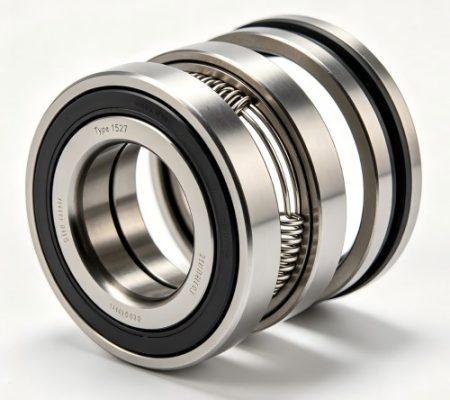
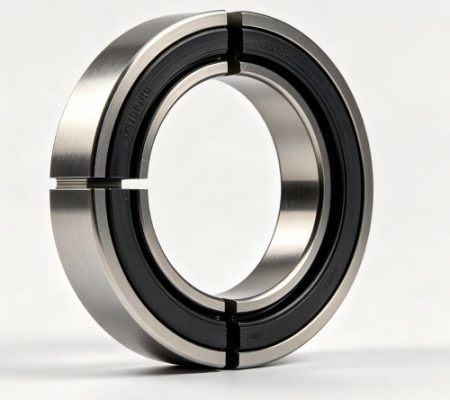
The service life of a mechanical seal refers to the time period during which the rotating and stationary seal faces maintain a stable sealing condition without significant leakage or failure under normal operating conditions. Fundamentally, it depends on three key factors: face wear rate, thermal stability, and system compatibility.A mechanical seal is not a completely static component; it is a precision structure that continuously experiences microscopic friction during high-speed rotation. The rotating ring moves with the shaft, while the stationary ring remains fixed. A very thin fluid film between them provides lubrication and sealing. Once this fluid film becomes unstable, the system enters boundary lubrication or even dry friction, significantly accelerating wear.
The essential factors affecting service life include:
Medium characteristics (whether it contains particles, is corrosive, or has lubricating properties)
Operating conditions (pressure, temperature, rotational speed)
Installation quality (alignment, compression amount, face condition)
Material compatibility (wear resistance, heat resistance, corrosion resistance)
How to Extend Service Life Through Operating Procedures?
Before use, ensure that the seal chamber is clean, the flushing system is unobstructed, the shaft alignment is good, and the installation compression is strictly controlled according to specifications to avoid hidden risks caused by initial errors. During startup, dry running must be avoided; a stable lubricating film must be established first, and speed and pressure should be increased gradually to reduce instantaneous impact on the seal faces.
During normal operation, process conditions should be kept as stable as possible. Frequent starts and stops, sudden pressure changes, or drastic temperature fluctuations should be avoided. The flushing and cooling systems must operate continuously and effectively to maintain a stable fluid film on the seal faces.After shutdown, it is necessary to prevent medium crystallization or deposition on the sealing faces and perform regular condition inspections to detect minor leakage or abnormal vibration in time.
Proper Selection Is the Foundation of Service Life
In the selection stage, the mechanical seal structure must be determined based on pump type, medium, and operating conditions. For example, particle-containing media should prioritize wear-resistant structures, high-temperature oil service should use heat-resistant seals, and corrosive media require enhanced material compatibility.If selection is incorrect, subsequent optimization can only “alleviate problems” rather than fundamentally solve them.
Installation Precision Control
During installation, axial compression, concentricity, and sealing face cleanliness must be strictly controlled. Many early seal failures are caused by surface scratches or uneven compression during installation. The more standardized the installation, the longer the service life.
Avoid Dry Friction During Startup
The most dangerous phase for a mechanical seal is the moment of startup. If the lubricating film has not formed and the system runs at high speed, instantaneous high temperature and impact wear will occur. Therefore, it is essential to ensure the flushing system is functioning properly before startup and avoid dry running.
Maintain Stable Operating Conditions
Mechanical seals are highly sensitive to operating fluctuations, including sudden pressure changes, rapid temperature variations, and frequent starts and stops. These conditions can destroy the stability of the seal face fluid film and accelerate wear.
Regular Inspection and Preventive Maintenance
By monitoring leakage rate, vibration, temperature, and flushing conditions, abnormal behavior can be detected in advance. Compared with “repair after failure,” preventive maintenance can significantly extend service life.
Technical Factors Affecting Service Life
From a technical perspective, the key factors affecting mechanical seal life are mainly concentrated on two points: whether the face load is stable and whether the lubricating film is continuously maintained.Shaft vibration and misalignment are the most common hidden causes. Once bearing conditions deteriorate or alignment errors exceed limits, periodic eccentric loading occurs on the seal faces, leading to localized high-pressure wear.Secondly, improper pressure and face load control can cause overheating or insufficient contact if spring force, medium pressure, and balance structure are not properly matched, resulting in leakage or dry friction.Thermal management is also critical.
· Control of Seal Face Fluid Film Stability
Mechanical seals rely on micrometer-scale fluid film lubrication. Once the film breaks, the system enters dry friction, and wear rate increases exponentially. Fluid film stability is affected by speed, medium viscosity, pressure ratio, and face roughness. Therefore, controlling lubrication conditions is the core of life extension.
· Proper Distribution of Seal Face Load
Too low a face load leads to leakage, while too high a load causes heat and wear. Proper load design must consider spring force, medium pressure, and the structure of rotating and stationary rings. If operated under improper load for a long time, even high-quality materials will fail quickly.
· Heat Control and Cooling Path Design
Friction-generated heat must be removed by the medium or flushing system. Poor heat dissipation leads to excessive temperature rise, causing thermal cracking, deformation, or lubrication failure. In high-speed or high-pressure conditions, thermal management is a key life factor.
· Vibration and Eccentricity Control
Shaft vibration causes periodic displacement of the rotating ring, leading to uneven face loading and localized wear points. Over time, these small damages expand into leakage paths. Therefore, bearing condition and alignment accuracy directly affect service life.
· Flushing and Cooling System Optimization
The flushing system is not only for cooling but also for cleaning the seal faces and removing particles. Insufficient flushing allows particles to enter the sealing interface, causing abrasive wear and significantly reducing service life.
How Materials Extend Service Life?
As the core friction pair, the material combination of rotating and stationary rings directly determines wear resistance, thermal shock resistance, and corrosion resistance.For clean or lightly lubricated conditions, a silicon carbide–graphite combination can be used to balance low friction and self-lubrication. In high-pressure or high-vibration conditions, tungsten carbide is more suitable due to its toughness and resistance to edge chipping. In strongly corrosive or high-temperature environments, ceramics or special hard alloys with higher chemical stability should be prioritized to avoid material degradation caused by medium attack.Auxiliary sealing materials (such as O-rings) are equally critical. Choosing FKM or FFKM can significantly improve temperature and corrosion resistance while reducing aging failure risk.
· Rotating and Stationary Ring Material Selection
Silicon carbide: high wear resistance and corrosion resistance, suitable for most chemical conditions
Tungsten carbide: strong impact resistance, suitable for vibration-prone equipment
Graphite: good self-lubrication, suitable for insufficient lubrication conditions
Material combinations are more important than single materials. For example, “hard + soft” combinations improve adaptability.
· Optimization of Auxiliary Sealing Materials
O-rings or bellows materials directly affect temperature and corrosion resistance:
NBR: normal-temperature water pumps
FKM: medium to high-temperature oil applications
FFKM: highly corrosive or high-end applications
Material aging is one of the main causes of leakage.
· Reinforcement of Metal Structural Materials
Springs, gland plates, and sleeves must balance strength and corrosion resistance. In high-temperature or corrosive environments, stainless steel or high-grade alloys should be used to prevent fatigue fracture.
· Surface Treatment Technologies
In addition to material selection, surface hardening and coating treatments (such as carbide coatings) can significantly reduce friction coefficient and improve wear resistance, thereby extending service life.
Common Question
Why does the service life remain short even after replacing with a new mechanical seal?
In many field cases, the issue is not the seal quality itself but system-related problems. Excessive shaft vibration, insufficient flushing, particle-containing media, or improper startup procedures can all lead to rapid failure of a new seal.A mechanical seal is only one component of the system. If operating conditions are unstable, even the best seal cannot achieve long service life.
In essence, the service life of a mechanical seal is not determined by a single factor but is the result of the entire system. Many people believe that simply replacing it with a better seal will solve the problem, but in reality, the situation is often more complex.During operation, mechanical seals are always in a state of high-speed rotation and micro-clearance friction, making them highly sensitive to installation accuracy, medium conditions, temperature changes, and vibration. Any instability in these factors will accelerate wear.
To extend service life, the key is not “using the most expensive option,” but “using the most suitable one.” Proper selection, standardized installation, stable operating conditions, effective flushing, and appropriate material matching are what allow mechanical seals to achieve their designed lifespan.A mechanical seal is like a precision system operating under long-term high load. It does not fear operation, but it is sensitive to unstable environments. If operated under proper conditions, it can usually run stably for a long time, reducing leakage and maintenance frequency while improving overall equipment efficiency.