Pressure testing and commissioning of mechanical seals is one of the key steps to ensure the reliability of sealing systems in pumps or compressors before formal operation. It is not only used to verify whether the seal leaks, but also to check installation accuracy, face contact condition, and system stability under different pressure conditions. If testing and commissioning are not properly carried out, even if the mechanical seal itself is of qualified quality, problems such as leakage, overheating, or rapid wear may still occur during early operation. Therefore, pressure testing and commissioning is an essential step for a mechanical seal to transition from “installation completed” to “safe operation.”
What Is Mechanical Seal Pressure Testing and Commissioning?
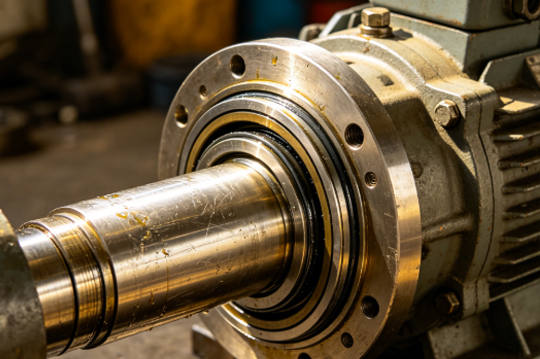
Mechanical seal pressure testing refers to the process of applying a certain pressure medium (usually clean water, nitrogen, or a dedicated test fluid) into the seal chamber or system before equipment operation, in order to verify the sealing performance of the mechanical seal. Its core purpose is to check whether the rotating and stationary seal faces, auxiliary sealing rings, and housing structure have leakage or abnormal deformation under pressure.
Commissioning, on the other hand, is the optimization and adjustment of the mechanical seal’s operating condition based on pressure testing. For example, adjusting spring compression, checking axial positioning, and confirming whether the cooling and flushing system is operating properly.The working environment of a mechanical seal involves high speed, high pressure, and micrometer-level clearances. Therefore, any small installation error or sealing face issue will be amplified during pressure testing. This is why pressure testing is regarded as the “first inspection checkpoint” for mechanical seal reliability.
How to Perform Mechanical Seal Pressure Testing and Commissioning?
Mechanical seal pressure testing and commissioning are usually divided into four stages: preparation, pressurization testing, pressure holding observation, and adjustment optimization. Each step must be carried out according to specifications.
Pre-test Preparation
Before pressure testing, it is necessary to confirm that the mechanical seal is correctly installed, including axial positioning, compression amount, cleanliness of the seal chamber, and auxiliary piping connections. It is also important to check whether the flushing and cooling systems are properly connected and unobstructed. In addition, the cleanliness of the test medium must be ensured to prevent particles from entering the sealing faces and causing scratches.
Stepwise Pressurization Test
Pressure testing is typically carried out using a stepwise pressurization method rather than directly applying full working pressure. A low-pressure test is performed first to observe whether there is obvious leakage, and then the pressure is gradually increased to the design or test pressure. During pressurization, continuous observation is required to check the sealing faces, gland, auxiliary sealing rings, and piping connections for leakage or abnormal deformation.
Pressure Holding Observation Stage
After reaching the set pressure, a pressure holding period is required to observe whether the mechanical seal has slow leakage or pressure drop. This stage is critical for evaluating long-term sealing reliability. If the pressure remains stable, the seal is considered basically qualified. If pressure drops occur, further inspection of sealing faces or installation issues is required.
Dynamic Commissioning Stage
After passing static testing, dynamic commissioning can begin, which involves low-speed rotation or jog testing. The focus is on observing face temperature rise, vibration conditions, and whether abnormal noise is present. If rapid temperature increase or abnormal vibration is detected, the machine must be stopped immediately for inspection.
Commonly Overlooked Issues in Pressure Testing
Although mechanical seal pressure testing seems simple, it involves multiple precision technical points. Any uncontrolled factor may lead to misjudgment or later failure.
· Pressure Loading Speed Control
Excessively fast pressurization may cause uneven instantaneous force on the sealing faces, potentially masking real leakage points or impacting brittle materials. The correct method is gradual, staged pressurization to allow the seal to adapt to pressure changes.
· Influence of Face Contact Condition on Test Results
Mechanical seals rely on a micrometer-level fluid film formed between rotating and stationary faces. If there is misalignment or surface damage during installation, intermittent leakage may appear during testing. Therefore, pre-test inspection of sealing faces is crucial.
· Axial Movement and Vibration Interference
During dynamic commissioning, significant shaft movement or vibration can cause periodic changes in seal face clearance, resulting in unstable test results. Therefore, bearing conditions must be ensured to be in good condition.
· Impact of Flushing and Cooling Systems
If the flushing flow is insufficient or the direction is incorrect, local overheating of the seal faces may occur, distorting test results. Many on-site “false faults” are actually caused by flushing system issues rather than the seal itself.
· Micro Leakage and Misjudgment
Mechanical seals allow extremely small leakage, which is normal. However, if inspection standards are too strict, normal micro leakage may be misjudged as failure. Therefore, judgment must be based on operating conditions rather than a strict “zero leakage” standard.
Why Do Materials Also Affect Testing and Commissioning?
Mechanical seal materials not only affect service life but also directly influence pressure testing and commissioning performance.
· Rotating and Stationary Ring Materials
Silicon carbide, tungsten carbide, and other hard materials perform stably during pressure testing but are more sensitive to impact. Graphite materials, on the other hand, are more flexible and can better adapt to initial contact conditions. Therefore, different materials show noticeable differences during testing.
· Auxiliary Sealing Materials
O-rings or bellows materials (such as NBR, FKM, FFKM) play a critical sealing role during pressure testing. Improper material selection may lead to leakage or insufficient elasticity even at low pressure stages.
· Metal Structural Materials
If components such as gland plates, springs, or sleeves lack sufficient rigidity, slight deformation may occur during pressurization, affecting face contact pressure and causing fluctuations in test results.
· Flushing System Materials
If the flushing pipeline uses pressure-unstable or rough inner-wall materials, flow stability will be affected, indirectly influencing seal face temperature and pressure conditions.
Common Questions
Why does leakage still occur after passing pressure testing?
This is a very common field issue. Pressure testing only simulates static or low-speed sealing conditions, while actual operation involves high-speed rotation, vibration, temperature rise, and medium variations. Therefore, even if pressure testing is successful, problems may still occur during dynamic operation. Common causes include excessive shaft vibration, insufficient flushing, particulate-laden media, rapid temperature changes, or short-term dry friction during startup. These factors are often not fully reflected in static testing.
In essence, pressure testing and commissioning of mechanical seals is like a “safety check-up” before equipment goes into formal operation. Pressure testing verifies whether it leaks, while dynamic commissioning evaluates whether it runs stably. Many people assume that no leakage during testing means everything is fine, but mechanical seals are precision components operating under high speed, high pressure, and micro-clearance conditions, and real operating conditions are far more complex than test environments. Therefore, testing is only the first step; ongoing operational management is more important.
During operation, pressure testing must be carried out gradually and not with sudden pressure spikes. Commissioning must monitor temperature, vibration, and leakage rather than focusing on a single indicator. At the same time, flushing systems, shaft conditions, and installation accuracy all affect final results. If a mechanical seal is regarded as the “heart protection system of a pump,” then pressure testing is its first “heart examination.” A passed inspection does not mean permanent safety, but it significantly reduces the risk of early failures. With proper testing procedures, correct commissioning, and reasonable operating conditions, mechanical seals can usually operate stably for a long time, reducing leakage and downtime issues.