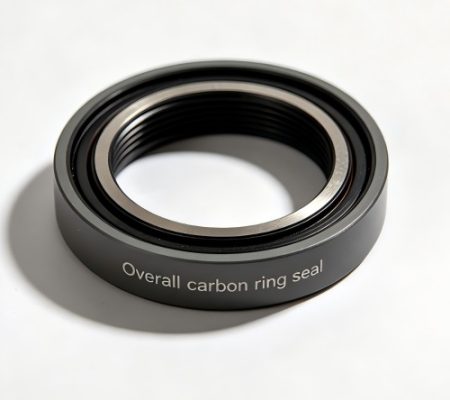
A mechanical seal is a high-precision component that relies on an extremely thin liquid film formed between the end faces of the rotating and stationary rings to achieve a seal. Its operating condition is extremely sensitive to installation accuracy. Unlike traditional packing seals, a mechanical seal is not a “just install and use” part; it is a precision device highly dependent on coaxiality, end face cleanliness, compression, and system operating conditions. “Installation errors” are not simply about reverse installation or omissions; any minute deviation during installation (such as shaft misalignment, incorrect compression, contamination of the sealing surface, or failure to activate flushing) can directly disrupt the conditions for liquid film formation, leading to leakage, overheating, or even short-term seal damage.
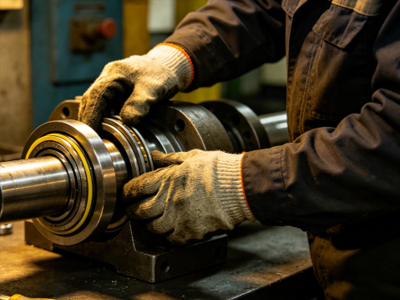
Standard Installation Procedure and Common Mistakes for Mechanical Seals
The installation of mechanical seals follows a standard procedure, and most errors occur because these steps are overlooked or simplified.
Preparation and Cleaning Stage Before installation
The shaft sleeve, sealing cavity, gland, and sealing end faces must be thoroughly cleaned to ensure no oil, metal particles, or fiber residue remains. If cleaning is inadequate, even tiny particles entering the end face can cause abrasive damage during startup, disrupting the conditions for liquid film formation. Additionally, the shaft diameter must be checked for scratches or wear; otherwise, the new seal will run directly on an uneven surface, leading to uneven wear.
Alignment and Dimension Confirmation Stage
Before installation, the coaxiality of the pump shaft and motor shaft must be confirmed, as well as whether the radial runout of the shaft is within the allowable range. Poor alignment will cause periodic uneven loading of the mechanical seal during operation, resulting in excessive pressure on one side of the end face, leading to localized heating and uneven wear. These problems are often not obvious in the initial installation phase but will quickly become apparent after a period of operation.
Seal Assembly and Compression Control Stage
The mechanical seal must have its compression controlled according to design requirements. Excessive compression will cause excessive end face pressure and heating, while insufficient compression will lead to an unstable liquid film and leakage. However, in actual installation, many field personnel rely on experience and “tighten by feel” instead of positioning according to standard dimensions, which is one of the main causes of early failure.
Pre-Startup System Inspection Stage
Before starting the equipment, it must be confirmed that the flushing system or sealing auxiliary system is operating normally and that the sealing cavity is filled with the medium. If the machine is started directly without establishing a liquid film, it will cause short-term dry friction, which can lead to overheating or even burn out the sealing surface.
The core reason for incorrect installation
The essence of incorrect mechanical seal installation is that “small errors are amplified at high speeds,” which translates into serious failure problems during operation. The following are the most critical technical issues.
· Contamination of the sealing end face
Mechanical seal end faces require extremely high cleanliness. Any oil, dust, or metal particles remaining will compromise the end face fit accuracy. Under high-speed rotation, these tiny particles will form local high points, preventing the liquid film from forming evenly and resulting in localized dry friction areas. Even contamination invisible to the naked eye is enough to affect the seal’s lifespan. Therefore, during installation, a fibrous cloth and cleaning solvent must be used for thorough cleaning, and direct contact with the sealing surface by hand should be avoided.
· Insufficient shaft coaxiality and vibration control
If the alignment error between the pump shaft and the motor shaft is too large, the mechanical seal will experience periodic uneven loading during operation, causing uneven stress on the end face. In this case, one side is always under high-pressure contact, while the other side may experience liquid film rupture, resulting in “periodic dry friction.” Such errors are often not directly observable during installation, but will manifest as leakage or abnormal overheating after several hours or days of operation.
· Inaccurate Compression Control
Mechanical seals are extremely sensitive to compression. Excessive compression leads to increased end-face pressure and significantly increased frictional heat; insufficient compression prevents the formation of a stable liquid film, increasing the risk of leakage. Many on-site installers rely on experience for adjustments, neglecting the positioning dimensions or installation scales provided by the manufacturer, which is one of the core reasons for the significant differences in seal lifespan.
· Incorrect Flushing System Activation
Mechanical seals rely on liquid film lubrication, and the formation of the liquid film depends on the flushing system or media circulation. If the flushing pipeline is not opened, the flow is insufficient, or the filter is clogged, the seal end face will be in a “no-lubrication state” during startup. Even a short period in this state can cause irreversible end-face damage. Therefore, the “flushing first, then startup” procedure must be strictly followed.
Common Questions
Q: My mechanical seal leaks quickly after installation. Is this a product quality issue?
Not necessarily. In most cases, it’s caused by alignment errors during installation, incorrect compression, or the flushing system not being activated.
Q: Why do problems still occur even after installing according to the instructions?
The instruction manual only provides basic conditions; actual operating conditions (vibration, medium, temperature) and installation details are equally crucial.
Q: Can I install a mechanical seal based on experience?
It’s not recommended. Mechanical seals are precision components. Experience can be helpful, but it cannot replace standard dimensions and process control.
Installing a mechanical seal may seem like a simple “put it on,” but it actually requires extremely high precision. Many problems aren’t due to a faulty seal itself, but rather to a small oversight during installation, such as insufficient cleaning, misalignment of the shaft, excessive tightening, or failure to pre-open the flushing mechanism. These problems may seem minor individually, but they are amplified at high speeds, ultimately leading to leaks, overheating, or even short-term damage. Mechanical seals work by relying on an extremely thin liquid film to reduce friction. If this film isn’t properly established, the seal becomes unstable. Mechanical seals aren’t “just install and use” parts; they are precision components that “only work well when installed correctly.” Most failures can be avoided by following proper installation procedures, correct alignment, thorough cleaning, and correct startup procedures. Conversely, if these details are ignored, even a high-quality seal can quickly develop problems.