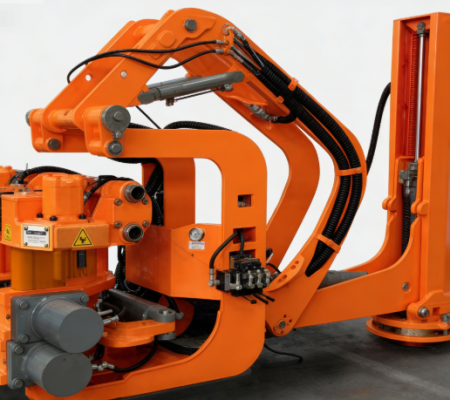
In oil and gas drilling operations, wellhead operations under complex conditions place higher demands on equipment stability, especially in deep wells, high-pressure wells, and environments with complex formation conditions, where casing fixation and load-bearing capacity are paramount. Casing slip, as a key load-bearing tool at the wellhead, is primarily used to provide reliable support and stable clamping during casing installation and installation, ensuring the casing remains in a safe position at the wellhead. It is optimized in terms of structural strength, stress stability, and adaptability to complex environments, thus possessing significant application value under complex conditions.
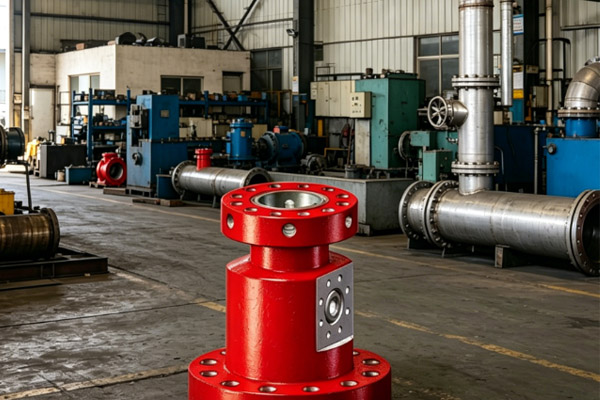
Stable Casing Clamping for Safe High-Pressure Well Operation
Casing stability requirements are extremely high under complex conditions.
- Casing slip uses a high-strength toothed surface structure to firmly clamp the casing, reducing the risk of slippage.
- Uniform stress design prevents casing displacement or deformation under high-pressure environments.
- Stable clamping also improves the overall sealing and load-bearing safety of the wellhead.
This clamping capability is fundamental to safe operation under complex conditions.
Adapting to Deep Well Operations and Improving Load-Bearing Stability
Deep well construction places even higher demands on equipment load-bearing capacity.
- The casing slip mechanism is constructed from high-strength materials, capable of withstanding significant weight and continuous loads.
- It maintains stable support performance even during extended casing tripping operations.
- Optimized structural design reduces fatigue wear caused by long-term loads.
This load-bearing capacity enhances the reliability of deep well operations.
It improves adaptability to complex formations and reduces construction risks
Different formation conditions significantly impact wellhead equipment.
- The casing slip mechanism adapts to changes caused by irregular well walls and complex formations.
- It maintains stable clamping even in environments with high mud content or large frictional variations.
- It reduces the risk of casing runaway due to changes in operating conditions.
This adaptability enhances construction safety.
It optimizes the casing tripping process and improves operational efficiency
During actual construction, the casing slip mechanism, through a smoother clamping and release mechanism, reduces unnecessary pauses and repetitive adjustments during casing tripping, while improving the continuity of wellhead operations. Standardized structural design simplifies equipment installation and operation, reduces the complexity for on-site personnel, and enhances the coordination efficiency between different wellhead equipment, resulting in a more stable and efficient overall operation. This process optimization capability helps shorten the construction cycle and improve overall drilling efficiency.
In modern oil and gas drilling engineering, casing slippage is a fundamental load-bearing tool and a crucial piece of equipment for ensuring construction safety and efficiency under complex conditions. From stable clamping to load-bearing optimization, and then to adapting to operating conditions and improving processes, its role is integral to the entire casing operation process. Through proper selection and standardized operation, the stability of wellhead operations can be effectively improved, providing more reliable support for oil and gas development projects.