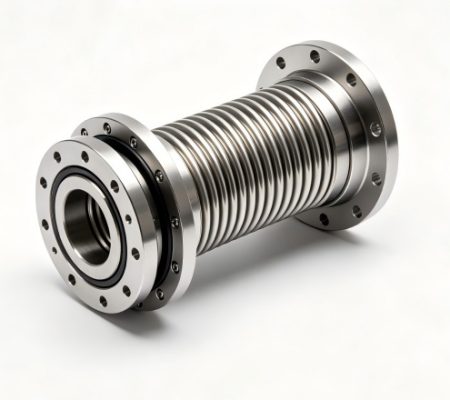

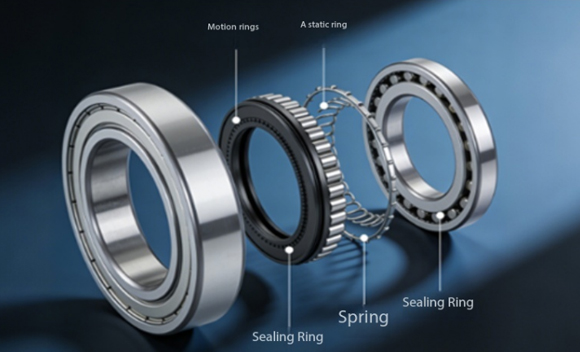
Mechanical seals are common sealing devices in industrial production. They form a tight contact between two precisely fitted sealing surfaces on a rotating shaft, effectively preventing liquid or gas leakage from the equipment while also preventing the ingress of external dust and impurities. This seemingly simple structure, with its reliable and durable characteristics, has become an indispensable “gatekeeper” for many critical pieces of equipment. Mechanical seals are almost standard equipment in various types of pumps. For example, centrifugal pumps used in factories to transport water, oil, and acid/alkali solutions would leak like a leaky faucet without a mechanical seal. Mechanical seals apply appropriate pressure through springs or bellows to keep the rotating and stationary rings in constant contact, maintaining a seal even under high speed and high pressure conditions. Similarly, in compressors and screw pumps of refrigeration units in petrochemical plants, mechanical seals play a crucial role in preventing the leakage of flammable and explosive media, ensuring production safety and reducing material waste.
In pharmaceutical plants, stirred tanks used for producing liquid drugs, and reaction vessels used for mixing sauces in food processing plants, poor sealing can not only contaminate the product but also lead to spoilage of the entire batch due to external bacterial invasion. Mechanical seals provide reliable protection for production processes with extremely high cleanliness requirements by isolating the vessel from the external environment. In chemical production, many reactors need to operate in high-temperature, high-pressure, or highly corrosive environments, conditions that ordinary sealing materials cannot withstand. Mechanical seals, using special materials such as corrosion-resistant alloys, ceramics, or silicon carbide, and in conjunction with cooling or flushing systems, can operate stably even under extreme conditions.
Mechanical seals are also widely used in the marine and power equipment industries. The propulsion shafts of large ships penetrate the hull; if the seal fails, seawater will flood the compartments. Mechanical seals, through multiple sealing structures and automatic compensation functions, maintain sealing performance even when the hull is rolling or the shaft is misaligned. Mechanical seal structures are also commonly used in crankcase ventilation systems of automotive engines and shaft seals of turbochargers to ensure that engine oil does not leak and gases do not escape, thereby protecting the environment and maintaining engine efficiency. Mechanical seals play a crucial role in preventing lubricating oil leakage and moisture infiltration in wind turbine gearboxes and hydroelectric turbines.
Beyond industrial applications, mechanical seals are also ubiquitous in everyday life. Without proper sealing, drain pumps in household washing machines and dishwashers can leak water and cause electrical leaks; in hospitals, medical equipment such as blood pumps and dialysis machines rely on high-precision mechanical seals to ensure patient safety. Even in the aerospace field, mechanical seals silently ensure the reliable operation of rocket engine fuel delivery systems and satellite attitude control mechanisms under extreme temperatures and vacuum environments.
Mechanical seals can handle such diverse applications thanks to their customizable design. Different sealing materials can be selected based on the characteristics of different media; cooling or heating systems can be designed for high or low temperature environments; and the pressure distribution on the sealing surface can be adjusted to adapt to high-pressure or vacuum conditions. With advancements in materials science and manufacturing processes, the service life of modern mechanical seals has increased from thousands of hours to tens of thousands of hours, significantly reducing maintenance costs and greatly improving reliability.
Although small in size, mechanical seals are indispensable “safety valves” and “efficiency locks” in modern industrial systems. They not only ensure production safety and product quality but also play an irreplaceable role in energy conservation, emission reduction, and resource conservation. With the continuous development of industrial technology, the design and manufacturing of mechanical seals will become more intelligent and environmentally friendly, and they will continue to play a crucial “gatekeeper” role in more fields.