
As an important centralizing tool in downhole operations, the installation method and usage precautions of integral centralizers directly affect the smoothness of casing installation and the final cementing quality. Correct installation not only improves centralization effectiveness but also prevents jamming, wear, or damage to the casing during downhole operation. Therefore, mastering the proper installation steps and paying attention to key details are crucial for ensuring the smooth progress of the project.
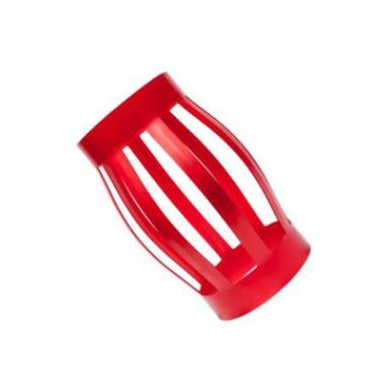
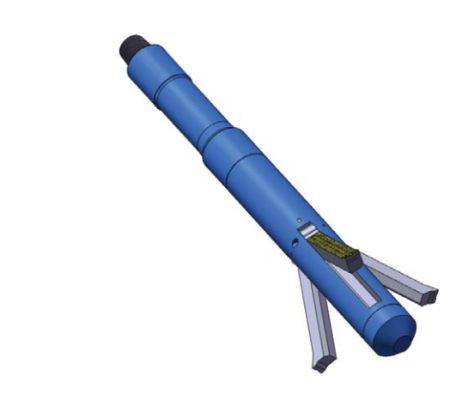
When installing an integral centralizer, first confirm that the centralizer’s specifications are completely compatible with the casing dimensions, including outer diameter, length, and applicable well diameter. Integral centralizers typically employ a one-piece molding design, offering high rigidity and wear resistance. Therefore, before installation, check the centralizer’s centralizing wings for deformation, cracks, or damage to ensure it can withstand sufficient axial and radial forces downhole. During installation, a fixing ring, retaining ring, or bolt structure is generally used to secure the centralizer in the designated position. They are usually evenly spaced according to the casing installation friction and cementing design requirements. To prevent the centering device from slipping during the run-in process, ensure that the fasteners are securely tightened and check that the centering device fits firmly against the casing without shifting.
During installation, pay attention to the orientation and position of the centering device, especially when combining multiple downhole tools. Ensure that the centering device does not interfere with other equipment. For example, when installing float shoes, cement heads, cementing accessories, etc., plan the centering device layout in advance to avoid running out of space and preventing proper run-in. For horizontal or highly deviated wells, due to the higher wellbore friction, pay special attention to the number and installation position of the centering devices to ensure smooth entry into the well section. Increase the assembly density if necessary to improve the centering effect and reduce direct contact between the casing and the wellbore.
When using integral centering devices, operators need to pay close attention to the run-in speed and wellbore condition. Since most integral centering devices are rigidly designed, irregular wellbore or reduced diameter may increase friction or even cause jamming. Therefore, before running the casing, fully understand the wellbore quality and use logging data to determine if there are any risk areas in the well section. Maintaining a stable and moderate operating speed is crucial during the running-in process. Too high a speed may cause impact, while too slow a speed may affect construction efficiency. Simultaneously, the stress on the casing should be closely monitored. If difficulty in running in is detected, the process should be stopped immediately to investigate the cause.
It is necessary to reconfirm that the centering device is in the correct position. If the centering device moves, is damaged, or becomes stuck during running-in, it should be addressed promptly; otherwise, it may lead to uneven cementing of the annulus, affecting the final cement sealing quality. It is worth noting that the integral centering device is a single-use tool and is generally not recycled after construction. Therefore, when selecting a centering device, its cost-effectiveness, well condition adaptability, and load-bearing capacity must be considered.
To ensure construction safety and equipment lifespan, the centering device also requires proper handling during storage and transportation. Although the integral structure is impact-resistant, prolonged stacking or improper placement may cause deformation of the centering fins, affecting its performance. Therefore, moisture-proof, corrosion-proof, and impact-proof measures should be taken to ensure the centering device is in good condition before use.
The installation method and usage precautions of the integrated centerizer directly affect the safety of downhole operations and cementing quality. From specification selection, installation and fixing, downhole operation to pre-cementing inspection, every step is crucial. Only through correct installation, standardized operation, and a full understanding of the downhole environment can the centerizer truly play its centering role, improve casing running efficiency, ensure cementing quality, and provide more reliable support for the entire wellbore structure.