Float shoes, as crucial tools installed at the bottom of the casing during cementing operations, directly impact cementing quality, casing running efficiency, and long-term well stability due to their structural design and applicable well conditions. Although they appear as simple cylindrical components, their internal and external structures have undergone engineering verification and meticulous optimization, allowing float shoes to play a key role in various well conditions. Understanding the structural characteristics and applicable scope of float shoes requires examining their internal core structure, pressure resistance design, guiding capability, and material compatibility. This knowledge helps in more accurately selecting the appropriate float shoe type during cementing operations.
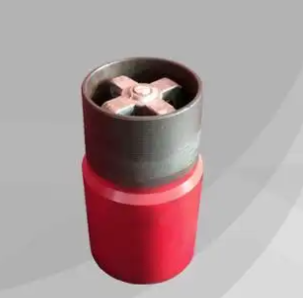
The most significant structural feature of float shoes is their internal one-way valve, also known as a check valve. This valve typically uses a rubber flap valve, spring valve, or composite material valve core. Its core function is to allow cement slurry to flow from inside the casing to the annulus outside, while preventing fluid backflow into the casing. While seemingly simple, the check valve is a vital device for ensuring stable cementing pressure and preventing cement backflow and downhole gas surge. In high-pressure or ultra-deep wells, valves require higher sealing ratings. Therefore, the valve body and seat of float shoes are typically made of reinforced pressure-resistant materials, such as high-strength steel and corrosion-resistant alloys, to withstand the high-pressure downhole environment.
Besides the internal valves, the float shoe’s external structure is also specially designed. Its exterior usually features a beveled or conical front end. This guiding structure helps the casing smoothly navigate through narrowing sections, steps, collapsed sections, or sections with significant curvature in the wellbore during installation. For horizontal or highly deviated wells, the guiding capability of the float shoe is particularly important, effectively reducing friction, minimizing the risk of casing sticking, and improving the success rate of casing installation. Some advanced float shoes also incorporate a swirling structure, creating a rotating effect as cement slurry passes through, improving bottomhole mud replacement efficiency and thus improving cementing quality.
The pressure resistance of the float shoe is another major structural feature. Because its working position is at the bottom of the well, it experiences pressures far exceeding those of other parts of the casing. Therefore, the float shoe material needs to possess high strength and high sealing performance. Common float shoe materials include steel, aluminum alloy, or composite materials. Steel float shoes offer the highest strength and are suitable for deep wells, extended reach wells, and high-pressure wells. Aluminum alloy and composite material float shoes are more suitable for shallow wells and conventional well conditions, offering advantages such as light weight, low cost, and ease of drill bit removal. In certain well conditions, high corrosion resistance is required for float shoes, especially in corrosive sections containing hydrogen sulfide (H₂S) or carbon dioxide (CO₂). Therefore, float shoes often incorporate corrosion-resistant coatings or are made of stainless steel.
In terms of applicable well conditions, float shoes are widely used in various types of wells, including vertical wells, deviated wells, horizontal wells, and ultra-deep wells. In well conditions prone to casing sticking, guide float shoes perform particularly well, effectively helping the casing overcome obstacles. For well sections with irregular walls or reduced diameter, the guide ramp at the tip of the float shoe reduces impact and improves the smoothness of casing lowering. In high-temperature and high-pressure wells, float shoe valves must simultaneously meet the requirements of high-temperature sealing and high-pressure load bearing. Therefore, metal valve cores or composite sealing structures are typically selected to ensure reliable check flow even in extreme environments.
If downhole conditions are complex, such as the presence of highly corrosive media, loose wellbore, or annulus requiring higher displacement efficiency, engineers will choose float shoe types with more sophisticated structures and higher-grade materials, such as high-performance float shoes with swirl guidance functions, or steel float shoes with high wear resistance. Conversely, in ordinary formations, shallow wells, or economical cementing projects, standard float shoes are sufficient.
The structural characteristics of float shoes determine that they are not only part of cementing tools, but also a crucial guarantee for cementing quality and successful casing placement. From the sealing performance of internal one-way valves to the external guiding structure improving placement efficiency, and the adaptation of different materials to different well conditions, float shoe design has developed into a mature and critical engineering system. Choosing the appropriate float shoe type can effectively improve cementing results, reduce operational risks, and ensure long-term wellbore stability. Therefore, a thorough understanding of the structural characteristics of the float shoe and its applicable well conditions is an important prerequisite for every successful cementing operation during the cementing design phase.