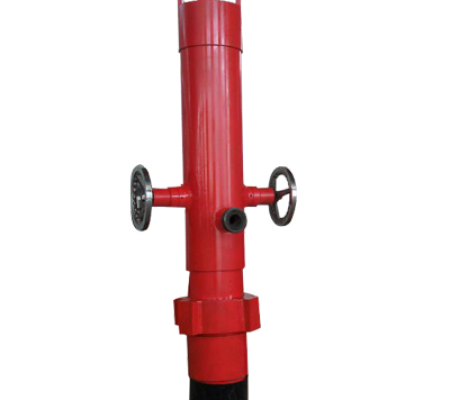

In drilling and cementing engineering, the cement head is a crucial piece of equipment. Although small in size and simple in structure, it plays an irreplaceable role in the entire cementing process. Whether in oil and gas wells, geothermal wells, or mining drilling, the cement head directly affects cementing quality, safety, and the efficiency of subsequent operations. To understand the true value of a cement head, we need to analyze its three core functions.

The primary function of a cement head is to ensure the sequential injection of mud and cement slurry.
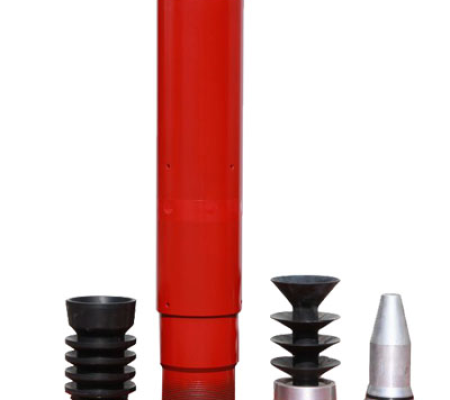
In cementing operations, the most critical use of the cement head is to ensure that mud and cement slurry enter the wellbore smoothly in a predetermined order. Before cementing, the wellbore is filled with mud. Without the precise control of the cement head, the cement slurry cannot be effectively separated from the mud, easily causing problems such as mud mixing and poor backflow, affecting cementing quality. The cement head, by loading upper and lower rubber plugs and using pressure, pushes the mud and cement slurry into the wellbore in sequence, achieving rapid switching between the two media. This seemingly simple process directly determines whether the cement slurry can completely fill the casing annulus, laying the foundation for a robust support layer in the cementing process.
The cement head provides stable pressure and protects the safety of the entire cementing process.
Cementing operations require high pressure to propel cement slurry into designated areas. However, the downhole environment is complex, with uneven pressure and high cement fluidity. Without specialized equipment for control, this can lead to serious safety hazards. The cement head provides a stable pressure interface, ensuring that the cement slurry enters the wellbore at a controllable speed. Its strong sealing performance and internal structure can withstand instantaneous high-pressure impacts, preventing leaks, bursts, and other dangerous situations. Simultaneously, the cement head can monitor the pressure application process in real time, allowing operators to assess the injection status based on pressure changes and avoid risks such as pipe jamming and blockages. In short, the cement head is not only an injection device but also a crucial safety barrier in cementing operations.
The cement head improves cementing efficiency and ensures stable final quality.
High-quality cementing depends not only on cement performance but also on the accuracy and efficiency of the injection process. Through structural optimization and operational design, the cement head makes the entire cementing process more efficient and rhythmic. First, the rubber plug ensures that impurities inside the wellbore are removed, allowing the cement slurry to fill the casing gaps more evenly. Second, the cement head allows for rapid connection and disassembly, reducing equipment replacement time and improving on-site construction efficiency. More importantly, the controllability of the cement head significantly reduces the probability of slurry mixing, resulting in a dense cemented layer structure, thereby improving the wellbore’s pressure-bearing capacity and preventing problems such as leakage and collapse later on. For any downhole project, high-quality cementing is the foundation of success, and the cement head is a crucial piece of equipment ensuring this foundation.
While the function of the cement head may seem singular, it actually encompasses key aspects of cementing operations. It not only enables the sequential injection of mud and cement slurry but also plays a role in pressure protection and quality stabilization. Whether improving cementing efficiency or ensuring the long-term safety and reliability of the wellbore, the cement head plays an irreplaceable role in downhole engineering. For projects requiring stable construction and long-term safety, selecting a reliable and structurally sound cement head is a prerequisite for successful cementing.