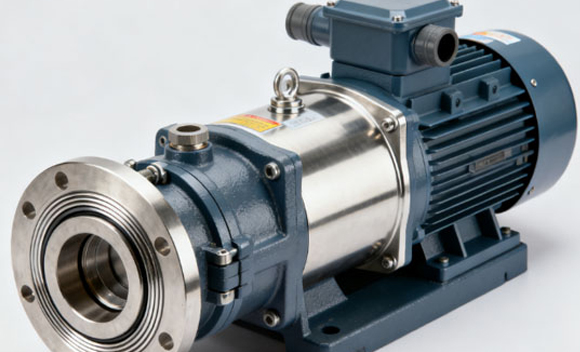
In the industrial fluid transfer field, companies often struggle with two options when selecting pumps: magnetic drive pumps and mechanical seal pumps. Both are mainstays of centrifugal pump systems, but their internal sealing methods are completely different. From structure and safety to maintenance methods and applicable media, these differences determine their roles in different scenarios. With increasingly stringent environmental requirements, greater demands for production continuity, and stricter management of hazardous chemicals, companies are particularly sensitive to pump leakage rates and stability. Therefore, choosing between magnetic drive pumps and mechanical seal pumps is no longer just a matter of equipment selection, but also concerns safety, compliance, and long-term operating costs.
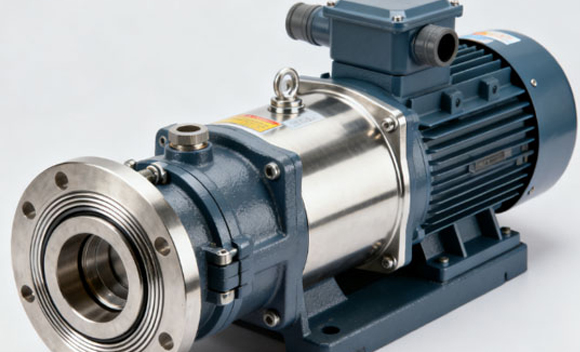
Neither type of pump is inherently superior or inferior; it’s simply a matter of suitability. Magnetic drive pumps are known for their leak-free operation, making them particularly suitable for corrosive, volatile, and toxic media. Mechanical seal pumps, on the other hand, have a mature structure and wide adaptability, maintaining their advantage under high temperature, high pressure, and high flow conditions. Understanding their differences can help engineers and purchasing personnel avoid over- or under-selection, resulting in more stable, economical, and safer equipment operation.
① Different Sealing Methods
Magnetic drive pumps use a magnetic coupling structure. Power is transmitted through an isolation sleeve by the rotation of an internal magnetic field driven by an external magnetic tape, thus eliminating the need for a mechanical seal. The pump chamber is completely sealed, making it a truly ‘leak-free’ structure.
Mechanical seal pumps, on the other hand, rely on the tight fit between a rotating ring and a stationary ring to achieve a seal. The sealing surfaces wear down during high-speed rotation, causing the sealing performance to deteriorate over time, requiring seal replacement.
This means:
– Magnetic drive pumps have virtually zero leakage risk.
– Mechanical seal pumps will inevitably experience some degree of leakage during long-term operation. The sealing method determines their core positioning: one emphasizes safety, the other emphasizes versatility.
② Different Preferences for Applicable Media
Magnetic drive pumps are particularly suitable for:
– Strongly corrosive media (acids, alkalis, salts, chemical solvents)
– Toxic, odorous, and volatile media (such as benzene, aldehydes)
– Industries with extremely high leakage control requirements (pharmaceuticals, electronics, environmental protection, fine chemicals)
Mechanical seal pumps have a wider range of applications, including:
– High-temperature media
– High-pressure systems
– High flow rates and large particle conditions
– Water, oil, and clean media
In other words, magnetic drive pumps are ‘specialized experts,’ while mechanical seal pumps are ‘general-purpose players.’
③Different Maintenance Cost Approaches
Magnetic drive pumps do not have mechanical seals, so they do not have the problem of ‘leakage due to seal wear,’ resulting in low maintenance frequency and suitability for long-term continuous operation. However, once their sliding bearings and isolation sleeves wear out, repair costs are high, and the medium must be kept clean and free of particles.
Mechanical seal pumps require more frequent maintenance because the sealing surface inevitably wears down. The advantages are high parts interchangeability, controllable maintenance costs, and ease of training for personnel.
In short: Magnetic drive pumps require less repair, but each repair is expensive. Mechanical seal pumps require more repair, but each repair is inexpensive. Whether a company prioritizes ‘downtime risk’ or ‘maintenance budget’ determines its choice.
④ Different Risk Points
Magnetic drive pumps are most vulnerable to:
Dry running
High-particle, high-viscosity media
Inadequate flushing leading to bearing dry friction
Excessive temperature rise causing damage to the isolation sleeve
Mechanical seal pumps are most vulnerable to:
Insufficient seal cooling
Severe media corrosion leading to seal failure
Pump shaft vibration causing seal face runout
Neither type of pump is perfect, but their risk points are significantly different. The choice should be based on the specific operating conditions, not just a simple price comparison.
⑤ Cost and Lifespan Differences
Magnetic drive pumps typically have higher initial costs, but extremely low leakage risk, less maintenance frequency, and a longer overall lifespan.
Mechanical seal pumps are initially cheaper, but long-term maintenance and downtime can lead to increased overall costs.
Therefore, in terms of ‘total life cycle cost’:
Industries sensitive to leakage → Magnetic drive pumps are more economical
For general operating conditions → Mechanical seal pumps are more cost-effective
The difference between magnetic drive pumps and mechanical seal pumps ultimately boils down to ‘different sealing methods leading to different positioning.’ Magnetic drive pumps, with their leak-free structure as their core value, are more suitable for industries handling hazardous chemicals, corrosive liquids, and those with extremely high environmental and safety requirements. Their stability, reliability, and environmental performance are irreplaceable in specific operating conditions. Mechanical seal pumps, on the other hand, with their mature technology, strong adaptability, and broad industry base, still dominate in most general operating conditions, especially in high-temperature, high-pressure, and high-flow-rate applications.
Choosing a pump should not be based solely on brand or price, but rather on considering the operating conditions: Is the medium hazardous? Is the temperature high? Does it contain particles? Is it sensitive to leakage? Does it require continuous operation? Once these questions are answered clearly, the best selection will naturally emerge. For enterprises, choosing the right pump is not just a purchasing decision, but a crucial step in ensuring safe production, reducing maintenance costs, and improving equipment reliability. Understanding the differences between magnetic pumps and mechanical seal pumps is an important foundation for making correct equipment decisions, and it can also make the system run more smoothly, efficiently, and safely.