
Mechanical seal Definition and Structural Principle: A mechanical seal is a non-contact sealing device based on fluid dynamics principles. It effectively controls media leakage by creating a tortuous flow channel through a complex toothed structure between rotating and stationary components. Its core structure consists of multiple annular sealing teeth and an expansion cavity. A series of flow-blocking gaps are formed between the teeth. When fluid passes through, a ‘labyrinth effect’ is generated—through the synergistic effects of friction, flow contraction, thermodynamics, and permeability, the pressure energy of the medium is gradually converted into heat energy, thereby reducing the leakage rate.
Mechanical seal Working Mechanism: Energy Conversion Mechanism: When fluid passes through the narrow gaps between the teeth, the flow velocity increases sharply, causing a sharp drop in pressure. Upon entering the expansion cavity, the high-speed fluid forms vortices, and kinetic energy is converted into heat energy through molecular friction, achieving a pressure gradient decrease. This ‘throttling-expansion-energy dissipation’ cycle gradually balances the pressure difference before and after sealing.
Labyrinth Effect Components:
Friction Effect: Energy is consumed due to friction between the fluid and the tooth wall.
Flow Constriction Effect: The reduced cross-sectional area of the fluid at the gap leads to an increase in flow velocity.
Thermodynamic Effect: Enthalpy recovery during expansion is accompanied by energy dissipation.
Permeability Effect: Some fluid ‘skims through’ due to insufficient energy conversion, requiring optimization and suppression through tooth design.
Structural Characteristics and Engineering Advantages
Structural Features
Non-contact Design: Micrometer-level gap is maintained between the rotor and stator, eliminating friction and wear, and eliminating the need for a lubrication system.
Suitable for Extreme Conditions: Resistant to high temperatures (>600℃), high pressures (>30MPa), high speeds (linear velocity >300m/s), and large-size applications.
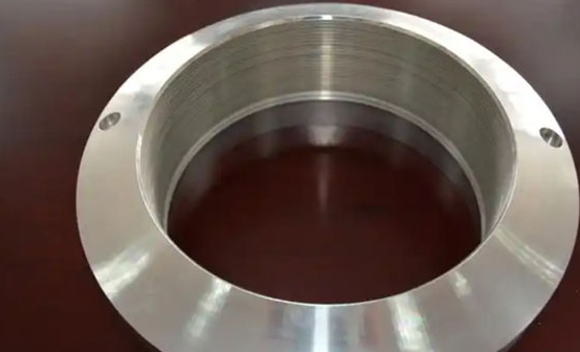
Modular Design: The sealing plate structure can be bent radially. The curved, fan-shaped sealing ring is clamped by a spring plate, facilitating disassembly and maintenance.
Installation accuracy requirements: Tooth tip thickness < 0.5mm, radial clearance must be precisely controlled above 0.25mm, and factors such as thermal expansion and vibration must be considered.
Performance advantages:
Low friction loss: Power consumption is reduced by 30%-50% compared to contact seals.
Long life and reliability: Wear-free design extends maintenance cycles to over 5 years.
Thermal expansion adaptability: Allows axial movement ±1mm, radial thermal expansion coefficient matching error < 0.05mm/℃.
Environmental characteristics: Suitable for sealing non-toxic and harmless gases; leakage rate can be controlled to < 1% through inflation/extraction design.
Application areas and typical scenarios: Widely used in power… Rotating machinery in industries such as petrochemicals and aerospace:
Steam turbines/gas turbines: Shaft end seals and interstage seals to reduce steam/gas leakage losses
Compressors/blowers: High-pressure gas seals to prevent interstage gas leakage
Pumps: Centrifugal pump shaft seals to adapt to high-temperature conditions
Special scenarios: High-reliability requirements such as nuclear reactor cooling systems and aerospace engines
Challenges and Development Trends
Existing Challenges
Leakage control limits: The theoretical minimum leakage rate is limited by the permeability effect, requiring breakthroughs through structural optimization.
Machining and assembly difficulty: Tooth tip precision requirements reach the μm level; assembly requires laser alignment.
Wear sensitivity: Tooth tip wear caused by abnormal operation significantly reduces sealing performance.
Innovative Development Directions
Imitation Biomimetic Structural Design: Drawing inspiration from the high flow resistance characteristics of ecological fishways, a double-sided interlaced labyrinth tooth structure was developed. The arc-shaped tooth design enhances eddy current dissipation, resulting in an annual carbon reduction of 62,650 tons for the 600MW unit.
Intelligent Monitoring System: Integrating temperature/vibration sensors enables real-time monitoring of the sealing status and predictive maintenance.
Material Innovation: Employing silicon carbide coatings and metal-ceramic composite materials improves high-temperature resistance and wear resistance.
Multi-Field Coupling Optimization: Optimizing the pressure/velocity field distribution through a combination of numerical simulation and experiments. For example, research on the influence of tooth inclination angle on flow velocity shows that the flow velocity at the tooth tip decreases by 40% when β=25°.
As a key technology for rotating machinery, mechanical seals demonstrate enormous potential in energy conservation and emission reduction. With breakthroughs in biomimetic structures and intelligent monitoring technologies, mechanical seals are developing towards lower leakage rates, easier maintenance, and wider adaptability to various operating conditions, continuously driving the upgrading of industrial equipment towards high efficiency, greenness, and intelligence, demonstrating significant technical and economic value under the ‘dual carbon’ target.