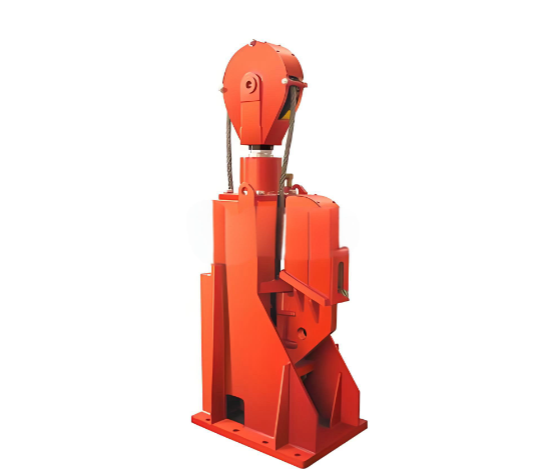
In oil well operations, wellhead tools are critical for ensuring both safety and operational efficiency. With the advancement of digital and intelligent technologies, traditional wellhead tools are gradually evolving into systems equipped with intelligent monitoring capabilities. By collecting real-time data such as pressure, torque, and displacement, intelligent monitoring technology not only supports decision-making but also provides early warnings of potential risks, significantly enhancing wellhead safety and reliability. This article provides an in-depth look at the core principles and applications of intelligent wellhead monitoring technology.

Real-Time Data Collection: Comprehensive Wellhead Monitoring
Intelligent wellhead tools are typically equipped with various sensors, including pressure sensors, torque sensors, displacement sensors, and temperature sensors. These sensors can collect key parameters in real time during operations and transmit them to a central monitoring system via wired or wireless networks.
The advantages of real-time data collection include:
Dynamic monitoring: Captures real-time changes in wellhead pressure, torque, and displacement, making it easier to detect anomalies.
Historical data comparison: Continuous data recording enables trend analysis and operational review, improving predictive capabilities.
Multi-point monitoring coverage: Combining multiple sensors provides comprehensive monitoring of all critical wellhead components, reducing blind spots.
This full-scale, real-time data collection is the foundation of intelligent wellhead management, providing reliable input for safety analysis and operational decisions.
Data Analysis and Early Warning: Enhancing Safety Management
The real-time data collected can be processed through intelligent analytics systems. These systems evaluate and predict the condition of wellhead tools using historical data, modeling algorithms, and safety thresholds.
Key functions include:
Anomaly alerts: The system can trigger immediate warnings when pressure, torque, or displacement exceeds set thresholds, prompting operators to take corrective action.
Trend prediction: Data trend analysis can detect potential equipment failures or wellhead hazards in advance.
Intelligent decision support: The system can generate operational recommendations, such as adjusting torque or scheduling maintenance, improving precision and safety.
Through real-time analysis and early warnings, operational teams can take proactive measures before problems occur, minimizing risk.
Application Cases: Demonstrating the Value of Intelligent Wellhead Tools
The advantages of intelligent monitoring technology are especially evident in deep wells, ultra-deep wells, and high-pressure wells. Examples include:
Preventing equipment overload: Real-time monitoring of torque and pressure helps prevent damage to slips or wellhead seals due to overloading.
Reducing downtime: Predictive maintenance reduces unexpected shutdowns and repair time, improving overall operational efficiency.
Enhancing operational safety: In high-temperature and high-pressure environments, intelligent monitoring detects abnormalities immediately, protecting personnel and equipment.
Practical applications show that intelligent monitoring systems not only improve safety but also provide clear economic and efficiency benefits.
Technological Development Trends
In the future, intelligent wellhead monitoring technology will move toward higher precision, lower latency, and stronger data processing capabilities. Integrating cloud computing, edge computing, and big data analytics will enable more automated and predictive wellhead management, further enhancing safety and efficiency. Additionally, wireless sensor networks and remote monitoring will make wellhead operations more flexible and reliable under complex conditions.
Conclusion
Intelligent monitoring technology for wellhead tools, through real-time data collection, intelligent analysis, and early warning functions, effectively improves the safety and reliability of oil well operations. For complex conditions such as deep wells and high-pressure wells, intelligent wellhead tools not only detect anomalies promptly and reduce the likelihood of accidents but also optimize operational processes and increase efficiency. As technology continues to advance, intelligent monitoring is expected to become a standard feature of wellhead tools, providing safer and more efficient operations for the oil and gas industry.