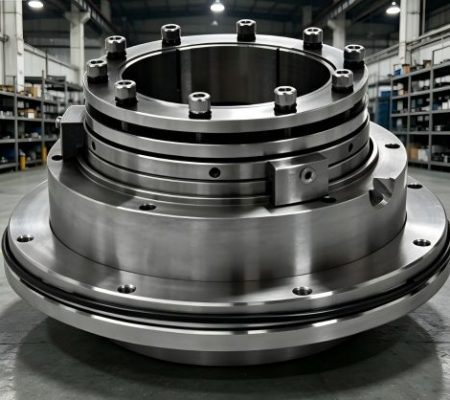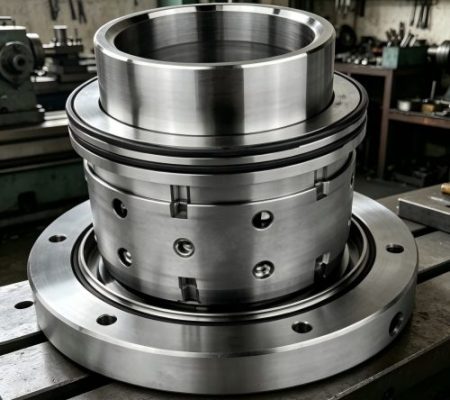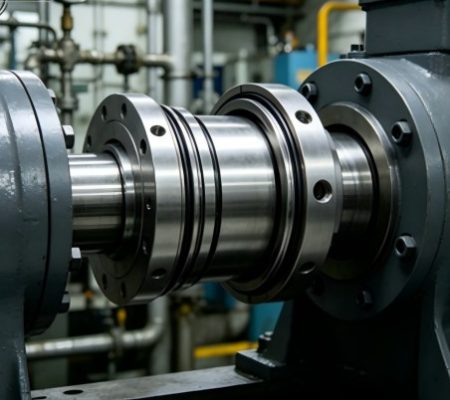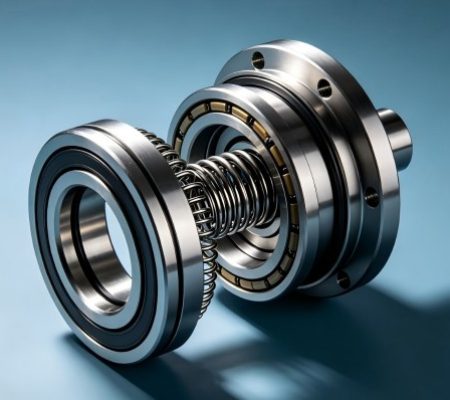
Retaining rings, though small in size, play an irreplaceable and crucial role in oil well operations, serving as the “precision locators” for downhole equipment. They primarily bear the responsibility of axial positioning, precisely limiting the position of downhole tool components and effectively preventing displacement, thus providing a solid guarantee for the stability of downhole operations. Whether it’s pumping units, screw pumps, or other downhole equipment, or complex hydraulic systems, retaining rings are widely used, silently and steadfastly ensuring that each component operates stably in its designated position, making them unsung heroes in the smooth operation of oil wells.
The Core Role of Retaining Rings in Downhole Operations
In oil well operations, downhole tools often operate in harsh environments with high pressure and high vibration, making their components highly susceptible to axial displacement. Retaining rings, installed in shaft grooves or bore grooves, act like precise “locators” and “limiters,” effectively restricting the displacement range of pistons, valve cores, and connecting components, preventing component dislocation or failure. Although retaining rings may seem insignificant in a large downhole tool system, their existence directly affects the operational stability and safety of the entire system, making them a crucial small component ensuring smooth oil well operations.
Structural Forms and Applicable Environments
Oil well retaining rings are typically made of spring steel or alloy steel. These materials give the retaining rings good elasticity and fatigue resistance, enabling them to withstand the long-term high temperatures, high pressures, and frequent impact loads encountered during downhole operations. Depending on the installation location, retaining rings are mainly divided into two structural forms: shaft retaining rings and bore retaining rings. Shaft retaining rings are primarily used for positioning and limiting shaft components, while bore retaining rings are suitable for installation scenarios involving bore components. Their compact design and reliable installation make them widely used in various downhole equipment such as hydraulic tools, packers, and fishing tools, providing strong support for the stable operation of different types of equipment.
Precautions for Downhole Operators Using Retaining Rings
During field operations, downhole operators must carefully select retaining rings with precise dimensions and strength matching according to the tool specifications. If the retaining ring specifications do not match the tool, it may cause the retaining ring to malfunction, or even, in extreme cases, trigger ultimate failure, resulting in serious consequences. Before installing retaining rings, operators must carefully inspect them for deformation, cracks, or fatigue damage to ensure that their elastic modulus and meshing force meet operational requirements. Only by using retaining rings correctly can the service life of downhole tools be effectively extended, the risk of component failure during operations reduced, and the safety and efficiency of oil well operations ensured.