Mechanical seals are crucial sealing structures in rotating machinery such as pumps, compressors, and agitators. The end-face friction pair formed by the rotating and stationary rings directly determines the stability of the seal performance. During machine operation, “rotating or stationary ring fracture” is a relatively serious failure mode. Once it occurs, it usually means that the equipment must be shut down for maintenance, and may even be accompanied by shaft damage or media leakage.
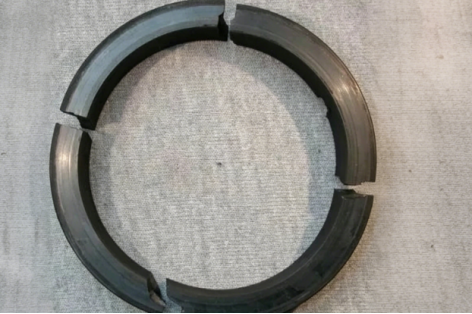
Why do the rotating and stationary rings fracture?
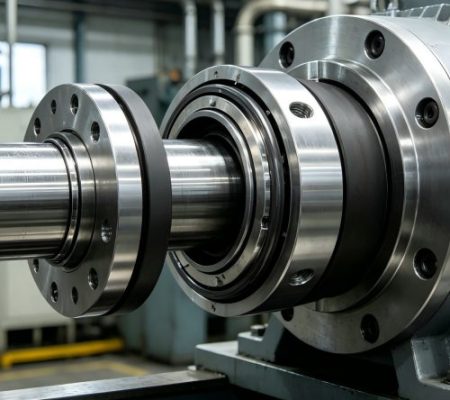
The rotating ring of a mechanical seal is mounted on a rotating shaft and rotates with the shaft; the stationary ring is fixed in the sealing cavity and does not rotate. The two form a sealing surface through extremely high-precision end-face contact, relying on a liquid film or gas film to maintain a micron-level gap, achieving leak-free or low-leakage operation. “Fracture” is not simply wear, but refers to structural damage to the rotating or stationary ring under stress, thermal shock, or mechanical impact, such as edge chipping, crack propagation, or even complete breakage. Essentially, the dynamic and static rings are high-precision brittle or semi-brittle material components (such as silicon carbide, tungsten carbide, and graphite composites). They possess high hardness but limited impact resistance, making them prone to fracture under abnormal stress or improper installation.
Fracture is often a “chain reaction” problem
Mechanical seal dynamic and static ring fractures are usually not caused by a single factor, but rather by a combination of problems during installation, startup, operation, and shutdown.
- Stress Introduction During Installation
During installation, uneven stress on the dynamic and static rings or improper use of assembly tools, such as hammering the end faces or forcibly pressing into the sealing cavity, can create microcracks within the material. These cracks may not initially appear but will gradually expand during operation, eventually leading to fracture.
- Dry Friction and Impact During Startup
If a stable liquid film is not established during equipment startup, the dynamic and static rings will be in a state of dry friction for a short period. Dry friction generates localized high temperatures and instantaneous impact forces, especially in hard materials (such as silicon carbide), making them highly susceptible to thermal cracking or edge chipping.
- Vibration and Eccentricity During Operation
If vibration or coaxiality deviation exists in the shaft system, the dynamic and static rings will experience periodic uneven loading, leading to excessively high local contact pressure. This “non-uniform stress” will gradually expand cracks during long-term operation, eventually causing fracture.
- Shutdown and Operating Condition Fluctuations
Frequent start-ups and shutdowns or drastic changes in operating conditions (such as sudden pressure changes or rapid temperature rises and falls) will cause uneven thermal expansion and contraction of materials, especially in brittle materials, easily leading to thermal stress cracks.
The True Technical Causes of Fracture
The fracture of the dynamic and static rings is essentially the result of the combined effects of “mechanical stress + thermal stress + installation errors + material defects.”
- Excessive End-Face Specific Pressure Leading to Structural Damage
Mechanical seals require a certain specific pressure to ensure sealing, but if the spring force is too large or the media pressure is too strong, the end faces of the dynamic and static rings will bear loads exceeding the design limits. For hard and brittle materials such as silicon carbide and tungsten carbide, this overload will directly lead to the propagation of microcracks or even instantaneous fracture.
- Thermal Shock Induces Crack Propagation
Under high-speed friction or insufficient lubrication, the moving and stationary rings can generate localized high temperatures. Uneven cooling can create significant temperature differences, leading to thermal stress concentration within the material, especially at the edges of the ring structure where radial cracks are most likely to appear.
- Vibration Causes Periodic Impact Loads
Shaft vibration causes the moving ring to produce minute vibrations during rotation. Each contact is a micro-impact load. Over time, cracks will propagate along stress concentration areas, eventually leading to fracture.
- Impurities Cause Localized Damage
If the medium contains hard particles (such as sand or metal shavings), it will create “point contact impacts” between the moving and stationary rings, causing localized chipping or scratches. This damage can rapidly propagate into crack initiation points.
- Machining and Assembly Error Amplification Effect
If the machining accuracy of the moving and stationary rings is insufficient, such as flatness deviations or poor edge chamfering, localized stress concentration areas will form during high-speed operation, causing the material to fail first at these weak points.
Why does the material determine whether a material is prone to fracture?
The choice of materials for the dynamic and static rings is a core factor affecting fracture risk, with significant differences in impact resistance, toughness, and heat resistance among different materials.
- Silicon Carbide (SiC)
Silicon carbide has extremely high hardness and strong corrosion resistance, but it is a typical brittle material, highly sensitive to impact and thermal stress. It is prone to chipping under dry or vibrating conditions, therefore good lubrication and stable operating conditions must be ensured.
- Tungsten Carbide (WC)
Tungsten carbide has higher strength than silicon carbide and better impact resistance, but it is still a high-hardness material, and crack propagation may occur under extreme vibration or off-center loading conditions.
- Graphite and Resin-Impregnated Graphite
Graphite materials have good self-lubricating properties and thermal shock resistance, good toughness, and are not prone to sudden fracture, but their wear resistance and corrosion resistance are relatively weak, making them suitable for medium-to-low pressure or well-lubricated conditions.
- Influence of Auxiliary Materials
Even if the dynamic and static ring materials have good performance, an inappropriate pairing (such as a hard-on-hard combination) can increase the impact risk. A combination of “hard + soft” or “hard + medium-toughness materials” is typically used to reduce the probability of fracture.
Common Problems
Why do the dynamic and stationary rings of mechanical seals “suddenly break”? Is it a quality issue?
Many “sudden fractures” observed in the field are not actually the result of instantaneous material failure, but rather the result of a long-term cumulative process. Microcracks often already exist inside the dynamic and stationary rings, but they are not apparent in the early stages of operation. When the equipment is started up, experiences increased vibration, or experiences pressure fluctuations, these microcracks rapidly expand, eventually manifesting as “sudden rupture.” In addition, many cases are not product quality issues, but rather problems with operating conditions or installation, such as dry friction startup, shaft eccentricity, particulate media impact, or excessively high specific pressure settings. These factors significantly reduce the material’s load-bearing capacity, causing the seal to fail prematurely.
The dynamic and stationary rings of a mechanical seal may appear to be just two “rings,” but they are actually critical components that operate for extended periods in high-speed, high-pressure, and precisely fitted environments. Once fracture occurs, it often means that the equipment has already undergone a period of unstable operation, rather than a sudden accident. Many people easily attribute breakage simply to “poor quality,” but in reality, most problems are related to usage conditions, such as whether there was hammering during installation, dry friction during startup, vibration during operation, particle presence in the medium, and stable cooling. These factors all affect the stress state of the material. The materials of the dynamic and static rings are usually quite hard and wear-resistant, but “hard” does not equal “impact-resistant.” They are more like precision pressure-bearing structures that need to operate under stable conditions. Once the operating conditions fluctuate greatly or the operation is not standardized, cracks will begin to appear at a weak point, then gradually propagate, eventually leading to breakage.