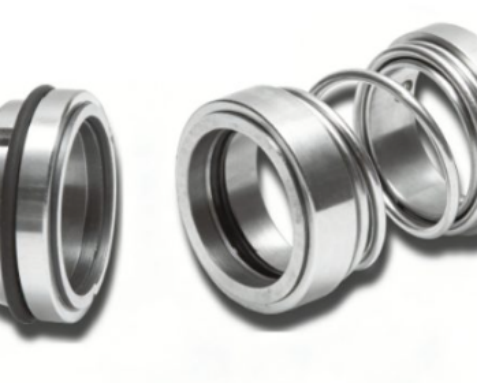
As one of the most critical dynamic sealing components in pump equipment, the mechanical seal’s operating state is not “universal and unchanging,” but rather highly coupled with the pump’s structure, operating mode, and media characteristics. Different pump types (such as centrifugal pumps, axial flow pumps, mixed flow pumps, multistage pumps, and canned motor pumps) differ significantly in axial force, radial force, vibration characteristics, and pressure distribution. These differences directly affect the stress state and lifespan of the mechanical seal.
Why does the pump type affect the mechanical seal?
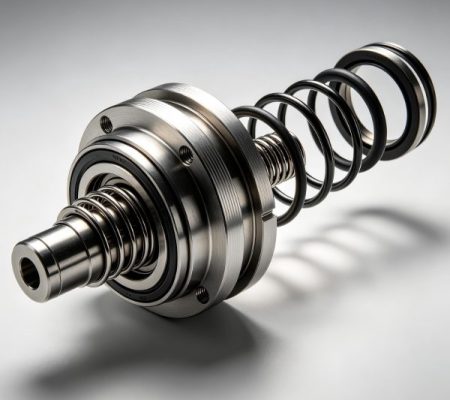
The mechanical seal is installed between the pump shaft and the pump body to prevent media leakage from the rotating shaft. It relies on the precise fit of the dynamic and static ring end faces to form a stable liquid or gas film within a micron-level gap. The structure of different pump types determines the different operating states of the shaft system, and the mechanical seal, being installed on this shaft system, is directly affected. For example:
- Centrifugal pump: Primarily radial force, high speed
- Axial flow pump: Primarily axial force, large flow rate but low pressure
- Multistage pump: High pressure superposition, complex axial force
- High temperature or special process pump: Significant thermal deformation
These differences alter the stress conditions, lubrication status, and vibration environment of the mechanical seal, thus affecting its lifespan and stability.
How different pump types affect seal selection and installation
Different pump types affect mechanical seals not only during operation but also throughout the selection, installation, and commissioning processes.
- Matching and Adjustment in the Selection Stage
Before selecting a mechanical seal, the seal structure must be determined based on the pump type. For example, centrifugal pumps typically use single-end or double-end mechanical seals, while multistage high-pressure pumps may require a balanced seal structure to reduce the end-face specific pressure. Axial flow pumps, due to their larger axial force, often require a stronger axial compensation design. Ignoring pump type differences and directly selecting a general-purpose seal can easily lead to specific pressure mismatch or insufficient compensation.
- Structural Adaptation During Installation
Different pumps have different shaft diameters, sealing cavity structures, and installation spaces, resulting in variations in the installation position and compression of the mechanical seal. For example, high-pressure multistage pumps have longer sealing cavities, requiring more precise axial positioning; while vertical pumps have higher requirements for gravity direction compensation. During installation, the spring compression and positioning dimensions must be adjusted according to the pump type; otherwise, the end face fit will be affected.
- Start-up and Operation Matching Adjustment
Different pump types have significantly different starting characteristics. Centrifugal pumps start more smoothly, while multistage or high-lift pumps experience larger pressure changes during startup, directly affecting the instantaneous load on the mechanical seal. Therefore, during operation, the pressure rise rate and load changes need to be controlled according to the pump type.
- Maintenance Cycle and Inspection Method Adjustment
Different pump types have different mechanical seal wear patterns. For example, high-speed centrifugal pumps are more prone to end face thermal wear, while axial flow pumps are more prone to vibration-induced uneven wear. Therefore, the maintenance cycle and inspection focus should also be differentiated.
How Pump Type Changes the Stress State of the Seal
The impact of pump type differences on mechanical seals essentially lies in the “change in the mechanical environment.”
- Different Distributions of Axial and Radial Forces
Centrifugal pumps primarily bear radial forces, making their mechanical seals susceptible to slight eccentricity. Axial flow pumps, on the other hand, are dominated by axial forces, easily leading to changes in the specific pressure at the end faces of the dynamic and static rings. Multistage pumps experience complex superimposed axial forces simultaneously, resulting in unstable seal stress. These force variations directly affect the quality of end face contact.
- Differences in Vibration Characteristics Affect Seal Stability
Different pump types have different vibration frequencies. Centrifugal pumps mostly exhibit high-frequency, low-amplitude vibration, while large axial flow pumps may experience low-frequency, high-amplitude vibration. Mechanical seals are extremely sensitive to vibration; once the vibration exceeds the design range, it can cause the dynamic ring to jump, leading to uneven end face wear or even edge chipping.
- Media Flow Pattern Affects Lubricating Film Formation
Different pump types result in different media flow patterns. For example, centrifugal pumps have high internal flow velocities, making it easy to form a stable liquid film; while axial flow pumps have more complex flow fields, making them prone to localized cavitation or turbulence, both of which affect the lubrication state of the mechanical seal face. If the lubrication film is unstable, dry friction or localized high temperatures may occur.
- Pressure Gradient Changes Affect Specific Pressure Stability
Multi-stage pumps, due to progressively increasing pressure, subject the sealing face to more complex pressure changes. If a balanced mechanical seal structure is not used, excessively high or fluctuating specific pressures can easily occur, accelerating wear.
- Thermal Deformation Has Different Effects on Different Pump Types
High-temperature pumps (such as hot oil pumps) have different heat distributions and shaft thermal expansion directions in different pump types. If the pump design does not adequately consider thermal compensation, the mechanical seal may shift during operation.
Different Pump Types Require Different Sealing Materials
Different pump types have different requirements for mechanical seal materials, and a comprehensive selection based on operating conditions is necessary.
- Selection of Materials for O-rings and Static Rings
In centrifugal pumps, silicon carbide or tungsten carbide are commonly used, suitable for high speeds and relatively stable operating conditions. In axial flow pumps, due to greater vibration, a combination of materials with better toughness is more suitable, such as tungsten carbide with graphite. In multistage high-pressure pumps, high-strength silicon carbide or reinforced composite materials are preferred to withstand high pressure loads.
- Compatibility of Auxiliary Seal Materials
Different pump types have significantly different operating temperatures and media, so the selection of O-ring materials must be matched. For example, high-temperature centrifugal pumps typically use perfluororubber, while ordinary room-temperature pumps can use fluororubber. Axial flow pumps, due to greater vibration, require consideration of the material’s extrusion resistance.
- Selection of Materials for Metal Structural Components
Different pump types result in different stress states, therefore the materials for metal components such as springs and bushings must also be adjusted. High-pressure multistage pumps typically use high-strength stainless steel or alloy steel, while ordinary centrifugal pumps can use standard stainless steel.
- Media Compatibility Material Optimization
If the pump is used for corrosive or particulate media, its wear and corrosion resistance must be improved, for example, by using surface-strengthened or ceramic-coated materials, to avoid exacerbating localized erosion due to different flow patterns.
Frequently Asked Questions
Can all pumps use the same type of mechanical seal?
The answer is no. Although mechanical seals may look similar, the operating conditions of different pump types vary greatly. Using a uniform model can easily lead to mismatch problems. For example, using a standard centrifugal pump seal in a high-pressure multistage pump may cause leakage due to insufficient specific pressure; while using an overly rigid seal in a high-vibration axial flow pump may result in end-face cracking. Therefore, mechanical seals are not “universal components” but rather precision parts that require system matching based on the pump type, operating conditions, and media.
The operating environment of mechanical seals varies greatly depending on the type of pump. Although they all appear to be “a seal mounted on a shaft,” the stress patterns, vibration states, and pressure changes during operation of centrifugal pumps, axial flow pumps, and multistage pumps are different, all of which directly affect the performance of the mechanical seal. Mechanical seals are not standard parts that can be installed and used immediately; they are system components that must be designed in conjunction with the type of pump. Choosing a mismatched seal for the pump type is like putting the same tires on a car designed for different road conditions—it will either wear out quickly or result in unstable operation. The correct approach is to first determine the pump type, then select the appropriate mechanical seal structure and materials based on the pump’s speed, pressure, and media characteristics. Simultaneously, adjust the compression and alignment accuracy during installation. As long as these conditions are properly matched, the mechanical seal can operate stably for a long period.