In industrial production systems, high-pressure vessels are widely used in chemical, petroleum, energy, pharmaceutical, and new materials processing industries. Their primary function is to safely store or react media under high-pressure environments. Due to the high internal pressure, leaks can not only affect production efficiency but also cause equipment damage or even safety accidents. Therefore, the “sealing structure” is one of the most critical core elements in high-pressure vessel design. The sealing structure, through mechanical design, material matching, and clamping methods, ensures that the vessel’s connections maintain a good airtight state even under high pressure, high temperature, or corrosive environments. Common sealing methods include gasket seals, metal ring seals, self-tightening seals, and O-ring seals. These structures each have their own characteristics and different applications in industry.
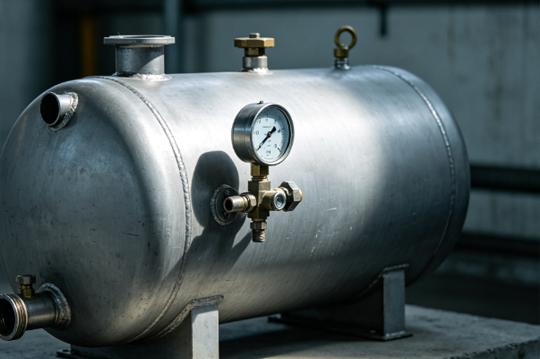
Common Sealing Methods for High-Pressure Vessels
· Flat Gasket Seal Structure (Basic Sealing Solution)
The flat gasket seal is the most common type, typically used for connections in high-pressure vessels operating at medium to low pressure or medium temperature. It achieves a sealing effect by inserting a flexible gasket material, such as a graphite gasket, PTFE gasket, or metal-clad gasket, between the flanges under bolt preload. The advantages of this structure are low cost, easy installation, and simple maintenance. However, its disadvantage is its sensitivity to installation accuracy; uneven stress can easily lead to leakage. Therefore, it is more suitable for general industrial equipment than for extreme high-pressure environments.
· Metal Ring Connection Sealing Structure (High-Pressure Dedicated Solution) Metal ring seals are commonly used in high-pressure reactors or high-pressure pipeline systems, such as the RTJ structure. This structure achieves a tight seal by allowing the metal ring to undergo slight plastic deformation under high pressure. Its advantages include extremely high pressure resistance, making it suitable for extremely high pressure and temperature conditions. However, it requires high machining precision and is relatively expensive. Since metal seals are not reusable, there are certain limitations in disassembly and maintenance.
· Self-Tightening Sealing Structure (Pressure-Enhanced Seal)
A self-tightening seal is a structure that enhances the sealing effect using internal pressure. When the internal pressure of the container increases, the seal is further compressed, thereby improving sealing performance. This structure is often used in high-pressure reaction equipment or ultra-high-pressure experimental devices. Its advantage is that the higher the pressure, the more reliable the seal. However, it is complex to design and requires high material strength and structural calculations.
· O-ring and Elastic Composite Sealing Structure (Auxiliary Seal)
O-ring seals are mostly used in medium- and low-pressure or auxiliary sealing systems. They achieve a sealing effect through the compression of rubber or elastic materials. They are easy to install and have good sealing performance, but they are prone to aging in high-temperature or highly corrosive environments. Therefore, they are usually used as auxiliary seals or in combination with other structures to improve overall reliability.
Applicable Conditions of Different Sealing Structures
There are significant differences between different high-pressure vessel sealing structures. Flat gasket seals have the lowest cost and wide applicability, but their reliability is relatively weak under high-pressure conditions. Metal ring seals perform best in extreme high-pressure environments, but maintenance costs are high and they are not reusable. Self-tightening seals perform better at higher pressures, exhibiting performance that increases with operating conditions. O-ring seals are more suited for auxiliary and low-pressure applications. It can be observed that industrial production often does not use a single sealing method, but rather combines multiple structures. For example, a metal ring may be used for the main high-pressure seal, while an O-ring may be used for auxiliary positions, forming a dual-protection system. This combination effectively improves overall safety and reduces the risk of failure of a single structure.
Frequently Asked Questions about High-Pressure Vessel Seals
Q: Must high-pressure vessels always use metal seals?
Not necessarily. Metal seals are only required under ultra-high pressure or extreme conditions. For general industrial pressures, gaskets or composite sealing structures can be used.
Q: Why are gasket seals prone to leakage?
The main reason is that the gasket material can deform or age due to pressure, temperature, or insufficient bolt preload. Uneven installation can also lead to localized failure.
Q: Are self-tightening seals safer?
Under high-pressure conditions, self-tightening seals are indeed more reliable because the seal tightens as pressure increases. However, they require higher design and material standards and are not suitable for low-cost equipment.
Applications of Different Sealing Structures
In high-pressure reactors in the chemical industry, metal ring seals are typically used to ensure the safety of the reaction process, such as in high-temperature catalytic reaction equipment. In oil pipelines, gasket seals are often used in conjunction with flange connections for easy maintenance and replacement. In laboratory ultra-high-pressure equipment, self-tightening seals are widely used, as they automatically enhance the sealing effect during pressure changes. In auxiliary pipelines or testing equipment, O-ring seals are widely used due to their simple installation and low cost.
The sealing structure of high-pressure vessels is a critical component for safe operation, and its selection must be based on a comprehensive consideration of pressure rating, media characteristics, and operating environment. From basic gasket seals to high-end metal ring seals, and then to self-tightening structures and O-ring-assisted seals, each structure has its unique application value and limitations. A single sealing method often cannot meet all requirements; therefore, a reasonable combination of methods has become the mainstream design approach. The sealing structure is not merely a mechanical connection issue, but a comprehensive reflection of materials science, structural design, and engineering experience.