In the field of oil and gas exploration and development, drilling equipment, as a core operational tool, directly impacts project progress and costs. However, drilling equipment, exposed to high temperatures, high pressures, and highly corrosive environments for extended periods, is highly susceptible to performance degradation and even safety hazards due to issues such as mud residue, oil buildup, and metal corrosion. Therefore, developing a scientific and efficient drilling equipment cleaning solution is not only crucial for ensuring operational continuity but also an important measure to extend equipment lifespan and reduce maintenance costs. This article will explore a systematic solution for drilling equipment cleaning from four dimensions: the necessity of cleaning, technical approaches, environmental requirements, and management optimization.
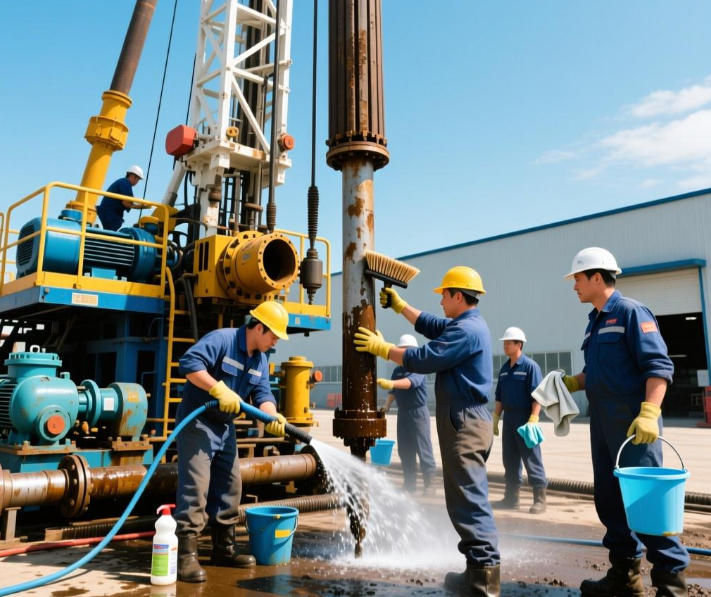
The Core Value of Drilling Equipment Cleaning: Dual Improvement in Efficiency and Lifespan
During drilling operations, the mixture of mud, drill cuttings, lubricating oil, and other contaminants adhering to the equipment surface forms a stubborn layer of dirt. This dirt not only increases frictional resistance, leading to higher energy consumption, but can also clog cooling systems, causing localized overheating and accelerating mechanical wear. For example, hardened mud at drill pipe joints significantly reduces torque transmission efficiency and can even cause stuck drill bits; while oil buildup on engine cooling fins can lead to overheating shutdowns and project delays. Regular cleaning can restore equipment to its original performance and reduce unplanned downtime. Statistics show that systematic cleaning can improve overall equipment efficiency by 15%-20%.
Furthermore, corrosive substances in the dirt (such as sulfides and chlorides) accelerate the electrochemical corrosion of metal components, shortening equipment lifespan. Taking the hydraulic end of a drilling pump as an example, if solid particles in the mud are not removed in time, they will embed into the metal surface under high pressure, forming microcracks and ultimately leading to fatigue fracture. Regular cleaning can effectively interrupt the corrosion chain, and combined with rust prevention treatment, can extend the lifespan of critical components by more than 30%.
Technical Approach: A Diversified Solution from Physical Cleaning to Chemical Synergy
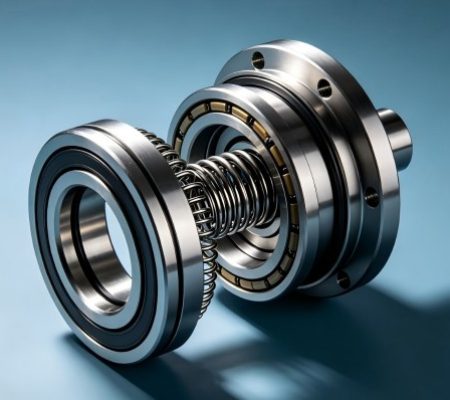
Differentiated cleaning technologies are required for different parts of drilling equipment due to their varying dirt characteristics. For loose surface dirt, high-pressure water jet cleaning is the preferred solution. By adjusting pressure and flow rate, it allows for flexible switching from gentle rinsing to powerful abrasion, making it particularly suitable for cleaning large structural components such as drill rig bases and mud tanks. For precision components (such as hydraulic valve bodies and bearings), ultrasonic cleaning technology is required. Utilizing the cavitation effect generated by high-frequency vibration, it thoroughly removes micron-sized dirt without damaging the surface.
Chemical cleaning targets stubborn oil stains and rust layers. For example, alkaline cleaning agents can neutralize acidic dirt and emulsify and decompose grease; while acidic rust removers can quickly dissolve metal oxides and restore surface smoothness. It is important to note that chemical cleaning requires strict control of concentration and contact time to avoid corrosion of the substrate. In recent years, the application of biodegradable cleaning agents has become increasingly widespread. Using plant extracts as raw materials, they significantly reduce negative environmental impacts while maintaining high cleaning efficiency.
Environmental Compliance: Wastewater Treatment and Green Transition
Wastewater generated from drilling equipment cleaning often contains heavy metals and petroleum pollutants. Direct discharge will severely damage soil and aquatic ecosystems. Therefore, a comprehensive wastewater treatment system is essential for effective cleaning solutions. Physical separation technologies (such as sedimentation and filtration) can remove large suspended particles; chemical precipitation methods use reagents to form insoluble precipitates of heavy metal ions; and membrane separation technology can achieve efficient oil-water separation and recycle clean water. Furthermore, using closed-loop cleaning equipment can reduce wastewater generation, and combined with a recycling system, water consumption can be reduced by more than 50%.
Management Optimization: From Passive Maintenance to Proactive Prevention
Establishing a closed-loop management system of “cleaning-detection-maintenance” is crucial for improving cleaning effectiveness. By introducing IoT sensors to monitor the level of dirt accumulation in key equipment components in real time, and combining this with big data analysis to predict cleaning cycles, a smart transformation from “scheduled cleaning” to “on-demand cleaning” can be achieved. Simultaneously, developing standardized cleaning operating procedures (SOPs) clarifies the cleaning frequency, methods, and acceptance criteria for different equipment, ensuring controllable cleaning quality. In addition, strengthening operator training to improve their awareness of the hazards of dirt and their cleaning skills is also a vital aspect of ensuring the successful implementation of the solution.Drilling equipment cleaning has evolved from a traditional maintenance method into a strategic initiative to improve operational efficiency, ensure safe production, and practice green development. Through technological iteration, environmental upgrades, and management optimization, companies can not only significantly reduce their total lifecycle costs but also build a differentiated advantage in industry competition. In the future, with the deep integration of intelligent cleaning technology and the circular economy model, the drilling equipment cleaning field will usher in even broader development prospects.