In the oil and gas extraction sector, drilling equipment, as core equipment, is exposed to high temperatures, high pressures, highly corrosive media, and complex geological environments for extended periods. Its corrosion resistance directly impacts operational efficiency, equipment lifespan, and production safety. From the wellhead to the bottom, from the drill pipe to the mud pump, corrosion at every stage can lead to equipment failure, downtime, and even safety accidents. Therefore, corrosion prevention technology for drilling equipment is not only a breakthrough in materials science but also a crucial line of defense in engineering practice, its importance becoming increasingly prominent with the advancement of deep-sea, ultra-deep, and unconventional oil and gas development.
The corrosive environment of drilling equipment presents multiple challenges. Downhole temperatures can reach over 200°C, pressures exceed 100 MPa, and highly corrosive media such as hydrogen sulfide (H₂S), carbon dioxide (CO₂), and chloride ions (Cl⁻) are present. For example, H₂S reacts with metals to form sulfide stress corrosion cracking (SSCC), CO₂ dissolves in water to form carbonic acid, inducing pitting and uniform corrosion, while high concentrations of Cl⁻ can damage the passivation film on the metal surface, accelerating localized corrosion. Furthermore, the scouring effect of drilling mud, the vibration and friction of drill strings, and the alternating wet and dry environments during drilling further exacerbate the physical and chemical damage to the equipment. The combined effect of these factors means that drilling equipment can experience severe corrosion after only a few months of service, potentially leading to catastrophic consequences such as drill pipe breakage and downhole tool failure.
To address such harsh environments, drilling equipment corrosion protection technology has developed a three-dimensional protection system encompassing material selection, surface protection, and process optimization. At the material level, high-alloy stainless steel and nickel-based alloys have become the mainstream choices. For example, super 13Cr martensitic stainless steel, through optimized chromium (Cr) and molybdenum (Mo) content, exhibits excellent resistance to SSCC in H₂S-containing environments; duplex stainless steels (such as 2205 and 2507) combine the advantages of austenitic and ferritic materials, possessing both high strength and resistance to chloride ion corrosion; while nickel-based alloys (such as Inconel 825), with their stable passivation film, have become the preferred choice for high-temperature, high-pressure CO₂ environments. These materials, by adjusting their chemical composition and microstructure, fundamentally improve the corrosion resistance of the equipment.
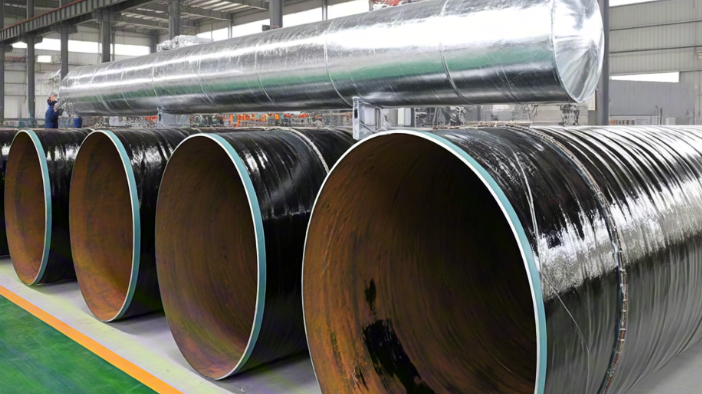
Surface protection technologies construct a protective layer on metal surfaces through physical or chemical means, blocking contact with corrosive media. Thermal spraying technology utilizes plasma or arc spraying to melt metal powders such as aluminum and zinc, or ceramic powders, and deposit them at high speed onto the equipment surface, forming a dense coating. For example, spraying aluminum-based alloys onto drill pipe joints can effectively resist H₂S corrosion; while ceramic coatings (such as alumina and zirconium oxide) are suitable for high-temperature, wear-resistant applications. Electroplating and electroless plating technologies deposit corrosion-resistant metal layers such as nickel and chromium on equipment surfaces through electrochemical or chemical reduction reactions. Electroless nickel-phosphorus alloy plating, due to its uniformity and strong adhesion, is widely used in precision components such as drills and valves. Furthermore, the combined use of organic coatings (such as epoxy resin and polyurethane) and inorganic coatings (such as glass flakes) further enhances the isolation effect against acid, alkali, and salt media.
Process optimization reduces corrosion risks from the design stage. For example, internally coated drill pipes are used, with corrosion-resistant materials sprayed onto the inner wall of the pipe to reduce the erosion and corrosion caused by drilling mud. Optimized drilling mud formulations, such as by adding corrosion inhibitors (e.g., imidazoline) and oxygen scavengers, suppress electrochemical corrosion reactions. Sealed structures are employed at equipment connections to prevent corrosive media from seeping into gaps. These measures, along with material selection and surface protection, create a synergistic effect, constructing a corrosion barrier throughout the entire lifecycle.
From deep-sea drilling platforms to shale gas fracturing units, drilling equipment corrosion protection technology is continuously evolving as oil and gas development extends to extreme environments. Through the deep integration of material innovation, surface engineering, and process optimization, modern drilling equipment can now operate stably for years under harsh conditions with corrosion rates below 0.1 mm/year, significantly reducing lifecycle costs and ensuring the safety and sustainability of energy extraction. In the future, with the introduction of new technologies such as nano-coatings and intelligent monitoring, drilling equipment corrosion protection will enter a more efficient, precise, and intelligent era, laying a solid foundation for global energy supply.