In the oil drilling industry, equipment storage management is a core element for ensuring operational continuity and controlling costs and risks. From drill pipes and drill bits to mud pumps and power systems, the storage status of each piece of equipment directly impacts drilling efficiency and safe production. However, traditional storage management models have long faced pain points such as information lag, low space utilization, and uncontrollable safety risks, urgently requiring breakthroughs through digitalization and intelligent methods. This article will explore optimization paths for oil drilling equipment storage management based on industry practices.
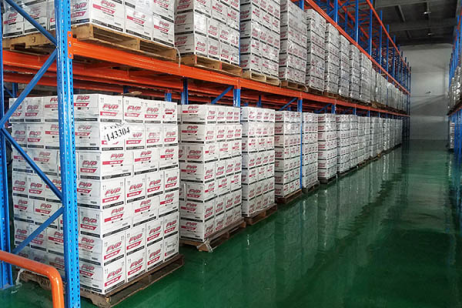
Traditional oil drilling equipment storage management generally relies on manual registration and paper documents, leading to low information transmission efficiency. For example, a large oil equipment processing company once experienced a 15% discrepancy between inventory data and actual inventory due to manual inventory errors, causing production delays. Furthermore, the lack of scientific planning in warehouse layout and the chaotic stacking of equipment not only reduce space utilization but also increase handling costs and safety hazards. More seriously, safety supervision relies on manual inspections, making it difficult to monitor equipment status in real time. One oilfield once suffered an environmental pollution accident with losses exceeding ten million yuan due to the failure to promptly detect a storage tank leak.
Digital transformation is key to overcoming the challenges of traditional warehouse management. Taking a petroleum equipment company in Sichuan as an example, after introducing the Jingcheng EAS-WMS warehouse material management system, it achieved three major breakthroughs:
Intelligent Location Management: Through barcode technology, the system automatically matches equipment with storage locations. Scanning the barcode upon entry displays available storage locations, and upon exit, it automatically recommends the optimal location based on the “first-in, first-out” principle, improving inventory turnover efficiency by 40%.
Real-time Inventory Monitoring: The system synchronizes with ERP data, increasing inventory accuracy from 85% to 99%, avoiding production stoppages due to stockouts. For example, in a drilling project, the system provided an early warning of insufficient drill bit inventory, allowing for timely resource allocation and reducing downtime by 26 hours.
Risk Warning Mechanism: Integrating temperature and humidity sensors and gas detectors, the system monitors tank pressure, liquid level, and environmental parameters in real time, automatically triggering alarms in case of anomalies. After implementing this system, an oilfield reduced its leakage accident rate by 35%, saving over 5 million yuan in safety losses annually.
Optimizing warehouse processes requires data support. For example, by introducing RFID technology, one company reduced equipment inbound/outbound time from 30 minutes per batch to 5 minutes, and decreased the human error rate by 80%. Simultaneously, the system supports multi-dimensional inventory analysis, generating dynamic reports based on equipment type, usage frequency, and maintenance cycle, helping managers accurately formulate procurement and allocation strategies. A drilling platform, by analyzing historical data, optimized its spare parts inventory structure, reducing redundant inventory by 30% and freeing up over 20 million yuan in working capital.
Safety management of oil equipment storage needs to be integrated throughout the entire process. On the one hand, risk control is strengthened through digital means: for example, the system automatically generates equipment maintenance plans, records data from each maintenance, and forms equipment health records; after implementation, one company saw a 22% reduction in equipment failure rate. On the other hand, strict adherence to regulations such as the “Regulations on the Safety Management of Hazardous Chemicals” is ensured by using the system to provide license expiration reminders and electronically archive safety records. An oilfield successfully passed a government special inspection and avoided the risk of fines by automatically generating environmental monitoring reports through the system.
With technological iteration, oil drilling equipment storage management is moving towards a higher level of intelligence. For example, AI algorithms can predict equipment lifespan and plan replacement cycles in advance; drone inspections replace manual inventory checks, improving efficiency and reducing risks; blockchain technology enables full lifecycle traceability of equipment, enhancing supply chain transparency. An international oil company has piloted a “digital twin” warehousing system, using virtual modeling to simulate the equipment storage environment and optimizing space utilization by 60%, becoming an industry benchmark.Optimizing oil drilling equipment storage management is not only a technological upgrade but also an essential path for industry transformation. From barcode systems in Sichuan enterprises to digital twins in the hands of international giants, practice has proven that digitalization and intelligentization can significantly improve storage efficiency, reduce costs, enhance security, and create long-term value for enterprises.