In resource exploration, geological surveys, and engineering construction, drilling rigs are core equipment, and their performance directly determines operational efficiency and cost. Currently, the mainstream hydraulic and electric drilling rigs on the market differ significantly in speed regulation, energy consumption control, and environmental adaptability due to differences in power sources and transmission methods. This article will compare them from three dimensions: technical principles, core performance, and application scenarios, providing a scientific basis for equipment selection.
Power Transmission: The “Rigidity and Flexibility” of Hydraulics vs. the “Precise Control” of Electricity
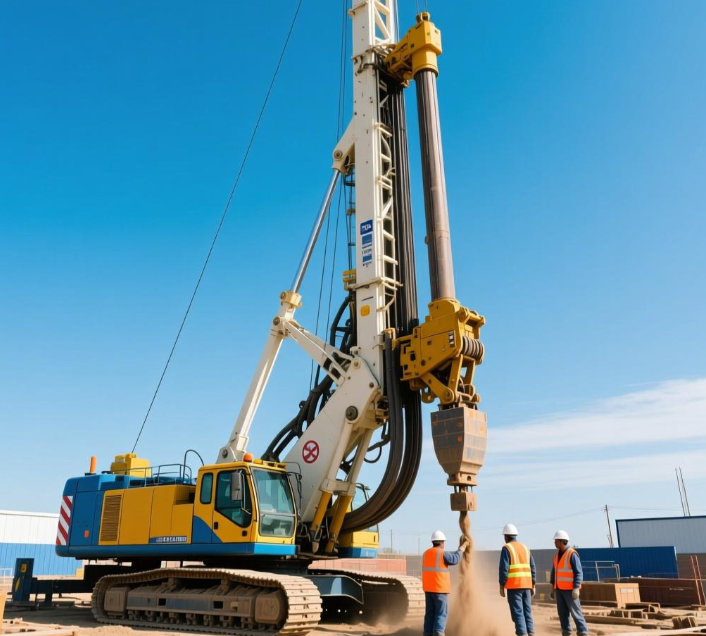
Hydraulic drilling rigs use mineral oil as the medium and achieve stepless speed regulation through a high-pressure variable oil pump and oil motor. Their core advantage lies in the “rigidity and flexibility” of power transmission. For example, the Genesis automatic hydraulic drilling rig developed by the Italian company B Robotics W employs “long-stroke” hydraulic cylinder technology, achieving a drill string speed of 1.5 m/s and adjusting the rig’s tilt angle within a 0-360 degree range to adapt to complex geological conditions. The “soft characteristics” of the hydraulic system allow it to automatically match the thrust and speed according to load changes, avoiding overload damage, making it particularly suitable for carbide drilling and impact rotary processes. Electric drilling rigs rely on the “precise control” of electric motors to achieve efficient operation. Taking AC variable frequency drive technology as an example, it uses pulse width modulation (PWM) and vector control (VC) technologies to extend the motor’s speed range to 1:1000 and maintain constant torque output at extremely low speeds. The 9000-meter AC variable frequency drilling rig developed by Baoji Petroleum Machinery Plant, through a CNC constant drilling pressure automatic drilling system, improves drilling efficiency by 20% while optimizing drilling parameters and reducing the risk of stuck drill bit. The “hard characteristics” of electric systems make them perform excellently in scenarios such as high-speed diamond drilling.
Energy Consumption and Cost: The “Hidden Burden” of Hydraulics and the “Long-Term Benefits” of Electricity
The energy consumption problem of hydraulic drilling rigs has long constrained their economic efficiency. The efficiency of traditional hydraulic systems is only 60%-70%, far lower than the 90% of electric systems. Taking deep-hole heavy-duty drilling rigs as an example, the energy cost of hydraulic drives is 30%-40% higher than that of electric systems. Furthermore, the environmental pollution and maintenance costs (such as replacing seals and cleaning oil spills) caused by hydraulic oil leaks further increase the total life cycle cost. For example, a coal mining company using hydraulic drilling rigs experienced an average annual hydraulic oil leakage of 500 liters, with environmental treatment costs alone exceeding 100,000 yuan.
While electric drilling rigs have a higher initial investment (20%-30% higher than hydraulic systems), their long-term operating cost advantages are significant. Taking a 12,000-meter AC variable frequency drilling rig as an example, its average annual energy consumption cost is 45% lower than that of a hydraulic drilling rig, and maintenance workload is reduced by 60%. The modular design of electric systems (such as detachable power modules) reduces maintenance difficulty. For example, an oilfield, through a remote fault diagnosis system, reduced equipment downtime from 72 hours to 8 hours, saving over 2 million yuan in maintenance costs annually.
Environmental Adaptability: The “Traditional Advantages” of Hydraulics and the “Innovative Breakthroughs” of Electricity
The adaptability of hydraulic drilling rigs to harsh environments was once their core advantage. For example, the ZYW series coal mine drilling rigs utilize explosion-proof hydraulic systems, enabling stable operation in high-temperature and high-dust environments. Furthermore, the linkage hydraulic system facilitates mechanized drilling and unloading operations, reducing manual intervention. However, the low-temperature fluidity of hydraulic oil (requiring preheating below -20°C) limits its application in extremely cold regions.
Electric drilling rigs are gradually overcoming environmental limitations through technological innovation. For instance, a company developed a lithium battery-powered electric drilling rig, employing a shock-resistant battery pack and a water-cooling system. This allows it to operate within a temperature range of -30°C to 50°C, and increases the number of holes drilled continuously per charge by three times. Moreover, the zero-emission characteristics of electric systems align with the “dual carbon” target (carbon reduction and emission reduction). A port company, after combining electric forklifts with electric drilling rigs, reduced its annual carbon emissions by 1200 tons and received over 500,000 yuan in government environmental subsidies.
Future Trends: Integration and Symbiosis or Substitution and Disruption?
The competition between hydraulic and electric drilling rigs is essentially a balance between efficiency, cost, and sustainability. In the short term, hydraulic drilling rigs will continue to dominate heavy-duty and complex operating scenarios (such as deep-sea drilling and mining), while electric drilling rigs, with their potential for intelligent control (such as remote operation and AI parameter optimization), are accelerating their penetration into medium- and light-duty sectors such as urban infrastructure and logistics equipment. In the long term, hybrid power solutions (such as “electric hydraulic pumps”) may become mainstream, using electric power to drive hydraulic systems while balancing energy conservation and power requirements. For example, a company’s digital hydraulic valve improves control precision by 30% while reducing energy consumption by 15%, providing a new path for technological integration.Whether it’s the “combination of rigidity and flexibility” of hydraulic drilling rigs or the “precision and efficiency” of electric drilling rigs, their core value lies in matching the needs of different scenarios. When selecting a model, companies need to comprehensively consider the operating environment, cost budget, and long-term planning to maximize equipment efficiency.