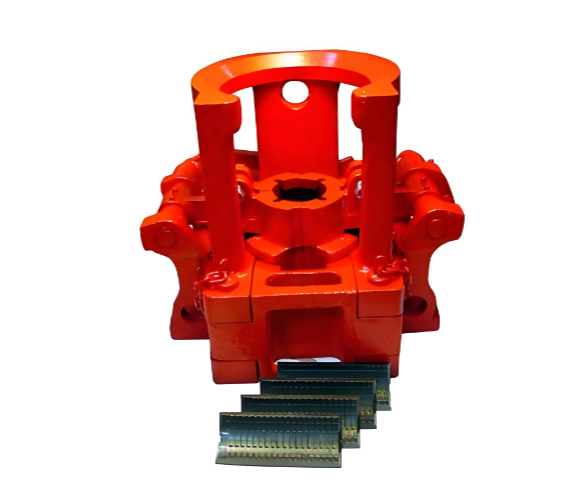
In oil well operations, wellhead tools endure extreme pressure, torque, and environmental temperature changes, and their performance and lifespan directly impact operational safety and economic efficiency. Heat treatment, as a critical process in the manufacturing of wellhead tools, has a decisive effect on hardness, toughness, wear resistance, and overall durability. This article provides an in-depth analysis of wellhead tool heat treatment processes, common methods, and their impact on tool durability, offering valuable insights for oilfield operations.
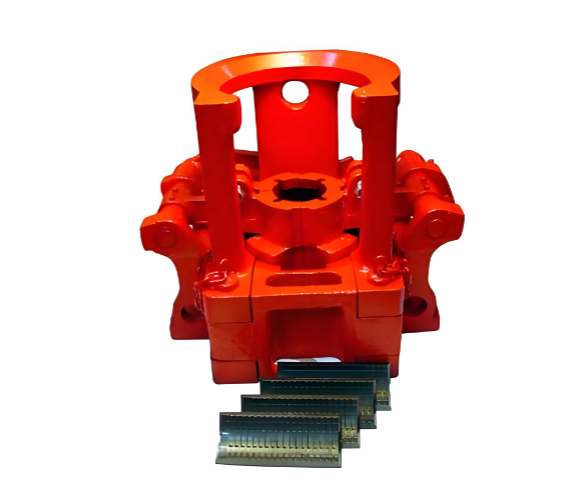
The Key Role of Heat Treatment in Wellhead Tool Performance
Heat treatment involves heating, holding, and cooling metals to alter their internal microstructure. For wellhead tools, heat treatment mainly affects the following properties:
Hardness and wear resistance: Proper quenching and tempering significantly increase steel hardness, making tools less prone to deformation or wear under high pressure and friction.
Toughness and impact resistance: Heat treatment optimizes the microstructure, balancing hardness and toughness to prevent fractures under shocks and vibrations.
Dimensional stability: Controlling cooling rates and tempering temperatures reduces internal stresses, ensuring tools maintain dimensional accuracy and safe operation.
Therefore, an appropriate heat treatment process is the foundation for high performance and long service life of wellhead tools.
Common Heat Treatment Methods for Wellhead Tools
Wellhead tool heat treatment mainly includes the following methods, each affecting durability differently:
Quenching: Heating steel above its critical temperature and rapidly cooling it increases hardness and wear resistance. However, without proper tempering, the tool may become too brittle.
Tempering: Reheating quenched steel and cooling it slowly reduces internal stress, improves toughness and impact resistance, while retaining adequate hardness.
Carburizing: Introducing carbon to the surface forms a hard outer layer, enhancing wear resistance while the core retains toughness, suitable for high-load wellhead tools.
Nitriding: Low-temperature diffusion forms a hardened surface layer with high wear resistance and fatigue life, while minimizing deformation—ideal for precision components.
Different combinations of heat treatment can be optimized according to tool type, operational environment, and load requirements to achieve maximum durability and safety.
How Heat Treatment Quality Affects Durability
The durability of wellhead tools depends not only on the material itself but also on the quality of heat treatment. Improper temperature control, insufficient heating time, or uneven cooling can cause:
Uneven hardness or cracks: Localized hardness or brittleness may lead to fractures or spalling during operation.
Stress concentration: Residual stresses can cause deformation under high loads, affecting fit and operational safety.
Reduced fatigue life: Insufficient wear resistance and toughness can lead to fatigue fractures or wear failures during prolonged use.
Therefore, precise control of heat treatment parameters and strict adherence to process standards are critical for ensuring tool durability.
Technological Development Trends
With increasingly complex well environments, wellhead tool heat treatment technology is advancing toward:
Intelligent heat treatment control: Automated regulation of temperature, time, and atmosphere to achieve uniform hardening and stable performance.
Advanced surface strengthening: Techniques such as plasma nitriding and laser surface treatment improve wear resistance and fatigue performance.
Digital quality tracking: Recording and analyzing each tool’s heat treatment process enables full lifecycle management, enhancing reliability and safety.
These advancements will further improve tool durability and operational safety in the oilfield.
Conclusion
Heat treatment plays a decisive role in the durability of wellhead tools. Properly designed and strictly executed processes—including quenching, tempering, carburizing, and nitriding—not only improve hardness, toughness, and wear resistance but also ensure dimensional stability and operational safety. With the development of intelligent and advanced surface treatment technologies, future wellhead tool heat treatment will become more precise and efficient, providing reliable safety and economic benefits for oil well operations.