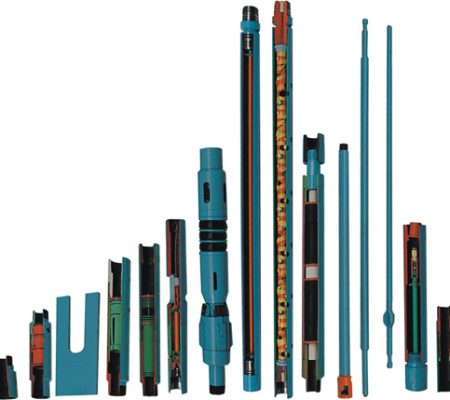
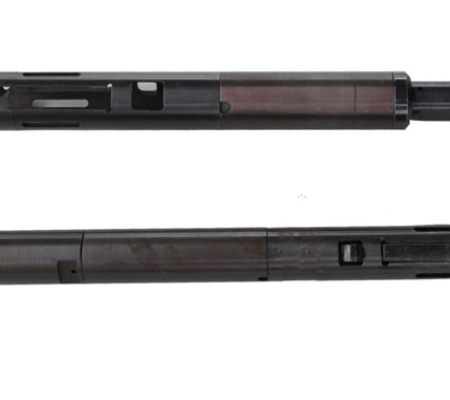
Float valves (Sub) are commonly used in drilling tool systems for fluid control and backflow prevention. One of their key functions is to help reduce the risk of reverse flow of the medium. The downhole working environment is complex; abnormal backflow not only affects fluid circulation stability but can also interfere with equipment operation safety. Preventing backflow in a float valve (Sub) is not achieved by a single structure but through the coordinated action of valve body response, pressure action, and channel design. Understanding this mechanism helps in recognizing its application value in downhole systems.

Unidirectional Flow Design is the Foundation of Backflow Prevention
The crucial foundation for preventing backflow in a float valve (Sub) lies in its unidirectional flow control logic. Under normal operating conditions, the system allows fluid to flow in a predetermined direction. When the medium attempts to flow in reverse, the structural design restricts the reverse flow path, making it difficult for a backflow path to form. This unidirectional control does not rely solely on simple obstruction but rather on the cooperation of the internal flow channels and valve body to create different operating states for forward flow and reverse obstruction. It is precisely because of this logic that the float valve (Sub) can undertake the task of backflow control.
Pressure Change Triggers Valve Body Blocking Action
The key mechanism for preventing backflow is related to pressure change-driven operation. When the system is in a normal flow state, the medium pressure keeps the channel open; when reverse pressure occurs, the valve body responds under pressure, closing or restricting the fluid passage, thus achieving a blocking effect. The Sub valve plays a supporting and pressure transmission role in this process, enabling the valve body to respond promptly when abnormal flow trends occur. The pressure-driven mechanism is also an important source of the backflow prevention capability of the float valve Sub.
Improved Backflow Blocking Stability Through Structural Coordination
The float valve Sub does not work alone; its backflow prevention capability also relies on the overall structural coordination.
- Internal flow channels guide the medium to flow in the correct direction.
- Coordination with valve body action achieves backflow blocking.
- Stable connection reduces the risk of structural displacement.
- Pressure transmission supports rapid response action.
- Maintaining blocking reliability under dynamic loads.
This structural coordination ensures that backflow control is not just an instantaneous action, but possesses continuous stability.
Sealing and Structural Compatibility Affect Backflow Prevention
The backflow prevention effect of the float valve (Sub) is also affected by the sealing condition and structural compatibility. Insufficient connection precision or decreased sealing performance may weaken the blocking capability. This is especially true in high-pressure conditions, where structural matching requirements are even higher. Proper design can reduce media leakage paths and improve the stability of the valve body in the closed state, further reducing the risk of backflow. Therefore, backflow prevention depends not only on the working principle but also on the quality of structural execution.
Protection Maintained by Continuous Response Under Dynamic Conditions
The downhole environment is not static; pressure fluctuations, fluid state changes, and load disturbances can all affect system operation. Therefore, the backflow prevention of the float valve (Sub) is not a one-time action but relies on a continuous response mechanism to maintain its protective effect. Whenever a change in operating conditions triggers an abnormal backflow trend, the system will re-establish the blocking state through the valve body and structural compatibility. Understanding this dynamic response logic helps to understand why the float valve (Sub) can play an important protective role in complex operating environments and also helps to more accurately assess its application value.