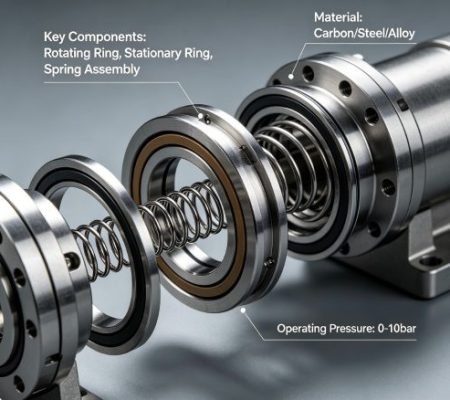
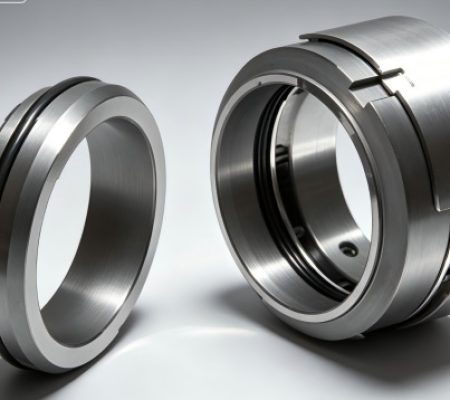
Integrated carbon ring seals, as important non-contact or light-contact sealing structures in high-speed rotating machinery, are widely used in aero-engines, gas turbines, turbo compressors, and other high-temperature, high-speed applications. Their core advantage lies in the high-temperature resistance, low friction, self-lubrication, and thermal shock resistance of carbon graphite materials, enabling them to maintain stable sealing even in harsh environments. The term “integrated carbon ring” refers to its one-piece ring design to withstand pressure differences, airflow erosion, and thermal loads, avoiding the cumulative errors of multi-segment structures and thus making the sealing performance more reliable.
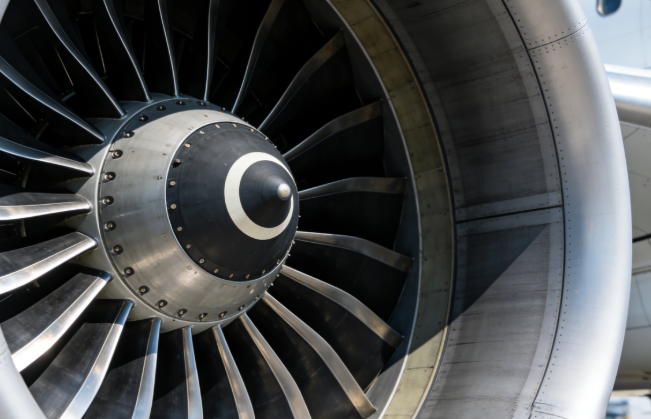
To understand how an integral carbon ring achieves its sealing effect, it is necessary to analyze it from multiple dimensions, including its working mechanism, structural characteristics, material properties, and airflow dynamics. While seemingly simple—a “carbon ring part fixed within a shell”—in actual operation, it must maintain a precise clearance near the high-speed rotating shaft, control leakage through film humidity or micro-contact modes, and maintain geometric stability under drastic temperature changes and pressure gradients. Its sealing effect does not depend on a single factor but is the result of the combined effects of structure, materials, clearance, flow field, and thermal field. The reliability and sealing performance of integral carbon ring seals are highly dependent on the rationality of the design phase, including ring geometry, clearance setting, load path, airflow balance, material grade, and thermal management strategies. Understanding these principles is crucial to truly grasping its sealing mechanism and understanding why carbon rings, while reliable, place extremely high demands on design, manufacturing, and assembly.
Gas Film Sealing
The core working mechanism of integral carbon ring seals is the formation of a stable gas film layer through precise control of the “micro-gap” between the inner diameter of the carbon ring and the outer diameter of the shaft.This is achieved by: relying on pressure difference to drive the gas to form a thin gas film, blocking leakage from the high-pressure side to the low-pressure side.The gas film creates a dynamic pressure effect on the surface of the high-speed shaft, enhancing isolation capability.The extremely small gap lengthens the leakage path and significantly reduces pressure drop, naturally decreasing the leakage amount.Integral carbon rings do not directly rely on elastic friction sealing but are closer to the concept of “controlled leakage,” that is, using the gas film to block most of the flow while maintaining a controllable small amount of leakage to stabilize temperature and pressure distribution.
Material Advantages
The stable operation of integral carbon ring seals at high temperatures and speeds is inseparable from their material properties:
Low coefficient of friction: Even slight contact will not cause severe wear.
Excellent thermal shock resistance: Rapid heating or cooling will not cause cracking.
Self-lubricating properties: Low frictional heat from carbon-carbon contact reduces the probability of failure.Low density helps reduce centrifugal stress: The structure is more stable under high-speed conditions.Materials not only affect sealing performance but also directly determine the stability, lifespan, and failure mode of the carbon ring.
Expansion Compensation and Deformation Control
Integral carbon rings need to maintain geometric stability under large temperature differences; therefore, material expansion and system thermal field changes must be considered in the design:
Carbon graphite has a low coefficient of thermal expansion, which helps control gap changes.The integral structure reduces thermal deformation deviations at the connection interface.Temperature difference stress between the inner and outer sides is controlled through ring wall thickness and geometric design.Partial carbon rings use groove design to reduce stress concentration caused by thermal gradients.Effective control of thermal deformation is key to the integral carbon ring maintaining its sealing ability under actual operating conditions.
Fluid Dynamics and Structure Matching
The design of an integral carbon ring seal cannot be based solely on geometry; it must also be matched with the flow field:Establish a stable gas film through pressure difference to prevent the ring from being disturbed by airflow.Labyrinth structures or drainage channels help slow down and diffuse the gas, reducing leakage.Control the internal pressure drop distribution to reduce the overturning moment of the carbon ring.Prevent high-speed turbulent flow from impacting the carbon ring surface through guiding design.Improper flow field design can cause a series of failure problems such as vibration, localized heating, and accelerated wear.
Structural Support and Load Transfer
Although the integral carbon ring is a “one-piece ring,” it still relies on an external support structure to maintain its position and stress balance.
Key points include:The support structure must provide appropriate flexibility to absorb shaft runout and vibration.Ensure that the carbon ring and the sealing cavity are geometrically concentric to avoid uneven wear.The load path must be uniform to avoid localized compression or slight twisting.Ensure that the ring does not move axially through positioning shoulders or limiting structures.The integral carbon ring must be stable; otherwise, if the gap shifts, the gas film cannot be maintained.
Controlled Leakage Strategy
The integral carbon ring seal is not inherently a zero-leakage seal, but rather:
It utilizes minimal leakage to regulate temperature and pressure
It maintains sealing isolation through a stable gas film
It ensures leakage remains within a controllable range.
This “controlled leakage” mechanism is a key characteristic that distinguishes carbon ring seals from mechanical seals and labyrinth seals.
The integral carbon ring seal achieves reliable sealing under extreme conditions. Its principle does not rely on a single structure, but rather on the combined effects of material properties, gas film effect, thermal compensation design, flow field configuration, and structural support. The carbon ring relies on micro-gap and dynamic/static pressure gas film for sealing, and the low friction and self-lubricating properties of carbon graphite materials ensure that even intermittent contact will not cause serious damage. Simultaneously, the integral structure reduces component interfaces, minimizes deformation and assembly errors, and makes the sealing effect more consistent. Any misjudgment of clearance, thermal field, flow field, or load will directly affect the sealing capability of the carbon ring; conversely, as long as the above factors are fully considered during the design phase, the integral carbon ring seal can maintain stable operation in high-temperature and high-speed environments such as aero engines. The success of the integral carbon ring seal is actually a success of systems engineering—the reliability is achieved through the synergy of materials, structure, gas film, thermal management, and dynamics.