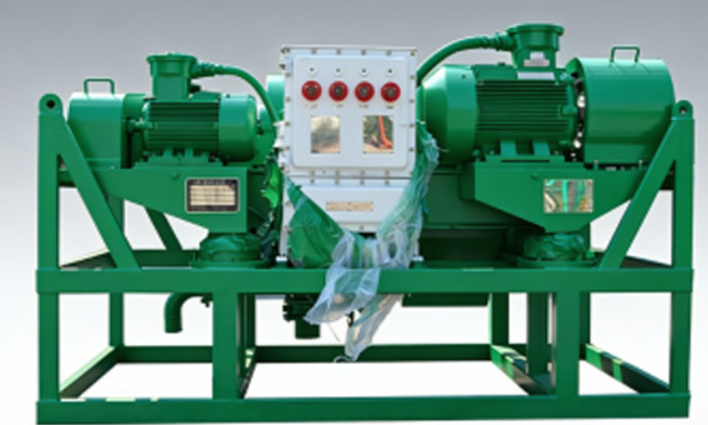
With rapid industrial development and urbanization, wastewater discharge has become an increasingly prominent issue. Whether it’s industrial wastewater or domestic sewage, it contains large amounts of suspended solids, grease, and fine particles. Direct discharge without effective treatment not only pollutes the environment but also poses potential threats to ecosystems and human health. Traditional sedimentation tanks, filters, or chemical treatments can reduce pollutant levels to some extent, but they are often inefficient, require large footprints, and are complex to maintain. Decarbonization centrifuges have emerged as a solution, performing exceptionally well in wastewater treatment as highly efficient solid-liquid separation equipment. These devices utilize the powerful centrifugal force generated by high-speed rotation to rapidly separate solid particles from wastewater, achieving concentration and purification. Depending on the model, such as LW223, LW363, and LW452, their processing capacity, rotation speed, separation factor, and particle separation diameter vary, allowing for the selection of appropriate equipment based on wastewater type and treatment volume. By rationally utilizing decarbonization centrifuges, enterprises and wastewater treatment plants can achieve efficient, stable, and energy-saving wastewater treatment.
Working Principle and Technical Characteristics of Decarbonization Centrifuges
Centrifugal Separation Principle
The core of a decarbonization centrifuge is the centrifugal force generated by the high-speed rotation of the drum. After wastewater enters the drum, denser suspended particles are thrown against the drum wall, while the clear liquid flows out axially, achieving solid-liquid separation. The separation factor of the equipment ranges from 815 to 3063, and the rotation speed can reach up to 4800 RPM, ensuring that particles from 2 microns to 7 microns can be effectively separated. This high-efficiency separation capability rapidly reduces suspended solids in the wastewater, thereby reducing the load on subsequent treatment stages.
Processing Capacity of Different Models
According to technical parameters, the LW223 and LW223VFD are suitable for small-flow treatment, with a maximum processing capacity of approximately 2 cubic meters per hour and an effective processing capacity of 0.5~2 cubic meters per hour; while the LW363 series can process 45 cubic meters per hour, and the LW452 and LW453 can reach 57~80 cubic meters per hour, meeting the needs of medium-to-large-scale industrial wastewater treatment. This means users can select the appropriate model based on their actual wastewater volume, achieving continuous and efficient treatment.
Adaptability and Ease of Operation
The decarbonization centrifuge can treat wastewater with high suspended solids content. The LW223VFD and LW363VFD models feature variable frequency control, automatically adjusting the speed according to different water qualities to optimize treatment results. In terms of operation, the equipment is equipped with a motor drive and auxiliary motor system, with power ranging from 3 kW to 45 kW, enabling continuous operation and reducing manual intervention. The application of a four-screw pump also ensures smooth wastewater transport, further improving treatment efficiency.
Advantages of Decarbonization Centrifuges in Wastewater Treatment
High Treatment Efficiency
Through high-speed rotation and a reasonable differential speed ratio (most models are 57:01:00), the decarbonization centrifuge can quickly separate fine particles in wastewater, effectively removing even micron-sized solids. Compared to traditional sedimentation tanks, this method offers faster processing speeds and significantly improved water quality.
Energy Saving and Environmental Protection
Although the initial investment is high, the efficient separation reduces the load on subsequent chemical or biological treatments, significantly reducing energy consumption and operating costs in the long run. Simultaneously, the treated water discharge meets environmental standards.
Maintenance and Reliability
The equipment has a compact structure and weighs from 750 kg to 3300 kg, suitable for installation in sites of different sizes. Explosion-proof design (ExIIB t4 / IECEx / ATEX) ensures safety in industrial environments. Maintenance is simple; regular checks of bearings and lubrication systems, and cleaning of the sludge discharge port are sufficient, reducing labor and maintenance costs.
Decarbonization centrifuges perform exceptionally well in wastewater treatment. Whether it’s the low-flow LW223 series or the high-capacity LW452 and LW453, they achieve efficient solid-liquid separation through high speed and high separation factor. The treated wastewater shows a significant reduction in suspended solids and pollutant load, facilitating subsequent chemical or biological treatment while reducing energy consumption and maintenance costs. In today’s increasingly stringent environmental policies, traditional sedimentation tanks and filtration systems are no longer sufficient to meet the demands of efficient and continuous treatment. Decarbonization centrifuges, with their high efficiency, automated operation, energy saving, environmental friendliness, and reliability, provide an ideal solution for industrial wastewater and domestic sewage treatment. Through proper selection and operation management, decarbonization centrifuges can operate stably, ensuring that wastewater meets discharge standards, thus contributing to environmental protection and sustainable development.