As oil and gas exploration and development advances into deeper, ultra-deep, and unconventional reservoirs, well trajectories are increasingly exhibiting complex characteristics such as high inclination, long horizontal sections, and multiple branches. As core equipment for drilling, logging, and completion operations, the adaptability of downhole tools directly impacts operational safety and efficiency. Ensuring stable operation of downhole tools in complex well trajectories has become a key engineering challenge.

Challenges Posed by Complex Well Trajectories to Downhole Tools
Complex well trajectories are often accompanied by frequent changes in wellbore curvature, increased friction, and limited space. During operation, downhole tools must not only withstand mechanical friction from the wellbore but also maintain structural stability and functional reliability in curved sections.
In high dogleg sections, traditional rigid tools are prone to jamming or stress concentration, affecting deployment and retrieval operations. Simultaneously, the irregular changes in the wellbore trajectory place higher demands on the measurement accuracy and control response of the tools.
Adaptation Methods for Downhole Tool Structural Design
To cope with complex well trajectories, downhole tools have undergone targeted optimization in their structural design. Improving the structural form can effectively enhance the tool’s ability to navigate curved well sections.
Common structural adaptation methods include:
Employing modular design to give the tool better overall flexibility and assembly flexibility.
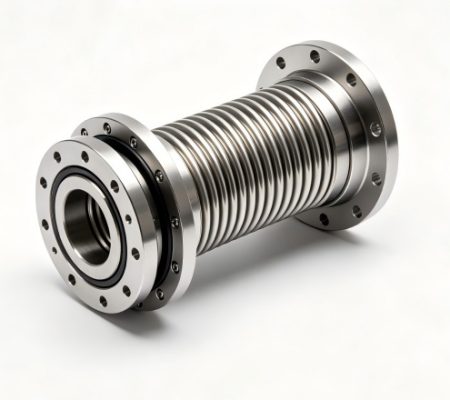
Incorporating universal joints or flexible connecting sections in key areas to reduce bending stress concentration.
Optimizing the overall dimensions and contour to reduce the contact area and frictional resistance with the wellbore.
These design approaches enable downhole tools to operate smoothly in complex trajectories, reducing operational risks.
Adaptation Strategies for Materials and Manufacturing Processes
Material properties are equally crucial for the adaptation of downhole tools to complex well trajectories. Under high temperature, high pressure, and high stress environments, materials need to balance strength, toughness, and fatigue resistance. Using high-strength alloy steel or composite materials can improve the tool’s resistance to deformation in curved well sections.
Meanwhile, advanced manufacturing processes also contribute to improving the overall performance of the tool. Precision machining and surface treatment technologies can effectively reduce localized stress concentration, improving the tool’s reliability and service life in complex trajectories.
Coordination of Motion Control and Guiding Technologies
In complex well trajectories, structural optimization alone is often insufficient to meet operational requirements; motion control and guiding technologies are also necessary. Real-time monitoring and adjustment of the tool’s motion state can enhance its adaptability.
Common technical approaches in practical applications include:
Using guiding devices to control the tool’s attitude, reducing sway and irregular movements.
Dynamically adjusting the tool’s operating state based on real-time measurement data.
Reducing downhole friction by optimizing the lowering speed and operating parameters.
These techniques help improve the controllability and stability of downhole tools in complex well trajectories.
Importance of Simulation Analysis and Field Verification
Simulation analysis is a crucial means of assessing the adaptability of downhole tools before they are deployed in the field. Through well trajectory modeling and stress analysis, the motion state and stress distribution of the tool in different well sections can be predicted, providing a basis for structural and parameter optimization.
Field testing and feedback from actual applications are equally important. By continuously accumulating actual operating data, engineers can further refine the design of downhole tools to better adapt to complex well trajectory conditions.
Comprehensive Approach to Adapting to Complex Well Trajectories
Adapting downhole tools to complex well trajectories is not a problem that can be solved by a single technology, but rather the result of the coordinated efforts of structural design, material selection, control technology, and construction experience. Only under the guidance of a systematic approach can safe and efficient downhole operations be achieved.
Conclusion
As well trajectories become increasingly complex, the adaptability of downhole tools has become a crucial factor affecting the efficiency and safety of oil and gas engineering. Through structural optimization, material upgrades, coordinated control technologies, and a combination of simulation and field verification, downhole tools can better cope with the challenges posed by complex well trajectories. Continuously improving adaptability not only helps ensure smooth operations but also provides solid technical support for the development of deep and unconventional oil and gas resources.