In oil drilling operations, the drill bit, as the core tool for directly breaking rock, directly determines drilling efficiency and cost. When drill bits need to be replaced due to wear, formation changes, or altered drilling requirements, a rigorous operating procedure and advanced technical support are essential. From the coordination of surface equipment to the precise operation of the downhole drill bit, each link embodies the wisdom of the petroleum engineering field.

Drill bit replacement begins with an accurate assessment of the drilling status. During drilling, the drill bit breaks rock by rotation, and its cutting teeth gradually wear down due to friction and impact, leading to a decrease in drilling speed, abnormal torque, or changes in cuttings size. Engineers use surface monitoring systems to analyze parameters such as drilling pressure, rotation speed, and torque in real time, combined with the morphology and composition of the cuttings returned from the drilling fluid, to comprehensively assess the drill bit’s condition. For example, if the outer teeth of the drill bit are found to be rounded while the middle teeth show less wear, it may indicate uneven formation hardness distribution, requiring replacement with a insert drill bit with gauge-maintaining teeth to enhance stability. This data-driven decision-making model avoids the cost waste caused by blind replacement.
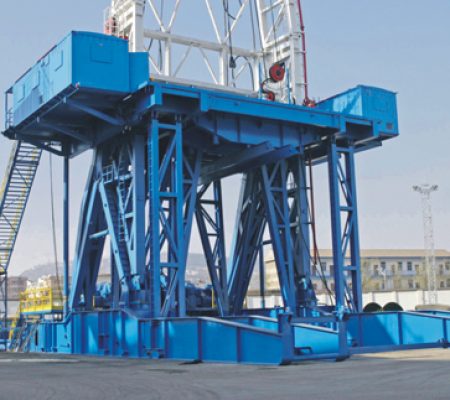
Once the replacement requirement is confirmed, the drilling team must initiate a sophisticated well control procedure. First, drilling is stopped while maintaining drilling fluid circulation. Cuttings are removed using solids control equipment such as vibrating screens and desanders to ensure a clean wellbore. This step is crucial—cuttings buildup can lead to wellbore collapse or stuck pipe. Next, using the derrick’s overhead crane, traveling block, and hook, the drill string is retrieved section by section (usually consisting of 2-3 drill pipes). During the retrieval process, drilling fluid is continuously pumped into the annulus to maintain pressure balance and prevent formation fluid intrusion. Operators must strictly control the retrieval speed, especially in sections with narrow boreholes or prone to collapse, to avoid wellbore instability due to suction effects.
Once all drill string is retrieved, the old drill bit is exposed. Taking a common tricone drill bit as an example, it consists of the bit body, teeth, cones, bearings, and water channels. After prolonged use, problems such as tooth wear, bearing jamming, or seal failure may occur. Workers must use specialized tools to remove the old drill bit and inspect the threads connecting the drill bit body and drill pipe for integrity to prevent residual rock cuttings or metal fragments from affecting the installation of the new drill bit. Then, a suitable new drill bit is selected based on the formation characteristics: for soft formations, a roller cone drill bit with a shift-axis and over-the-top structure is recommended to enhance breaking efficiency; for hard formations, a drill bit with carbide-insulated teeth is needed to improve wear resistance; and for easily deviating formations, a drill bit with many short teeth and a small shift-axis range is required to reduce the risk of well deviation.
After the new drill bit is installed, it must be lowered into the well in the original drill string sequence. During drilling, drilling fluid must be circulated in stages, pausing after every 3-5 drill pipes to circulate and clean the wellbore using a drilling pump to prevent rock cuttings accumulation. Simultaneously, a wellbore trajectory is monitored using an inclinometer to ensure the drill bit follows the predetermined path. When the drill bit approaches the bottom of the well, the lowering speed must be controlled to avoid damage to the cutting teeth due to impact. Finally, the drill bit rotation is started using surface equipment, drilling pressure is gradually applied, and drilling resumes. At this point, the cutting teeth of the new drill bit come into contact with the formation, and its breaking efficiency and stability directly affect subsequent operations.
With technological advancements, drill bit replacement processes are evolving towards greater intelligence and efficiency. For example, some drilling rigs are equipped with automated drill pipe operating systems, using robotic arms to complete drill string tripping, reducing manual intervention; new drill bits adopt modular designs, allowing cutting teeth to be replaced directly downhole, avoiding the need for complete tripping; and some research is even exploring downhole robotics technology to achieve fully automated drill bit replacement. These innovations not only shorten non-productive time but also improve operational safety and economy.
From traditional manual operation to intelligent technology empowerment, the drill bit replacement process for oil drilling equipment reflects the industry’s enduring pursuit of efficiency and safety. Each drill bit replacement represents a deepening of formation understanding and a practical breakthrough in technology. In the future, with continuous innovation in materials science and automation technology, drill bit replacement will become more precise and efficient, injecting stronger momentum into global energy development.