In oil drilling, geological exploration, and foundation construction, drill bits are core consumables, and their service life directly affects operational efficiency and costs. Statistics show that drill bit costs account for 15%-25% of total drilling costs, while unplanned downtime due to drill bit failure accounts for as much as 30%. Extending drill bit life through scientific selection, standardized operation, and precise maintenance has become a key issue for cost reduction and efficiency improvement in the industry. This article will systematically elaborate on practical paths to extend drill bit life from four dimensions: drill bit selection and matching, operational parameter control, cooling and lubrication optimization, and fault early warning management.
Drill Bit Selection and Matching: Precise Adaptation Based on Local Conditions
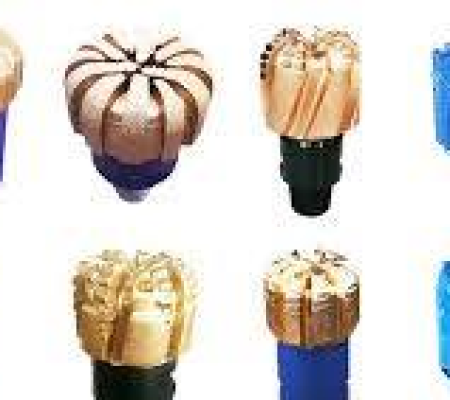
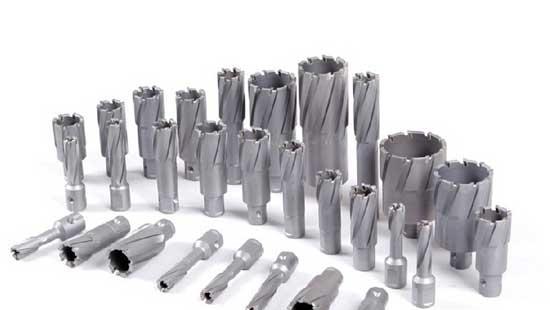
The primary factor affecting drill bit life is whether the selected drill bit matches the formation characteristics. Different geological conditions result in significantly different wear mechanisms for drill bits: soft formations (such as mudstone and sandstone) easily lead to wear on the cutting teeth; hard formations (such as granite and limestone) may cause chipping of the cutting teeth; and fractured formations (such as fault zones) easily cause uneven wear of the drill bit. A drilling team mistakenly selected PDC (polycrystalline diamond composite) drill bits when drilling into granite formations, resulting in extensive chipping of the cutting teeth and consuming 8 drill bits per well. After switching to roller cone drill bits, the number of drill bits used per well decreased to 3, and drill bit life increased by 167%.
Optimizing drill bit structural parameters is equally crucial. The cutting tooth layout density, back rake angle, and side rotation angle need to be dynamically adjusted according to the formation hardness. For example, when drilling into medium-hard formations, using high-density cutting teeth (tooth spacing ≤ 8mm) can disperse impact loads and extend the life of a single tooth; while when drilling into soft formations, increasing the tooth spacing (≥ 12mm) can improve chip removal efficiency and reduce repeated cutting wear. One company optimized the drill bit crown profile through simulation analysis, increasing the drill bit life in homogeneous formations by 40%.
Operational Parameter Control: Dynamic Balance Process Optimization
The matching of drill pressure and rotational speed is a core process parameter affecting drill bit life. Excessive drill pressure (DPP) can cause cutting teeth to become overly embedded in the formation, leading to fracturing; insufficient DPP will cause the cutting teeth to slip, accelerating wear. Excessive rotational speed will exacerbate thermal fatigue of the cutting teeth, while insufficient speed will reduce rock-breaking efficiency. A field test showed that when drilling sandstone formations, reducing DPP from 120kN to 100kN and increasing rotational speed from 80rpm to 100rpm increased the mechanical drilling rate by 15% and extended drill bit life by 20%. Dynamic optimization of parameters can be achieved by establishing a three-dimensional model of “DPP-rotational speed-formation hardness”.
Cutting material removal efficiency directly affects the drill bit’s working environment. Poor cutting material removal leads to repeated cutting by rock cuttings, accelerating drill bit wear. In deep well drilling, adjusting the rheology of the drilling fluid (e.g., increasing the dynamic shear stress from 8Pa to 12Pa) enhances cuttings carrying capacity; in horizontal well drilling, using auger drill pipes or vibrating screens can reduce cuttings bed formation. A project optimized its chip removal system, extending drill bit life in shale formations from 50 hours to 80 hours.
Cooling and Lubrication Optimization: The Hidden Defense Line of Temperature Control
Drill bit operating temperature is a hidden factor affecting lifespan. The heat generated by friction between the cutting teeth and the rock can cause diamond to carbide (temperature > 750℃) or cemented carbide to soften (temperature > 600℃), leading to decreased cutting efficiency. An infrared thermometry test showed that when drilling into granite, the drill bit crown temperature can reach 600℃; without timely cooling, lifespan will be shortened by 50%. By optimizing the drilling fluid formulation (e.g., adding nano-lubricants to reduce the coefficient of friction) or using bottom-hole cooling devices (e.g., jet-cooled drill bits), the operating temperature can be controlled below 400℃, significantly extending drill bit life.
The impact of drilling fluid properties on drill bit lifespan cannot be ignored. High-solids-content drilling fluids exacerbate drill bit erosion wear, while low-viscosity drilling fluids are less likely to form a lubricating film. A company increased drill bit lifespan by 30% in sandstone-mudstone interbedded formations by reducing the solids content of drilling fluid from 8% to 5% and increasing viscosity from 60s to 75s. Furthermore, regularly monitoring the drilling fluid pH (maintaining it between 8 and 10) prevents acidic substances from corroding the drill bit matrix.
Fault Early Warning Management: From Reactive Replacement to Proactive Maintenance
Establishing a drill bit health monitoring system is key to maximizing lifespan. By embedding vibration, temperature, and pressure sensors inside the drill bit, data such as cutting tooth wear, drill bit vibration frequency, and bottom hole pressure can be collected in real time. A smart drill bit monitoring system successfully predicted precursors to cutting tooth breakage by analyzing the vibration signal spectrum, allowing for early drill bit replacement and avoiding unplanned downtime, saving 12 hours per well.
Big data-based lifespan prediction models can further optimize maintenance strategies. By collecting historical drill bit usage data (such as formation type, operating parameters, and failure modes), machine learning algorithms can be used to build lifespan prediction models, creating customized “health records” for each drill bit. After applying this model, one company reduced its average drill bit life prediction error rate from 30% to 10% and increased inventory turnover by 25%.
Extending drill bit life is a systematic engineering project involving geology, mechanics, materials, and information technology. Significant improvements in drill bit life can be achieved through scientifically selecting drill bits to match formations, dynamically optimizing operating parameters, strengthening cooling and lubrication protection, and establishing fault early warning mechanisms. Driven by both cost reduction and efficiency improvement and green development in the industry, these strategies are not only related to corporate economic benefits but also crucial for advancing drilling technology towards intelligence and precision. In the future, with the deep application of digital twin and artificial intelligence technologies, drill bit life management will move towards a higher level of predictability and proactivity.