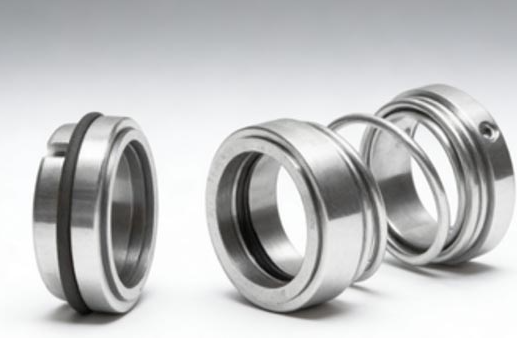
Mechanical seals play a crucial role in rotating equipment, preventing media leakage and ensuring safe and stable operation. However, long-term operation or changes in operating conditions can lead to oil leaks in mechanical seals, affecting equipment efficiency and potentially causing safety hazards and environmental problems. If a leaking mechanical seal is not repaired promptly, it may exacerbate friction damage, elastomer aging, and even cause equipment downtime and production losses. Faced with oil leaks, many engineers tend to fall into the single-minded approach of ‘replacing the seal,’ neglecting the importance of systematic repair. In fact, repairing a leaking mechanical seal involves not only the inspection and maintenance of the seal itself but also equipment condition assessment, installation accuracy verification, auxiliary system adjustments, and operational management optimization.
Analyzing the Cause of the Leak
Before repairing an oil leak, the cause must be clearly identified; otherwise, blindly addressing the problem can easily lead to repeated failures. Common influencing factors include:
Sealing end face wear or damage: Long-term operation causes scratches, pits, or unevenness on the end face.
Elastic element aging: Aging of sealing rings, O-rings, or auxiliary springs leads to uneven end face contact.
Shaft system problems: Shaft misalignment, excessive radial runout, or excessive axial movement.
Operating condition fluctuations: Excessive pressure, excessive temperature, or frequent start-ups and shutdowns.
Auxiliary system failure: Insufficient flushing, inadequate cooling, or abnormal isolation fluid pressure.
Through a comprehensive investigation of the causes, the focus of repair can be clearly identified, preventing recurrence of problems.
Equipment and Operation Preparations Before Repair
Before implementing repairs, the following preparations must be made:
Shut down and safely isolate: Ensure equipment pressure is released and the medium is emptied;
Clean the sealing cavity and surrounding environment: Prevent dust and impurities from entering the end face;
Inspect the bearings and shaft system condition: Perform shaft alignment and vibration assessments if necessary;
Confirm the required tools and spare parts: Ensure the sealing body, elastic elements, and auxiliary parts are usable. Good preparation is a prerequisite for ensuring repair efficiency and success rate.
Inspection and Treatment of the Seal Body
The mechanical seal body is the core component of oil leak repair. The following aspects should be emphasized:
End Face Cleaning and Grinding: Remove impurities and minor scratches; polishing can restore smoothness.
Replacement of Elastic Elements: Replace aged seals, O-rings, or springs promptly.
Inspection of Seal Structure Integrity: Ensure the end face, metal parts, and support ring are free of cracks or deformation.
Assembly Clearance Adjustment: Adjust the compression and end face clearance according to equipment operating conditions to ensure lubrication film formation.
The precision of the seal body treatment directly affects the sealing effect and lifespan after repair.
Auxiliary System and Equipment Adjustment
The operating performance of the mechanical seal depends not only on the seal body but also closely on the auxiliary systems and equipment condition:
Flushing System: Ensure the flushing fluid flow rate, pressure, and cleanliness meet requirements.
Cooling System: Maintain the sealing cavity temperature within the allowable range to prevent thermal expansion or overheating of the elastomer.
Shaft Alignment and Vibration Control: Check and adjust the shaft position during repair to reduce end face impact.
Pressure Fluctuation Management: Reduce end face load through pressure stabilization or slow start-up.
Optimization of auxiliary systems can effectively improve the success rate of repairs and reduce the risk of recurring leaks.
Operation and Maintenance Standards
After repair, standardized operation and maintenance strategies must be established:
Initial Monitoring: Closely observe temperature, vibration, and leakage during the initial operation of the seal.
Regular Inspection: Monitor wear of elastic elements, end face condition, and auxiliary system parameters.
Standardized Start-up and Shutdown: Avoid frequent start-ups and shutdowns or overload operation.
Recording and Feedback: Record and archive the repair process and operating parameters for future optimization.
Scientific operation and maintenance can extend the duration of the repair effect and improve the overall reliability of the mechanical seal.
Mechanical seal leaks may originate from multiple factors such as end face wear, aging of elastic elements, shaft instability, or fluctuations in operating conditions. Only by identifying the root cause and carrying out targeted repairs can a true improvement in effectiveness be achieved. The meticulous treatment of the seal body, including end face cleaning, grinding, and replacement of elastic elements, is the core of the repair; optimization of the auxiliary system and equipment condition is key to ensuring the stable continuation of the repair effect. Standardized operation and regular maintenance further ensure that the repaired seal can operate stably for a long period. The success rate of mechanical seal oil leak repair depends on a systematic and comprehensive approach; neglecting any step can lead to recurring problems. Through a scientific repair process and continuous monitoring and management, mechanical seals can not only restore their leak-proof capability but also extend their service life and improve the overall operational reliability of the equipment.