In industries such as chemical processing, petroleum, pharmaceuticals, environmental protection, power generation, and fine chemicals, the sealing system of equipment is directly related to production safety, environmental protection, and operational stability. For ordinary media, a single mechanical seal is usually sufficient to meet basic sealing requirements. However, when the medium is toxic, flammable, explosive, highly corrosive, or volatile, conventional sealing solutions often cannot meet safety requirements. In such cases, a double mechanical seal (dual mechanical seal) becomes an important choice for many critical pieces of equipment.
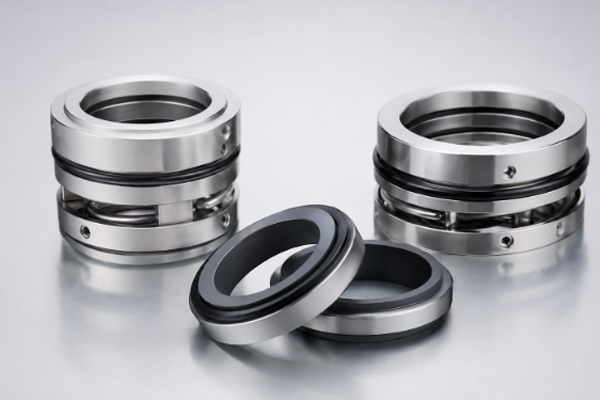
A double mechanical seal utilizes two sets of sealing faces working together and is equipped with an independent barrier fluid system, effectively reducing leakage risks and improving equipment reliability. Especially in hazardous media applications, high-pressure operating conditions, and production environments with strict environmental requirements, double mechanical seals have become an important technical solution for ensuring safe equipment operation.
What Is a Double Mechanical Seal?
Basic Concept of a Double Mechanical Seal
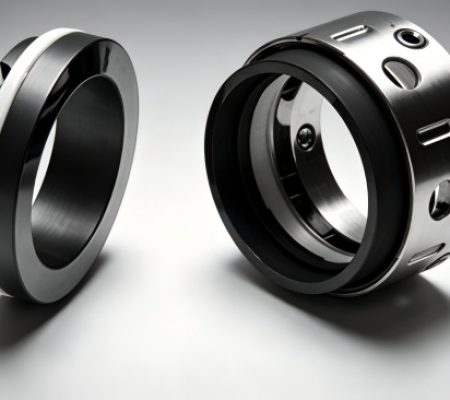
A double mechanical seal is a sealing structure composed of two mechanical seal assemblies, typically installed on the same shaft. The inner seal and outer seal work together to create a dual protective barrier.Compared with a single mechanical seal, a double mechanical seal not only prevents medium leakage but also creates a stable pressure environment through a barrier fluid system, thereby further improving sealing performance.
Its typical configuration usually adopts a back-to-back arrangement, in which the two sealing faces are positioned opposite each other and supported by a circulating barrier fluid system. This keeps the seal chamber under controlled conditions at all times. Even if one seal experiences wear, the second seal can continue to provide protection.
Main Components of a Double Mechanical Seal
A double mechanical seal system generally includes the following core components:
- Rotating ring assembly
- Stationary ring assembly
- Secondary sealing elements
- Spring compensation mechanism
- Seal gland
- Barrier fluid reservoir
- Cooling circulation system
Pressure monitoring devicesThese components work together to form a complete sealing protection system that enhances equipment safety and operational stability.
Differences Between Double and Single Mechanical Seals
A single mechanical seal contains only one pair of sealing faces, whereas a double mechanical seal contains two pairs of sealing faces.Because a single mechanical seal relies on only one sealing interface, while a double mechanical seal creates a dual sealing barrier and can be combined with a barrier fluid system to achieve zero leakage or near-zero leakage, it is better suited for high-risk media and demanding operating conditions.Therefore, in production environments with higher safety requirements, double mechanical seals are often the preferred option.
When Is a Double Mechanical Seal Required?
- When Handling Hazardous or Toxic Media
When the medium being pumped or mixed is toxic, any leakage may affect not only product quality but also personnel health and environmental safety.
Examples include:
— Organic solvents
— Benzene compounds
— Chloride-containing media
— Pesticide raw materials
Pharmaceutical intermediatesThese media generally require extremely high sealing reliability. Therefore, a double mechanical seal can significantly reduce leakage risks through its dual sealing structure.
- When Handling Flammable or Explosive Media
For products such as gasoline, methanol, ethanol, liquefied gas, and various volatile solvents used in the petrochemical industry, even small amounts of leakage may create serious safety hazards.
Through its barrier fluid system, a double mechanical seal isolates the process medium from the external environment and effectively prevents:Dispersion of flammable gases、Increased explosion risks、Formation of fire hazards.As a result, it is widely used in high-hazard equipment applications.
- Equipment Operating Under High Pressure
As internal equipment pressure increases, the load acting on the sealing faces also increases.If only a single mechanical seal is used, the following problems may occur:Seal face deformation、Lubrication failure、Increased leakage、Reduced service life。
A double mechanical seal can utilize barrier fluid pressure to balance seal face loading, improving pressure resistance and operational stability.
- Equipment Operating Under Vacuum Conditions
In processes such as vacuum distillation, vacuum reactions, and vacuum drying, equipment often operates under negative pressure conditions.
Under such circumstances, single mechanical seals may experience:Air ingress、Seal failure、Product contamination.
A double mechanical seal can maintain stable sealing pressure and prevent external air from entering the equipment, thereby ensuring process quality.
Implementation Process of a Double Mechanical Seal
Determine the Double Mechanical Seal Solution Based on Operating Conditions
Whether a double mechanical seal is required depends on a comprehensive analysis of medium characteristics, operating pressure, temperature range, rotational speed, and environmental requirements.
For example, toxic, flammable, explosive, or highly volatile media generally require a back-to-back double mechanical seal configuration combined with an appropriate barrier fluid system.Through early-stage operating condition evaluation, the seal arrangement, material selection, and auxiliary system configuration can be determined, providing reliable support for long-term operation.
Configure the Barrier Fluid System and Complete Installation
After determining the seal configuration, a compatible barrier fluid circulation system must be established.The barrier fluid not only lubricates and cools the sealing faces but also creates a stable pressure barrier that prevents process media from leaking outward.
During installation, it is necessary to ensure proper shaft alignment and verify that piping connections, pressure control devices, and cooling systems are functioning correctly.Proper installation quality is a critical foundation for the long-term reliable operation of a double mechanical seal.
Commissioning, Operation, and Continuous Monitoring
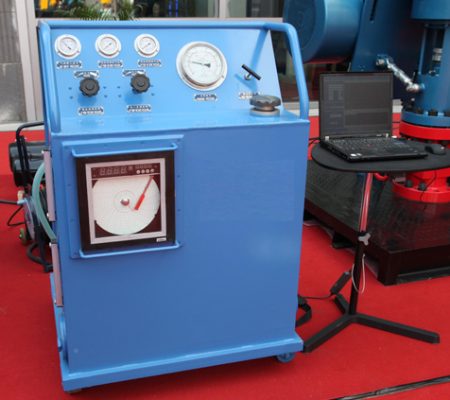
Before equipment is placed into service, the double mechanical seal must undergo commissioning and trial operation.By monitoring barrier fluid pressure, circulation flow rate, seal chamber temperature, and equipment vibration, it can be confirmed that the system is operating normally.After startup, seal system parameters should continue to be monitored regularly to detect issues such as wear, pressure abnormalities, or insufficient cooling.Through continuous maintenance and condition monitoring, the service life of the double mechanical seal can be effectively extended while ensuring stable and reliable sealing performance under heavy-duty and complex operating conditions.
Frequently Asked Questions
Q: Do all types of equipment require double mechanical seals?
A: No. If the medium is clean water, standard oils, or other low-risk fluids, a single mechanical seal is usually sufficient and offers a lower overall cost.
Q: Under what circumstances is a double mechanical seal recommended?
A: When the medium is toxic, flammable, explosive, highly corrosive, or volatile, or when the equipment operates under high-pressure or vacuum conditions, a double mechanical seal is recommended to improve sealing safety and operational reliability.
Q: What are the main advantages of a double mechanical seal?
A: A double mechanical seal provides multiple layers of protection through dual sealing faces and a barrier fluid system.
It effectively reduces leakage risks, improves equipment reliability, and satisfies more stringent safety and environmental requirements.A double mechanical seal is a highly reliable sealing technology specifically developed for high-risk operating conditions. Its core advantage lies in the combination of a dual sealing structure and an independent barrier fluid system, enabling a higher level of leakage control and equipment protection.Particularly when handling hazardous, toxic, or volatile media, double mechanical seals can significantly reduce the risks of environmental pollution and safety incidents. At the same time, in high-pressure, vacuum, highly corrosive, and environmentally demanding applications, their stability and reliability are far superior to those of conventional single mechanical seals.