
In modern industries such as chemical processing, pharmaceuticals, food processing, environmental protection, and fine chemicals, vessel equipment is widely used in mixing, blending, reaction, and storage processes. Since liquids, gases, or slurry media are often present inside the equipment, preventing leakage during operation becomes a critical factor affecting production safety and product quality.
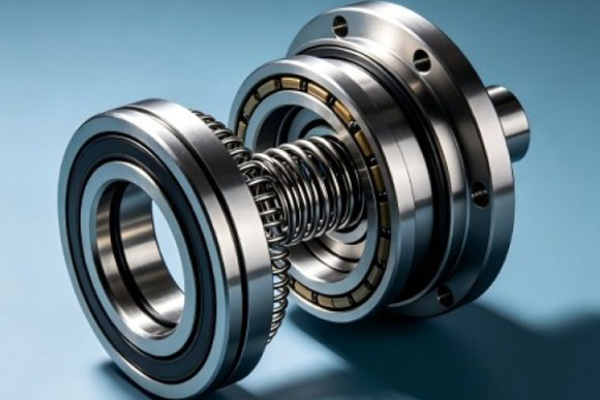
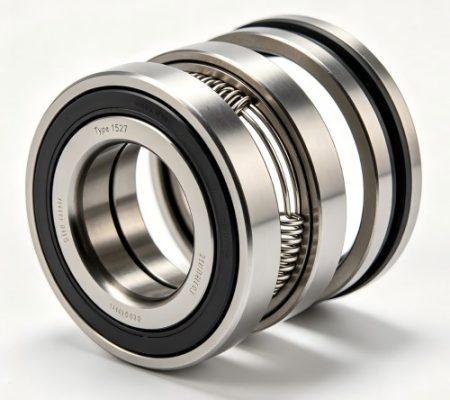
As one of the most common sealing solutions for vessel agitator equipment, the Single-lobe containerized mechanical seal is widely used in various rotating equipment due to its compact structure, easy installation, and stable sealing performance. In particular, products featuring a single balanced cartridge mechanical seal design achieve more reliable sealing performance through multi-spring construction, modular components, and a robust lug drive system.
What Is a Single-lobe containerized mechanical seal?
Basic Definition of a Single-lobe containerized mechanical seal
A Single-lobe containerized mechanical seal is a dynamic sealing device specifically designed for agitator shafts, reactor shafts, and mixing equipment shaft ends. Its primary function is to prevent process media from leaking through the clearance between the shaft and the equipment housing during operation.Compared with traditional packing seals, mechanical seals achieve sealing through the microscopic sealing gap formed between the rotating ring and stationary ring faces.
They do not rely on excessive compression force, resulting in lower friction losses and more stable sealing performance.A Single-lobe design typically adopts a single-face seal configuration. Its design objective is to reduce structural complexity while meeting sealing requirements, thereby improving installation efficiency and maintenance convenience.
Characteristics of the Single Balanced Design
A balanced mechanical seal optimizes the pressure-loaded area of the sealing faces, allowing the hydraulic force acting on the seal faces to remain within a reasonable range.
Its main advantages include:
- Reduced seal face wear
- Lower frictional heat generation
- Improved operational stability
- Extended seal life
Suitability for medium- and high-pressure applications.For vessel equipment, a balanced design can effectively handle pressure fluctuations and media impact generated during the mixing process.
Why Are Cartridge Mechanical Seals Becoming More Popular?
Cartridge mechanical seals integrate the rotating ring, stationary ring, springs, sleeve, and secondary sealing elements into a pre-assembled module.
This design offers significant advantages:
- No need for on-site installation measurements
- Reduced installation errors
- Shorter downtime
- Higher installation success rates
- Lower maintenance difficulty
As a result, cartridge mechanical seals have gradually become the mainstream configuration in modern industrial equipment.
How Is Sealing Achieved?
Working Process During Startup
When the equipment starts operating, the agitator shaft begins rotating. The following processes occur inside the mechanical seal:First, the rotating ring mounted on the shaft rotates synchronously with the shaft.At the same time, the stationary ring fixed to the equipment housing remains stationary.
Under the action of the spring system:
- The rotating ring continuously applies axial force to the stationary ring
- The sealing faces remain tightly engaged
- The contact surfaces establish the initial sealing condition
Because the seal faces are precision-lapped, they maintain an extremely high degree of contact even at the microscopic level, thereby preventing significant media leakage.
Formation of a Stable Sealing Fluid Film During Operation
Once the equipment enters normal operation, the sealing faces do not remain in complete dry-friction contact.Instead, an extremely thin fluid film forms between the sealing faces.
This fluid film serves two functions:
- Providing lubrication
- Carrying away friction-generated heat
- The fluid film thickness is typically only a few microns
By controlling the fluid film thickness, the mechanical seal can minimize wear while maintaining effective sealing performance.This dynamic equilibrium mechanism is the key reason why mechanical seals can operate reliably for extended periods.
Seal Retention Mechanism During Shutdown
When the equipment stops operating:
- The rotating ring stops rotating
- The stationary ring remains fixed
- The springs continue providing preload force
Even when the equipment is stationary, the sealing faces continue to maintain contact pressure.As a result, the process medium will not experience significant leakage during shutdown.This characteristic is particularly important for mixing equipment that requires frequent starts and stops.
Core Technologies of Single-lobe containerized mechanical seals
How Does the Multi-Spring Structure Improve Operational Stability?
Traditional single-spring mechanical seals are susceptible to uneven loading.
A multi-spring design distributes the load evenly across the entire sealing face.
Its advantages include:
- Improved load distribution across the sealing faces
- Reduced localized wear
- Lower vibration influence
- Enhanced impact resistance
- Extended seal life
For vessel equipment experiencing slight shaft runout, multi-spring structures can better adapt to changing operating conditions.
Function of the Lug Drive System
The lug drive system is an important component of cartridge mechanical seals.
Its primary functions include:
- Transmitting rotational torque
- Ensuring synchronous rotation of the rotating ring
- Preventing seal face slippage
- Reducing wear of drive components
Compared with traditional pin-drive structures, lug drives provide higher mechanical strength and better fatigue resistance.They are especially suitable for industrial equipment operating continuously for long periods.
Modular Design Improves Maintenance Efficiency
Modular design is an important development trend in modern mechanical seals.
Through the use of standardized components:
- Component replacement becomes easier
- Maintenance time is significantly reduced
- Spare parts management becomes simpler
- Inventory costs are reduced
For large chemical processing plants, modular design helps minimize equipment downtime and improve production continuity.
Frequently Asked Questions
Q: What types of equipment are suitable for Single-lobe containerized mechanical seals?
A: Single-lobe containerized mechanical seals are mainly used in reactors, mixing tanks, blending tanks, fermentation vessels, storage tanks, and other equipment with rotating agitator shafts. They are widely applied in the chemical, pharmaceutical, food processing, and environmental protection industries.
Q: Is the installation of a cartridge mechanical seal complicated?
A: No. Cartridge mechanical seals use a pre-assembled design, eliminating the need to adjust sealing face clearances during installation. This effectively reduces installation errors and shortens downtime and maintenance time.
Q: What are the advantages of a multi-spring structure?
A: A multi-spring structure distributes load more evenly across the sealing faces, reducing uneven wear and vibration effects while improving operational stability and extending seal service life.
Q: Is a small amount of seepage from a mechanical seal normal?
A: Yes. During operation, an extremely thin lubricating fluid film forms between the seal faces. Therefore, a very small amount of seepage is considered normal. However, if continuous dripping or a significant increase in leakage occurs, the seal condition should be inspected promptly.
Q: How can the service life of a Single-lobe containerized mechanical seal be extended?
A: Proper installation, accurate shaft alignment, vibration control within acceptable limits, selection of suitable sealing materials based on the process medium, and regular inspection and maintenance are all essential for maximizing seal service life.
The performance of a Single-lobe containerized mechanical seal is directly related to equipment safety, production efficiency, and product quality. Through the precise interaction between rotating and stationary seal faces, multi-spring load-balancing design, lug drive construction, and standardized cartridge components, this type of mechanical seal can achieve stable and reliable sealing performance under demanding operating conditions.、It utilizes face-sealing technology to create a micron-level fluid film, reducing leakage while minimizing friction and wear. The multi-spring configuration and modular design further enhance equipment stability and maintenance convenience. As a result, it is widely used in various mixing vessel applications across the chemical, pharmaceutical, food processing, and environmental protection industries.