In industrial fields such as oil drilling and geological exploration, mud pumps, as core equipment, undertake critical tasks such as circulating mud, cooling drill bits, and carrying cuttings. The lifespan of its components directly affects the stability and efficiency of equipment operation, and is closely linked to construction costs and safety risks. With the increasing demand for deep and ultra-deep well drilling, mud pump component lifespan prediction technology has become a focus of industry attention. Scientifically predicting component lifespan not only allows for advance maintenance planning and avoids unexpected failures, but also optimizes component selection, extends the overall service life of the equipment, and saves companies significant costs.
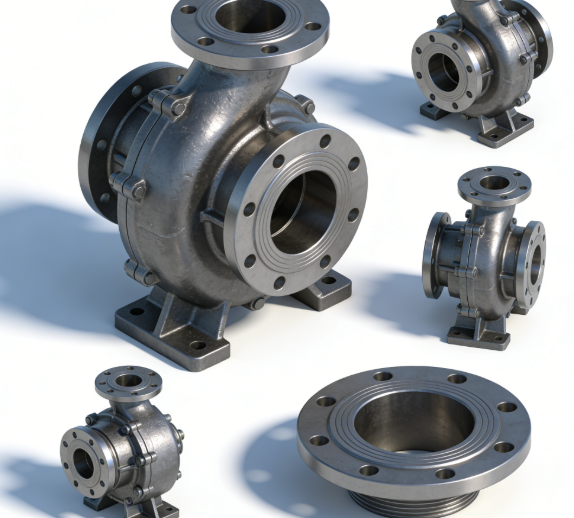
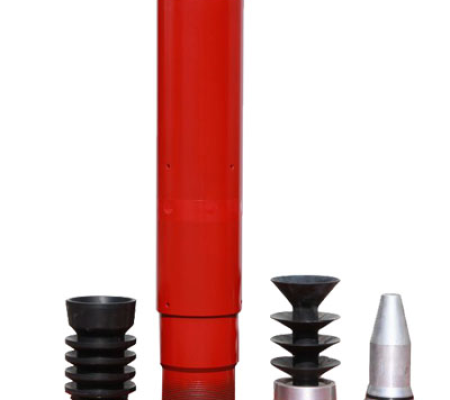
Mud pumps have a wide variety of wear-prone components, including cylinder liners, pistons, valve seats, valve discs, tie rods, and seals. Their lifespan is affected by multiple factors, including material properties, structural design, working environment, and operation and maintenance. Taking cylinder liners as an example, traditional single-metal cylinder liners can have a lifespan of several hundred hours in low-corrosion environments, while cylinder liners with a bimetallic composite structure, combining a hot-forged carbon steel outer sleeve and a high-chromium cast iron inner sleeve, can have a normal operating lifespan exceeding 800 hours. More advanced ceramic cylinder liners, made of zirconium oxide or alumina, offer high hardness and wear resistance, with a service life of up to 4000 hours, 5-10 times that of ordinary metal cylinder liners. Nickel-based alloy cylinder liners, through vacuum sintering to form a hard alloy layer, achieve a hardness of HRC60-64, combining wear resistance and corrosion resistance, and also significantly extending service life. These material innovations provide a solid foundation for extending cylinder liner life.
Besides materials, optimized structural design is also key to improving component life. For example, pump valves, as wear-prone components in mud pumps, are significantly affected by the angle and form of the contact support surface between the valve seat and the valve disc. Valve seats with a dual support surface structure of horizontal and conical surfaces improve stress distribution and reduce wear; while ball valves, by constantly changing their position relative to the valve seat during up-and-down movement, prevent the expansion of tiny gaps, greatly reducing erosion damage, and extending service life to over 2000 hours. Furthermore, changing the position of the valve disc on the valve seat, such as using a rotary airfoil guide, allows the valve disc to continuously rotate in liquid flow, which can also effectively extend valve life. In terms of lifespan prediction methods, the industry has developed a scientific system. By using finite element analysis software (such as ANSYS) to establish static models of components, stress concentration points can be accurately located and maximum stress values calculated. Combined with dynamic software (such as ADAMS), rigid-flexible coupled models can be created to simulate the dynamic stress state of components under cyclic loading and analyze the fatigue damage accumulation process. Then, using fatigue life prediction software (such as MSC.fatigue), based on stress-life curves or damage accumulation theory, the minimum total stress cycles of the components can be calculated to predict their remaining lifespan. These techniques provide a quantitative basis for component lifespan prediction, making maintenance plans more forward-looking.
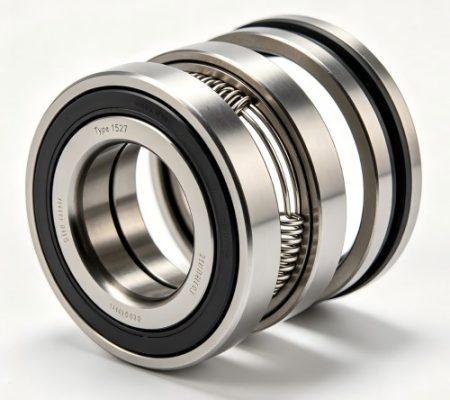
Extending the lifespan of mud pump components also requires addressing the operational and maintenance aspects. Strengthening mud purification to reduce sand content can significantly reduce wear on components such as pistons and cylinder liners. Optimizing suction conditions, such as using large-diameter, short, and straight suction pipelines and ensuring the sealing of the suction section, can reduce impact loads and extend the life of vulnerable parts. Regularly inspecting and replacing aging rubber parts can prevent leaks and wear caused by seal failure. Surface strengthening treatments for metal parts, such as spraying and ion nitriding, can enhance surface hardness and improve wear resistance. These measures, along with material innovation and structural design optimization, complement each other to form a complete solution for extending component life.
Life prediction of mud pump components is a crucial aspect of improving equipment reliability and reducing construction costs. Through the comprehensive application of material innovation, structural design optimization, scientific prediction methods, and refined maintenance management, the industry has achieved significant improvements in component life. In the future, with the continuous emergence of new materials, processes, and technologies, life prediction of mud pump components will become more accurate, and maintenance strategies will become more intelligent, providing strong support for the sustainable development of fields such as oil drilling and geological exploration.