Decarbonization centrifuges are common separation equipment in industries such as chemical, pharmaceutical, environmental protection, and food processing. They are mainly used to complete solid-liquid separation, liquid-liquid separation, or clarification and removal of gaseous media under high-speed rotation conditions. They have high operating efficiency and strong processing capacity, but also require high standards for operating procedures, condition control, and maintenance. Many equipment failures are not due to poor machine quality, but rather because the start-up, feeding, operation, and shutdown processes are not performed according to standard procedures, leading to abnormal vibration, reduced separation efficiency, and even component damage. Therefore, establishing and strictly implementing standard operating procedures for decarbonization centrifuges is not just about “getting the equipment up and running,” but also about ensuring stable production, extending equipment life, and reducing safety risks.
What exactly is a decarbonization centrifuge? A decarbonization centrifuge is essentially a device that uses centrifugal force to separate materials. It uses a motor to drive a drum to rotate at high speed, causing components of different densities to quickly separate into strata in the centrifugal field, thereby separating solid sediments, light-phase liquids, or gases from the mixed system. In some processes, “decarbonization” often refers to the removal of gases, carbon dioxide, or foaming impurities from liquids or slurries, and decarbonization centrifuges are essential equipment used to meet these process requirements. A decarbonization centrifuge typically consists of a drum, main shaft, bearing system, drive unit, feeding system, discharging system, sealing system, and control system. Its core characteristic is not simply “high speed,” but rather that through stable high-speed rotation and precise flow channel design, it transforms the separation process into a continuous, controllable, and monitorable operation. Because it is a high-speed rotating device, any small deviation can be amplified into vibration, wear, or material leakage problems, making standard operating procedures particularly important.
How to perform standard operation of a decarbonization centrifuge?
The standard operating procedure for a decarbonization centrifuge cannot simply be written as “start-up—running—stopping,” but must connect each step to ensure the equipment operates in a safe condition.
- Pre-start Inspection
Before starting, you must check the equipment’s appearance, fasteners, lubrication status, power connection, control panel, inlet and outlet pipelines, and emergency stop device to ensure they are functioning properly. It is also necessary to confirm that there are no foreign objects or residual hard lumps inside the drum, and that the seals are not visibly aged or damaged. Many equipment failures are caused by the failure to check for foreign objects entering the drum before startup, leading to momentary imbalance at startup. This can result in vibration or, in severe cases, damage to the bearings and drum.
- No-load Test Run
Before formal feeding, a no-load test run should be conducted to observe whether the equipment’s speed increase is stable, whether the vibration is abnormal, whether the noise is excessive, and whether the temperature rise is normal. No-load operation helps operators determine if the equipment is ready for startup and can also promptly identify installation misalignment, bearing abnormalities, or drive system problems. If the no-load state is unstable, it indicates that the equipment cannot yet enter production operation.
- Officially feed the materials into the machine
During feeding, the flow rate must be strictly controlled; a large load should not be applied at the beginning. Feed should be added gradually according to process requirements, allowing the centrifuge to first reach a stable separation state before entering the normal operating range. The feed concentration, temperature, viscosity, and particle size must all be consistent with the process requirements; otherwise, the separation effect will be directly affected. For materials with high viscosity or high gas content, a slow, continuous, and uniform feeding method should be adopted.
- Operation Monitoring
During equipment operation, operators must continuously monitor vibration, temperature, current, drainage status, and discharge effect. If abnormal noise, material leakage, incomplete separation, or poor slag discharge occurs, the cause should be investigated immediately; operation with defects is prohibited. The core of the standard procedure is not “can run,” but “stable operation,” therefore monitoring records are crucial.
- Shutdown Procedure
When shutting down, feed should be stopped first. After the residual material inside the equipment has been largely emptied, gradually reduce speed and shut down. Sudden power outages should be avoided. After shutdown, the drum should be cleaned, and the seals and discharge outlets checked to prevent residual material from clumping inside the equipment or corroding the equipment surface. For corrosive materials, timely rinsing and drying are also necessary.
Why is this standard procedure mandatory?
The reason why decarbonization centrifuges have high operational requirements is that they are typical “condition-sensitive” equipment. Even slight negligence in operational details can significantly reduce separation efficiency and equipment lifespan.
- Rotation Speed and Separation Effect Must Be Matched
The separation capacity of a centrifuge is closely related to its rotation speed, but higher speed is not always better. Too low a speed results in insufficient separation; too high a speed increases bearing load, vibration, and energy consumption, and may even cause material splashing or structural fatigue. Therefore, the rotation speed must be set according to the equipment nameplate and process requirements, and arbitrarily exceeding the speed limit is prohibited.
- Feed Stability Directly Determines Separation Quality
Inconsistent feed speed, large concentration fluctuations, and high gas content will disrupt the stable stratification within the centrifugal field. This not only affects the decarbonization effect but may also cause uneven drum load, leading to increased vibration. Standard operation must emphasize continuous, uniform, and controllable feeding principles, which are the foundation for ensuring stable equipment operation.
- Bearing and Seal Condition Determine Long-Term Operating Capacity
Decarbonization centrifuges are high-speed equipment; bearing temperature rise, lubrication quality, and seal reliability all affect the overall lifespan of the machine. Insufficient lubrication can cause bearings to overheat or even seize; if the seal fails, material may enter the bearing cavity, leading to contamination and wear. Therefore, routine inspections of bearing temperature, vibration levels, and leakage should not be omitted.
- Cleaning and Slag Removal Cannot Be Ignored
If residual material is not promptly removed after equipment shutdown, it is prone to clumping, jamming, or corrosion upon restarting. This is especially true for materials containing salt, acid, alkali, or those prone to crystallization; rinsing and cleaning are crucial. Many so-called “malfunctions” are actually secondary problems caused by inadequate cleaning, rather than a decline in equipment performance.
- Safety Interlocks Must Be Effective
If overload, overheating, excessive vibration, or an open door occurs during decarbonization centrifuge operation, the safety interlocks should activate immediately. The procedures must clearly define the inspection frequency and handling methods for each interlock. The consequences of high-speed equipment malfunctioning are often more severe than with ordinary equipment; therefore, safety interlocks are not an add-on but part of standard operation.
Why Use Different Materials for Different Operating Conditions?
The performance and lifespan of a decarbonization centrifuge depend not only on operation but also on material selection. Under different operating conditions, the materials of key components must be matched to the characteristics of the medium.
- Rotary Drum Material
The rotary drum is the core component that withstands high-speed centrifugal force and is typically made of high-strength stainless steel, duplex steel, or special alloy materials. If the material is corrosive, a material with stronger corrosion resistance must be selected; if the operating conditions involve high vibration or high speed, material strength and fatigue life must be prioritized. Incorrect selection of the rotary drum material can lead to corrosion and perforation, or even structural instability.
- Bearings and Lubrication Materials
Bearings need to withstand continuous high-speed operation, therefore, the requirements for material hardness, wear resistance, and thermal stability are extremely high. The grease or lubricating oil must also be selected according to the equipment’s speed and temperature range. Incompatible lubrication materials can lead to bearing overheating, increased noise, and shortened lifespan, directly affecting the stability of the centrifuge.
- Sealing Materials
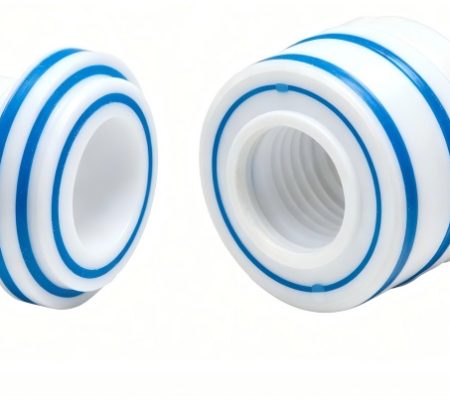
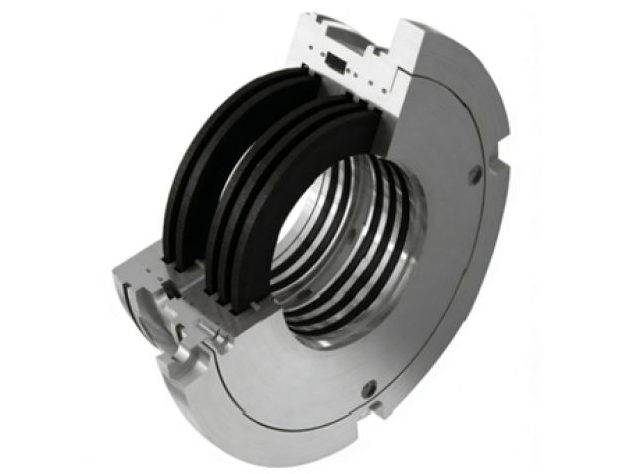
Common sealing materials include fluororubber, nitrile rubber, and PTFE. Different materials have different adaptability to temperature, acids, alkalis, solvents, and particulate media. For example, in high-temperature or highly corrosive environments, ordinary rubber is prone to aging and failure, while materials with stronger chemical resistance can extend the seal life. Choosing the right sealing material can significantly reduce leakage and downtime frequency.
- Lining and Wetted Parts Materials
Materials for linings, guide vanes, and discharge ports that come into direct contact with materials should also be selected based on the properties of the medium. For highly corrosive, abrasive, or crystallizing materials, wear-resistant, corrosion-resistant, and easy-to-clean materials should be used to avoid systemic failure due to localized damage.
Common Questions
Why must decarbonization centrifuges be operated according to standard procedures, and not based on experience?
Because decarbonization centrifuges are not ordinary mixing equipment; they are precision devices involving high-speed rotation, strong centrifugal force, and continuous separation. Experience is certainly important, but it often only addresses “visible problems,” while standard procedures can control “invisible risks” in advance. For example, whether vibration is within acceptable limits, whether the feed rate is appropriate, whether there are abnormal bearing temperatures, and whether there are minor leaks in the seals—these cannot be accurately judged by feeling alone. The significance of standard procedures is to transform each action into executable, inspectable, and traceable steps. This not only reduces accidents but also ensures more stable separation results, more consistent product quality, and a longer equipment lifespan.
While a decarbonization centrifuge may seem like just a “fast-rotating separation device,” it actually places high demands on operation, maintenance, and materials. By taking an extra step before startup, observing more closely during operation, and cleaning thoroughly after shutdown, many malfunctions can be prevented. Standard operating procedures (SOPs) transform “how to do it” into a unified method that everyone can follow, preventing equipment instability due to individual habits. The value of a decarbonization centrifuge lies not only in completing separation tasks but, more importantly, in consistently performing those tasks over the long term. Good SOPs result in more durable equipment, more stable product quality, and naturally lower maintenance and downtime costs. For on-site personnel, the most important thing is not “knowing how to operate the machine,” but “knowing when to check, adjust, and shut down.” Mastering these details allows the centrifuge to truly fulfill its function, leading to smoother and safer production.