In industrial equipment, whether it’s a water pump, a speed reducer, an engine, or a hydraulic system, any system involving rotating shafts or liquid media requires a sealing device. Mechanical seals and oil seals are the two most common types. Many people easily confuse the two in practice, thinking they are just different names with similar functions. However, they actually have significant differences in structure, working principle, application scenarios, and performance. Especially during equipment selection or maintenance, using the wrong seal type can, at best, affect equipment efficiency, and at worst, cause leaks or even damage the equipment. For example, using an oil seal in a high-pressure chemical pump may lead to failure within a short time; conversely, using a mechanical seal in a regular speed reducer will increase unnecessary costs and maintenance difficulties.
Core Design Differences
Mechanical seals and oil seals have fundamental structural differences:
Mechanical Seals: Composed of a rotating ring, stationary ring, spring, and sealing ring.
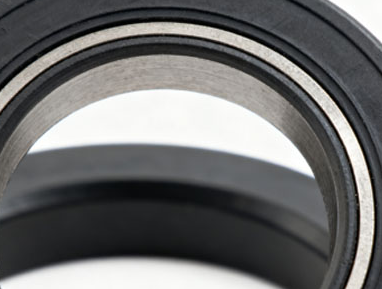
Oil Seals: Primarily composed of a rubber body, metal skeleton, and sealing lip.
Mechanical seals have a complex structure and are precision components, while oil seals have a simpler structure and are more standardized products. For example, mechanical seals used in chemical pumps typically require multiple components working together, while oil seals used on ordinary motor shafts are simply a single rubber ring.
Comparison of Working Principles The sealing principles of the two differ significantly:
· Mechanical seals rely on the contact of two smooth end faces to achieve a seal through a liquid film.
· Oil seals form a barrier by contacting the shaft surface with a sealing lip. Mechanical seals are “end-face seals,” while oil seals are “radial seals.” For example, in high-speed water pumps, mechanical seals reduce friction through liquid lubrication, while oil seals rely on the rubber lip tightly adhering to the shaft surface to prevent oil leakage.
Applicable Scenarios Different equipment requires different seal types:
✔ Mechanical seals: Suitable for high-pressure, high-temperature, and corrosive media environments.
✔ Oil seals: Suitable for sealing lubricating oil, preventing dust, and preventing oil leakage.
For example, mechanical seals are essential for transporting corrosive liquids in the chemical industry; while oil seals are commonly used in automotive engines or gearboxes to prevent lubricating oil leakage.
Significant Performance Differences
From a sealing performance perspective:
· Mechanical seals offer strong sealing performance with virtually no leakage.
· Oil seals allow for minor leakage and are considered contact seals.
In practical applications, if extremely high sealing requirements are needed (e.g., with toxic media), mechanical seals are more reliable; however, in ordinary equipment, minor leakage from oil seals is generally acceptable.
Service Life Comparison
The two also differ in service life:
· Mechanical seals have a longer service life (provided installation is performed correctly).
· Oil seals are prone to wear and require regular replacement.
For example, a stable water pump mechanical seal can last for several years, while a gearbox oil seal may need inspection or replacement after about a year.
Installation Difficulty (Different Operational Requirements)
Installation difficulty differs significantly:
—— Mechanical seal installation requires high expertise.
—— Oil seal installation is simple and can be quickly replaced.
In actual maintenance, mechanical seals require strict control of installation accuracy, while oil seals only require correct orientation and proper pressing.
Cost Differences
There are also significant cost differences: mechanical seals are more expensive; oil seals are less expensive. For example, a high-quality mechanical seal can cost dozens of times more than a regular oil seal. Therefore, it is not recommended to use mechanical seals as a substitute for oil seals unless absolutely necessary.
Maintenance Methods
Maintenance methods also differ:
✔ Mechanical seals require regular inspection of the cooling and flushing system.
✔ Oil seals are primarily inspected for wear and aging.
For example, a mechanical seal may fail quickly if the cooling water supply is interrupted, while an oil seal is more prone to aging due to long-term friction.
Typical Application Examples
Practical examples can help clarify the differences between the two:
Water pumps conveying clean water: commonly use mechanical seals to prevent leakage.
Gearbox internal lubrication: use oil seals to prevent oil leakage.
Automotive engine crankshafts: use oil seals to control lubrication.
Using mechanical seals in gearboxes is not only costly but also structurally incompatible; conversely, using oil seals in high-pressure pumps cannot meet sealing requirements.
Through the above analysis, it can be seen that although mechanical seals and oil seals are both sealing devices, they differ significantly in structure, principle, performance, and application. Mechanical seals are better suited for demanding operating conditions, emphasizing sealing performance and reliability, while oil seals prioritize economy and practicality, making them suitable for general equipment. Many equipment problems stem from incorrect selection or improper use. For example, misusing oil seals in high-temperature or high-pressure environments can easily lead to rapid failure; while using mechanical seals in ordinary equipment will increase unnecessary costs. Furthermore, appropriate measures should be taken according to the different seal types during installation and maintenance. Mechanical seals require strict control of installation accuracy and operating conditions, while oil seals require attention to wear and replacement cycles.