In the field of energy extraction, oil drill bits, as the core tool for breaking through geological barriers, directly impact drilling efficiency, cost control, and operational safety through their material selection. From traditional metals to superhard composite materials, the evolution of oil drill bit materials is essentially a response to the challenges of extreme geological conditions. Modern oil drill bits have formed a system dominated by diamond composite materials and supported by multiple other materials. This technological iteration has not only increased drilling depth but also reshaped the economic model of energy extraction.

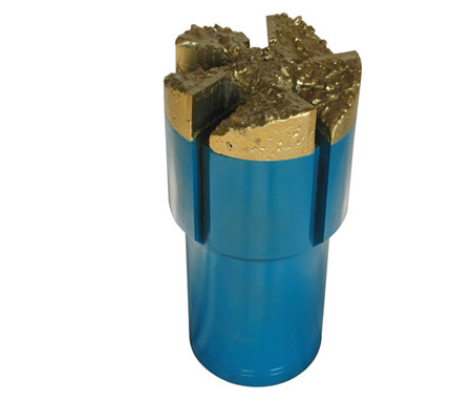
Natural diamond drill bits, with their unique physical properties, have become a powerful tool for drilling in hard formations. These drill bits use natural diamond particles as cutting teeth, fixed to the surface of a steel matrix through a copper-based alloy sintering process, forming a composite structure that combines hardness and toughness. In crystalline rock formations with a quartz content exceeding 40%, natural diamond drill bits offer 3-5 times the rock-breaking efficiency of cemented carbide drill bits. Their working principle relies on the synergistic effect of axial pressure and tangential force—diamond particles indent the rock, creating Hertzian cracks; rotational motion expands these cracks, forming rock cuttings. While the cutting depth of a single diamond is only 0.01-0.1 mm, continuous rock breaking is achieved through their dense arrangement. The CCSD-1 well in the China Continental Scientific Drilling Project used a natural diamond core drill bit to complete 5000 meters of continuous coring in crystalline rock. The Songke-2 well also employed this technology to obtain complete core samples in a 7018-meter high-temperature, high-pressure section. These cases demonstrate the irreplaceable role of natural diamond in ultra-deep well drilling.
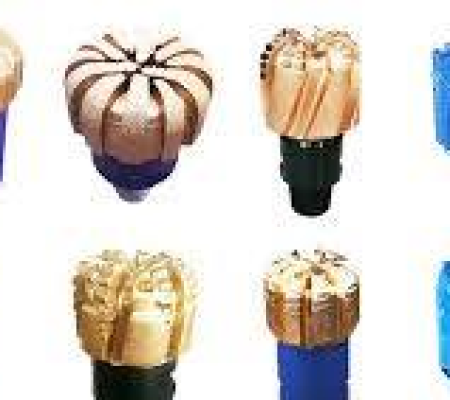
The rise of polycrystalline diamond composite (PDC) bits marks a leap towards higher efficiency and economy in oil drill bits. PDC bits are sintered from diamond micropowder and a cemented carbide matrix under ultra-high pressure and high temperature conditions, combining the high hardness of diamond with the impact toughness of cemented carbide. Its heat resistance reaches 750℃, and it can be customized with planar and grooved structures to adapt to soft to medium-hard formations. In the Tarim Repu block, PDC drill bits, combined with a rotary steerable system, achieved a single-trip drilling footage of 5491 meters, maintaining a mechanical drilling rate of 8.4 meters per hour. In Norwegian oilfield applications, it set a single-trip service life record of 4827 meters, exceeding the lifespan of traditional drill bits by more than 30%. This performance leap stems from breakthroughs in material design: through optimized matrix groove design, multi-layer transition structure, and layered particle distribution, the interfacial bonding strength and impact resistance of PDC are significantly enhanced, with some drill bit models achieving a service life 20-40 times that of ordinary materials.
Material innovation does not stop at optimizing single materials; composite and intelligent technologies are becoming new trends. The steerable drill bit uses high-density PDC cutting teeth, enhanced with deep cobalt filtration technology. Its four-wing 19mm triangular teeth, conical teeth, and non-planar tooth mix design allows for customized cutting layouts for different formation characteristics such as sandstone and limestone. In complex formation applications in Texas, this drill bit, combined with screw drill bits, achieved a drilling efficiency of 1957 meters per day, a 20% increase in drilling speed compared to previous years. More noteworthy is the breakthrough in vibration-resistant technology. The Ulterra CounterForce series drill bits employ reaction-force cutting tooth technology, reversing the arrangement of 20% of the cutting teeth to convert lateral vibration into rock-breaking energy, reducing reverse torque by up to 40%. After replacing traditional roller cone drill bits in Middle Eastern oilfields, efficiency increased by 100%, with a maximum efficiency of 62 meters per hour in a single well section.
From the “hard against hard” of natural diamonds to the “rigid-flexible” combination of PDC (Power Distribution Controller), and then to the “flexible overcoming rigidity” of intelligent directional drill bits, the technological evolution of oil drill bit materials has consistently revolved around the “efficiency-cost-safety” triangle. In the Tarim Basin’s environment of over 210°C high temperature and 145 MPa high pressure, domestically produced diamond drill bits helped achieve a vertical drilling depth exceeding 10910 meters, forming a deep-earth drilling technology and equipment system together with 12000-meter ultra-deep well automated drilling rigs and high-temperature resistant drilling fluids. These breakthroughs not only prove that materials innovation is the core driving force for upgrading energy extraction technology, but also indicate that with the development of new materials such as nanodiamonds and tungsten carbide reinforced composites, oil drill bits will continue to evolve towards greater efficiency, intelligence, and environmental friendliness, providing solid technical support for global energy security.