Vacuum degassing machines play a vital role in industries such as drilling, chemical processing, and mud treatment. These machines remove gases from liquids through vacuum separation, thereby improving system stability. Due to continuous operation, vacuum degassing machines may experience problems such as decreased vacuum levels, abnormal noise, and unstable exhaust. If these issues are not addressed promptly, they can not only affect degassing efficiency but also lead to equipment malfunction.
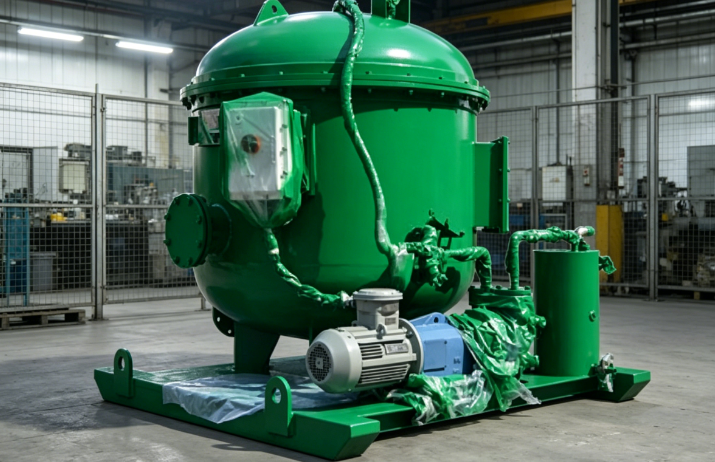
Insufficient Vacuum Levels Affect Degassing Effects
Insufficient vacuum levels are one of the most common problems with vacuum degassing machines. When the equipment cannot create a stable low-pressure environment, gases in the mud or liquid cannot be completely separated, resulting in reduced degassing efficiency. This is usually related to vacuum pump wear, deteriorated sealing performance, or pipeline leaks. During operation, if the vacuum level remains consistently low, air bubbles in the liquid cannot be quickly expelled, potentially leading to abnormal pressure in the circulation system. Prolonged exposure to this condition also increases the load on the equipment. Regularly checking the vacuum pump’s operating status and sealing structure helps reduce the occurrence of insufficient vacuum problems.
Exhaust System Blockage Can Easily Lead to Abnormal Operation
After prolonged use, the exhaust system may become blocked or experience poor exhaust flow, affecting the normal operation of the equipment.
- Impurities easily accumulate at the exhaust port.
- Pipe blockage can affect gas discharge.
- Filter contamination may reduce efficiency.
- Unstable exhaust can affect the vacuum state.
- Long-term blockage may increase equipment load.
Maintaining a smooth exhaust system can help the vacuum degasser maintain a stable operating state.
Abnormal Equipment Vibration or Noise is Common
Abnormal vibration or noise during the operation of the vacuum degasser usually indicates a possible malfunction in the internal system. For example, worn bearings, loose rotating parts, or abnormal vacuum pump operation can all cause noticeable noise. If the equipment vibration continues to worsen, it will not only affect operational stability but may also accelerate the wear of internal parts. In some cases, an unstable foundation or long-term overload operation can also cause abnormal vibration. Timely inspection of the connection structure and rotating parts can reduce the risk of further escalation of the malfunction.
Motor Failure Affects Equipment Operating Efficiency
The motor is a crucial power source for the vacuum degasser; once a malfunction occurs, the equipment’s operating efficiency will significantly decrease.
- Overheating of the motor may cause shutdown.
- Unstable voltage can easily affect operation.
- Long-term high load will increase wear.
- Wiring problems may cause abnormal starting.
- Insufficient heat dissipation will affect service life.
Regularly checking the motor status helps reduce operational failures.
Insufficient daily maintenance can shorten equipment lifespan.
Many vacuum degasser failures are related to insufficient daily maintenance. If internal impurities are not cleaned for a long time, or lubrication and sealing checks are neglected, operating efficiency will easily decrease. Especially in mud treatment environments, particles and residues easily accumulate inside the equipment, which may affect the stability of the vacuum system if not dealt with in time. Proper maintenance can not only reduce the frequency of failures but also extend the service life of the equipment. Regularly checking the vacuum pump, exhaust system, and transmission structure can keep the equipment in a stable operating state and reduce later maintenance costs.