As core equipment in the energy extraction field, oil drilling equipment’s technological evolution and functional integration directly determine drilling efficiency, safety, and economy. In a modern petroleum industry system, a complete drilling equipment system consists of eight core modules, covering the entire process of operation requirements, including power transmission, rock fracturing, wellbore maintenance, and safety protection, forming a sophisticated engineering system with multi-system collaboration.

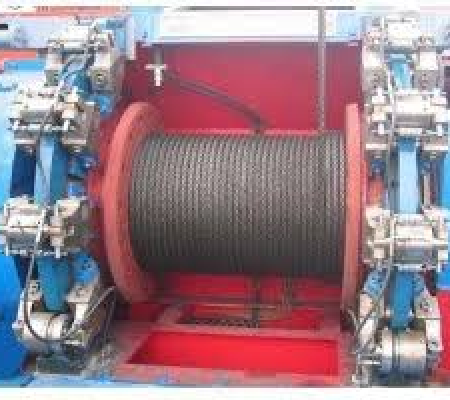
The power drive system is the energy heart of the drilling equipment, and its performance directly determines drilling depth and operational intensity. Traditional diesel generator sets, with their strong adaptability and high power density, remain the mainstream choice for remote onshore well sites, while offshore platforms generally adopt a dual-drive mode of gas turbines and diesel engines, achieving power redundancy through paralleling mechanisms. With the penetration of new energy technologies, the proportion of electric drilling rigs has significantly increased. These rigs use AC variable frequency motors to drive core components such as winches and rotary tables, not only reducing energy consumption by more than 30%, but also improving drill pressure control accuracy to ±5% through intelligent speed regulation, making them particularly suitable for deep and ultra-deep well operations. Taking Sinopec’s “Jingwei Leading” series drilling rigs as an example, their 12,000-horsepower diesel-electric hybrid system can simultaneously drive five drilling pumps and top drive units, meeting the requirements for well depths of up to 8,000 meters.
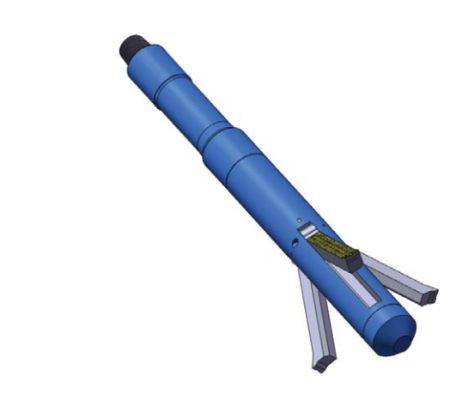
The rotary rock-breaking system is a key breakthrough in drilling efficiency. Rotary drilling rigs, with their simple mechanical structure that transmits torque through angular drill pipes, suffer from limitations such as coarse drill pressure control and difficulties in directional drilling. The emergence of top drive drilling rigs has completely changed this situation. They integrate the power swivel into the top of the derrick, enabling 360-degree continuous rotation of the drill string. Combined with a measurement-while-drilling (MWD) system, this achieves directional well trajectory control accuracy of ±0.5 degrees. In the southern Sichuan shale gas block, a drilling team that used top drive drilling rigs saw an average well drilling cycle shortened by 42 days and a mechanical drilling rate increased by 65%. To address the challenges of drilling in hard formations, downhole power drilling tools demonstrate unique advantages. Screw drills, driven by mud, achieve a daily drilling depth of 300 meters in granite formations, while turbine drills, with their high rotation speed of 20,000 rpm, have become standard equipment for wells reaching depths of tens of thousands of meters.
Wellbore maintenance systems bear the triple responsibility of cleaning the wellbore, cooling the drill bit, and stabilizing the wellbore. The drilling fluid circulation system, centered on the drilling pump, uses high-pressure mud to carry cuttings to the surface; its flow rate accuracy directly affects drilling efficiency. Modern drilling rigs are generally equipped with three-cylinder single-acting reciprocating pumps, with a single unit displacement of up to 60 liters per second. Combined with a five-stage purification system (vibrating screen, desander, desilter, centrifuge, and deaerator), the mud solids content can be controlled below 0.5%, effectively preventing well collapse, stuck pipe, and other accidents. On an offshore platform in the Bohai Bay, an intelligent drilling fluid system automatically adjusts the amount of bentonite added by monitoring rheological parameters in real time, reducing drilling fluid costs by 18%.
Safety protection systems are the lifeline of drilling operations. As the last line of defense, the reliability of the blowout preventer (BOP) assembly is crucial to the safety of the entire well site. Modern BOPs utilize hydraulic drive and remote control technology, enabling wellhead closure within 3 seconds. The combination of gate BOPs and rotary BOPs further supports special conditions such as drilling while BOPs are being applied. In an ultra-deep well operation in the Tarim Basin, the BOP assembly successfully blocked a 138 MPa high-pressure oil and gas flow, preventing a major accident. Furthermore, specialized offshore equipment such as motion compensation devices and tension compensation devices use hydraulic systems to counteract the heave of floating drilling platforms, ensuring the drill string remains vertical and increasing the success rate of offshore drilling to 92%.
From land to sea, from shallow to ultra-deep, the technological iteration of oil drilling equipment has always revolved around the three core demands of efficiency, safety, and environmental protection. With the deep integration of artificial intelligence and the Internet of Things (IoT), the new generation of intelligent drilling rigs has acquired autonomous decision-making capabilities, optimizing drilling parameters through big data analysis to achieve drilling cycle prediction errors of less than 5%. In this technological revolution of energy extraction, Chinese drilling equipment manufacturers are leading the world with an annual patent growth rate of 15%, providing Chinese solutions for global energy security.