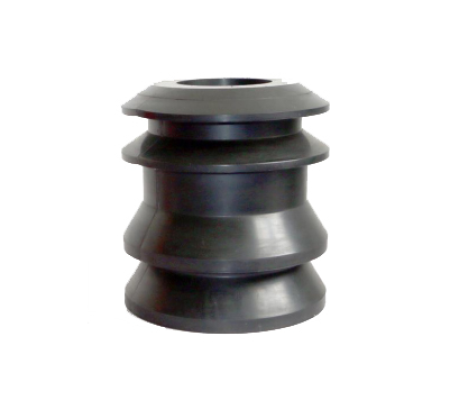

In well cementing operations, cement plugs are seemingly simple yet crucial tools. They are responsible for controlling the position of the cement slurry, pushing the liquid separation layer, and ensuring the cementing process is completed smoothly according to the designed sequence. Throughout the entire cementing process, cement plugs play a vital role in sealing, separating, and transmitting pressure, and are essential for the success of cementing. Cementing typically uses upper and lower cement plugs. While their tasks differ during construction, their common goal is to ensure the cement slurry travels along the designated path, without being contaminated by mud or experiencing backflow.

The lower cement plug is usually placed at the front. Its function is to separate the mud and cement slurry, preventing them from mixing. If mud mixes with cement slurry, it will lead to prolonged water loss time, incomplete setting, and reduced strength, thus creating potential quality problems. The lower cement plug, with its rubber sealing strip, provides effective separation. As the pressure within the casing pushes the cement slurry towards the bottom of the well, when it contacts the float shoe or float collar, it triggers the opening of the bypass port, allowing the cement slurry to continue flowing into the annulus. This process ensures the sequential distribution of fluids and is an indispensable step in cementing operations.
The upper cement plug’s primary task is to push all the cement slurry to the designated location and provide the final seal. Located after the cement slurry, it is propelled forward by clean water or drilling fluid and, like the lower cement plug, isolates the fluid channels through the sealing strip. When the upper and lower cement plugs come into contact and “collide,” a clear pressure differential signal is generated, alerting the operators that the cementing flow rate has reached the design value and that the cement has been completely pushed into the annulus. This collision signal is a crucial indicator of successful cementing and a condition for ensuring the formation of a complete cement sheath.
The cement plug also prevents backflow. Without a cement plug, the cement slurry may flow back into the casing when the pressure decreases, resulting in insufficient cement in the annulus, forming micro-annulus or irregular solidified areas. The unidirectional structure of cement plugs effectively prevents backflow risks and maintains stable pressure during cementing, thereby improving cementing quality.
More importantly, cement plugs help improve cementing displacement efficiency. When cement slurry is pushed into the annulus, the high velocity at the center and slow velocity at the edges can easily lead to mud cake residue. Cement plugs provide a stable pressure head, allowing the cement slurry front to advance more evenly, fundamentally improving the displacement effect. This is especially important for complex conditions such as long well sections, highly deviated wells, or horizontal wells.
Cement plugs are not only a “process tool” in the cementing process but also a crucial guarantee of cementing quality. They ensure fluid separation, improve displacement effectiveness, prevent backflow, and provide construction signals, making the entire cementing process more controllable, safe, and reliable.