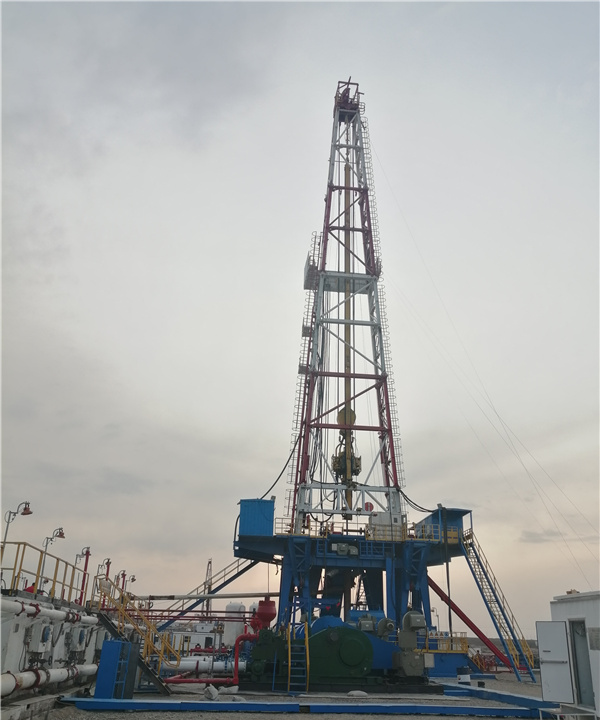
In the fields of petroleum, geological exploration, and engineering construction, drilling rigs are core equipment, and their operating status directly affects operational efficiency and costs. However, due to factors such as complex working conditions, high-intensity operation, and improper maintenance, drilling rig failures occur frequently, leading to anything from minor downtime for repairs to serious safety accidents. Quickly diagnosing faults and pinpointing their root causes is crucial for minimizing downtime and reducing losses. This article will focus on common drilling rig failure phenomena, combining practical cases and technical principles to summarize a systematic rapid diagnostic method to help practitioners solve problems efficiently.
Power System Abnormalities: Troubleshooting Logic from “Difficulty Starting” to “Insufficient Power”
The power system is the “heart” of the drilling rig, and its failures often manifest as difficulty starting, vibration during operation, or insufficient power. If the diesel engine requires multiple attempts to start or external assistance, the fuel system should be checked first: whether the fuel filter is clogged, whether the fuel lines are leaking, and whether the fuel injectors have carbon buildup. For example, a drilling rig experienced difficulty starting while operating in a high-altitude area. Inspection revealed that the fuel filter was freezing due to low temperatures, causing a fuel supply interruption. Replacing it with an antifreeze filter resolved the problem. If the fuel system is normal, the intake system needs to be checked: is the air filter clogged, and is the turbocharger leaking? There have been cases where drilling rigs experienced insufficient air intake and a 30% drop in engine power due to delayed air filter replacement.
Vibration or abnormal noise in the power system is often related to transmission components. Check the drive shaft and universal joints for bending or deformation, and check the coupling bolts for looseness. One drilling rig experienced periodic vibrations during drilling; inspection revealed that the drive shaft was bent due to long-term uneven loading, and the vibration disappeared after replacement. Insufficient power requires attention to the cooling and lubrication systems: is the coolant sufficient, is the radiator clogged, and is the engine oil viscosity up to standard? For example, in high-temperature summer conditions, a drilling rig experienced engine overheating due to insufficient coolant, resulting in a power drop to 60% of the rated value; replenishing coolant and cleaning the radiator restored normal operation.
Hydraulic System Failures: A Correlation Analysis from “Unstable Pressure” to “Slow Movement”
The hydraulic system is the “muscle” of the drilling rig; its failures often manifest as pressure fluctuations, slow movement, or leaks. If system pressure is unstable, first check the hydraulic pump: pump body wear, internal leakage, or a stuck variable displacement mechanism can all cause abnormal pressure. In one drilling rig, pressure suddenly dropped while lifting the drill string; disassembly and inspection revealed severe wear on the hydraulic pump plunger, which restored pressure after replacement. If the pump is normal, check the relief valve: a stuck valve core, a faulty spring, or improper adjustment can cause pressure runaway. There have been cases where a drilling rig’s hydraulic lines burst due to excessively high relief valve pressure, leading to a safety accident.
Slow or weak operation is often related to hydraulic oil contamination or internal system leakage. Check if the hydraulic oil is deteriorated and if the oil level is too low, and simultaneously determine the amount of internal leakage through pressure testing. For example, a drilling rig’s rotation was slow; testing revealed severe emulsification of the hydraulic oil, which restored normal operation after replacing the hydraulic oil and cleaning the system. For leakage faults, the leak point must be located: loose pipe joints, aging seals, or cylinder cracks can all cause leakage. In one drilling rig, aging hydraulic cylinder seals caused a leakage of 5 liters per minute; replacing the seals stopped the leakage.
Electrical System Faults: Signal Tracing from “Control Malfunction” to “Sensor Abnormalities”
The electrical system is the “nerve center” of the drilling rig. Faults in this system often manifest as control malfunctions, signal errors, or power supply abnormalities. If the control panel displays nothing or is unresponsive, first check the power system: battery charge, generator output voltage, and wiring connections. In one case, a drilling rig suddenly lost power while operating in the field. Inspection revealed a broken generator belt causing charging interruption; replacing the belt restored power. If the power supply is normal, the control module needs to be checked: PLC program errors, module damage, or communication failures can cause control malfunctions. There have been cases where a drilling rig’s PLC module became damp, causing the program to malfunction; reprogramming and drying restored normal operation.
Sensor abnormalities are a common fault in electrical systems, manifesting as data fluctuations, display errors, or frequent alarms. Check if the sensors are securely installed and if the wiring is loose. Simultaneously, use a multimeter to test if the sensor output signal is within the normal range. For example, a drilling rig’s depth sensor displayed a value lower than the actual value; inspection revealed a stuck sensor pulley, which, after cleaning, restored the accurate display. If the sensor is functioning normally, the signal transmission line should be checked: is the shielding layer damaged, and is the grounding reliable? A drilling rig experienced frequent fluctuations in depth data due to electromagnetic interference caused by a damaged signal line shielding layer; the problem was resolved after re-wrapping the shielding layer.
Drilling rig fault diagnosis requires combining phenomena, principles, and experience, using a “from surface to core, from simple to complex” troubleshooting logic to quickly pinpoint the root cause of the fault. In routine maintenance, establishing equipment files and recording fault phenomena and handling methods can accumulate diagnostic experience and improve fault handling efficiency. Simultaneously, regular training for operators to master basic diagnostic skills enables “on-site resolution of minor faults and early warning of major faults,” ensuring the safe and efficient operation of the drilling rig.