
High-speed pumps are key equipment in process industries, petrochemicals, energy, environmental protection, and precision manufacturing. Their operation often presents challenges such as high speed, high sealing chamber pressure, wide fluid temperature range, and highly corrosive media. Under these conditions, the seal design not only determines the stability of the equipment but also directly affects operational safety, maintenance cycle, and overall lifespan. Compared to ordinary centrifugal pumps, high-speed pumps, which typically operate at speeds of thousands or even tens of thousands of revolutions per minute, face more stringent requirements regarding friction between sealing surfaces, heat accumulation, material durability, and structural stability. Therefore, the selection of seal types is more specialized and precise.
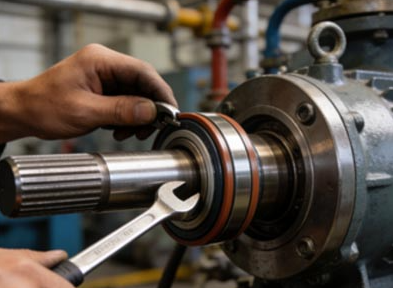
Why must high-speed pumps use high-grade seals?
Under high-speed rotation conditions, the sealing chamber of a high-speed pump generates significant frictional heat, end-face load, and dynamic pressure fluctuations. If the seal type is unsuitable, it can lead to end-face erosion, increased leakage, and even damage to the bearings and rotor system. Therefore, high-speed pump seals must possess the following characteristics: high wear-resistant materials (such as silicon carbide, impregnated graphite, hard alloys, etc.); excellent heat dissipation and lubrication capabilities; maintain end-face stability under high-speed vibration environments; and a structure capable of withstanding high pv (pressure × velocity) loads. Therefore, high-speed pumps almost never use simple packing seals, but rather move towards advanced mechanical seals or non-contact seals.
Commonly Used Mechanical Seal Types for High-Speed Pumps
The most common and mature sealing method for high-speed pumps remains the mechanical seal, but the structure and materials are selected according to specific operating conditions.
Balanced Mechanical Seals
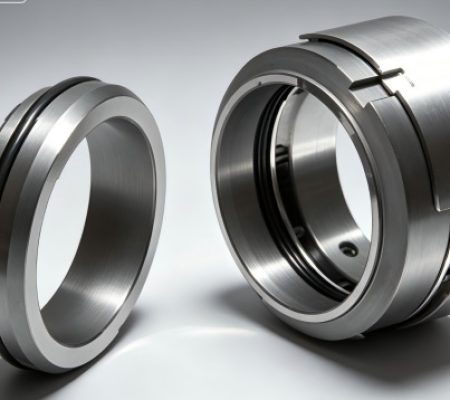
High-speed pumps commonly use balanced mechanical seals because they reduce end-face load, lower frictional heat, and maintain good film lubrication at high speeds, reducing the risk of burnout. The balanced structure is particularly suitable for pumps with high medium pressure or high speed and is a basic configuration for high-speed pumps.
Double-face mechanical seal
Double-face seals utilize two end faces to form a barrier, which can: control leakage, reduce end face wear, and enhance cooling (requires a flushing and shielding fluid system). It is particularly suitable for high-speed pumps conveying volatile, flammable, light, or corrosive media.
Dry gas seal (non-contact type)
For ultra-high-speed pumps or high-end equipment, a dry gas seal similar to that used in compressors is employed. Its characteristics include non-direct end face contact, low friction, low temperature rise, and long service life, making it especially suitable for high-speed, clean gas media applications. However, it is more expensive and requires strict assembly.
Can packing seals be used on high-speed pumps?
Generally, it is not recommended because: packing seals have high friction, poor heat dissipation, and are not suitable for high speeds; they easily lead to shaft sleeve wear;
leakage is difficult to control; and rapid temperature rise at high speeds can cause the packing to harden, carbonize, and fail. Therefore, in high-speed pump applications, packing seals are usually only used in low-end, low-speed auxiliary pumps, and not in core high-speed equipment.
Selection Principles for High-Speed Pump Sealing Materials
Materials directly impact the seal’s ability to withstand high-speed conditions. Common combinations include: hard-on-hard: such as silicon carbide/silicon carbide, suitable for particulate media or high-speed, high-temperature conditions; hard-on-soft: such as silicon carbide/graphite, suitable for most high-speed, clean liquids; metal bellows structure: used in high-temperature, high-speed, and high-vibration environments; reinforced auxiliary sealing materials: such as fluororubber, FFKM, and PTFE, for temperature and corrosion resistance requirements. Material selection must be evaluated in conjunction with the cooling and flushing system, media properties, and pump shaft runout.
The general principle for selecting seals for high-speed pumps is: high speed, high pressure, and complex media necessitate a higher-grade, more wear-resistant, and more stable sealing structure. From an engineering practice perspective, balanced mechanical seals and double-end mechanical seals are the mainstream choices for high-speed pumps. Combined with a suitable cooling and flushing system, they can significantly improve seal life and equipment stability. For extreme high-speed conditions or special gas transportation, high-end dry gas seals offer the best non-contact solution. Choosing the right seal not only reduces leakage and maintenance but also shortens downtime and improves enterprise production efficiency. Understanding the operating characteristics of high-speed pumps and following scientific seal design principles are fundamental to ensuring the safe, reliable, and continuous operation of the entire system under high load conditions.