
Among various industrial equipment, the compressor is arguably a core piece of equipment, widely used in industries such as petroleum, chemical, natural gas, and power. Preventing media leakage and ensuring long-term stable operation of the equipment during compressor operation is an unavoidable issue. Against this backdrop, dry gas seals have gradually become a crucial technology in modern compressors. Many people, when encountering dry gas seals, often focus on their principles, advantages, or service life, but overlook a seemingly simple yet extremely important question: Where exactly is the dry gas seal installed on the compressor?
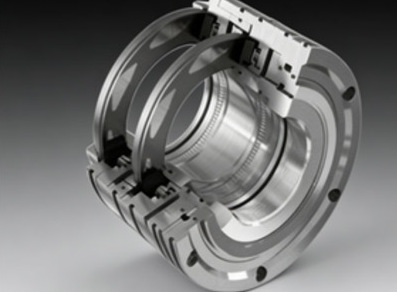
Dry Gas Seals are Shaft Seals
A dry gas seal is essentially a shaft seal device. Simply put, a shaft seal is used to seal the “location where the rotating shaft extends from the inside of the equipment.” Inside the compressor, the rotor rotates at high speed, and one or both ends of the rotor must pass through the housing and connect to the outside. If this location is not sealed, the internal gas medium will leak out axially. Therefore, the dry gas seal is usually installed in the shaft seal cavity between the compressor housing and the rotating shaft. This location is close to the high-pressure gas inside the compressor and is also the most prone to leakage, making it one of the areas with the highest sealing requirements in the entire equipment.
Specific Installation Location
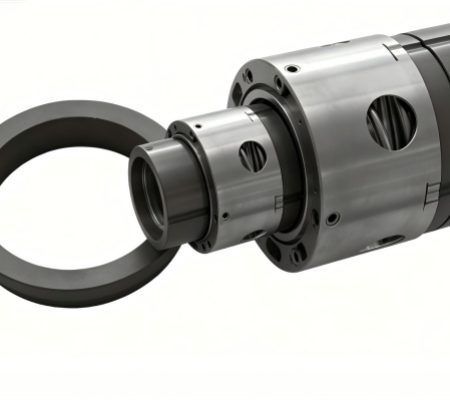
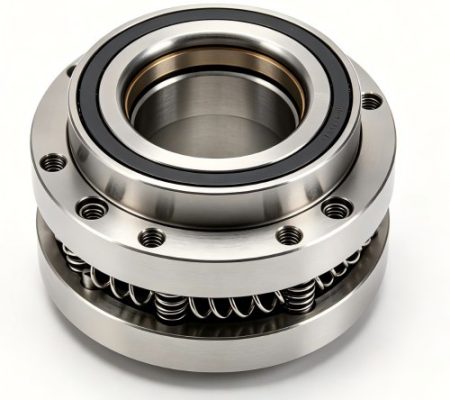
In actual structures, dry gas seals are generally installed at the compressor end cover, that is, in the area near the bearing and the end of the rotor. More precisely, it is located: inside the compressor housing / where the rotor shaft exits the housing / between the bearing and the compressor working chamber. This area is often referred to as the “shaft seal cavity” or “sealing cavity.” The moving ring of the dry gas seal rotates with the shaft, while the stationary ring is fixed to the seal seat; the two are arranged opposite each other within this cavity. This installation method effectively prevents internal gas leakage without affecting the normal operation of the rotor.
Why Not Install It Elsewhere?
Many people wonder, since the dry gas seal is so important, can it be installed further out, or even simply on the outside of the bearing? In fact, this idea is not feasible in engineering.
There are three main reasons:
The highest sealing requirement is at the shaft exit point
The most vulnerable point for gas leakage is the junction between the shaft and the housing, and the dry gas seal must “protect” this critical passage.
Stable structural support is required
Dry gas seals need to be installed in areas with high rigidity, and end covers and shaft seal cavities provide this.
Convenient integration with other systems
Dry gas seals are often used in conjunction with sealing gas systems and monitoring systems, and locating these interfaces near the shaft seal cavity is most logical.
Common Installation Positions
Depending on the compressor structure, the installation method of dry gas seals varies, but the basic positioning logic remains the same:
Single-end dry gas seal: Mostly used on one side of the compressor, installed in the shaft seal cavity at one end.
Double-end dry gas seal: One set is installed at each end of the compressor’s shaft seal position, used for symmetrical structures or applications with higher sealing requirements.
Whether single-end or double-end, the dry gas seal is always arranged around the “location where the shaft exits the housing,” which is determined by its function.
The compressor dry gas seal is not an arbitrarily installed accessory, but a core component firmly positioned within the compressor shaft seal area. It is typically installed in the compressor end cover or shaft seal cavity, located where the rotor shaft exits the housing, serving as the “first line of defense” between the internal media and the external environment. This location is chosen because it presents the highest risk of leakage, the most stringent sealing requirements, and also offers the best structural stability and operational stability. Since the dry gas seal must be close to the media without interfering with the high-speed rotation of the shaft, the shaft seal cavity perfectly meets these conditions.