In modern industrial production, sealing systems are not only key components ensuring the normal operation of equipment, but also important means of controlling media leakage, protecting the environment, and conserving resources. Especially in refrigeration, piping, and chemical compression systems, media leakage can lead to production losses, environmental pollution, and safety risks. Traditional mechanical seals often fail under high pressure, high speed, and extreme temperature conditions, resulting in the direct release of large amounts of gas into the atmosphere, causing resource waste and operational hazards.
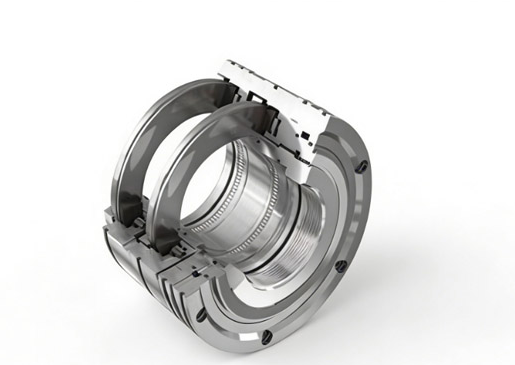
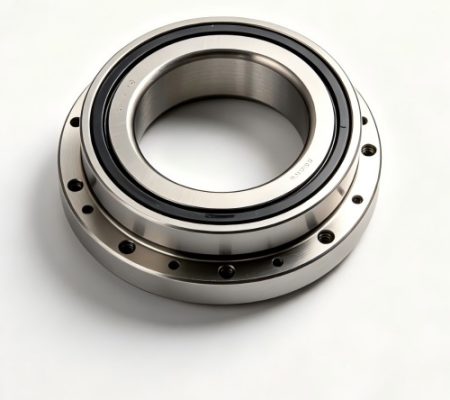
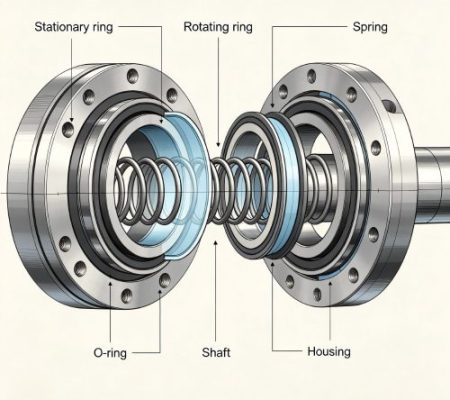
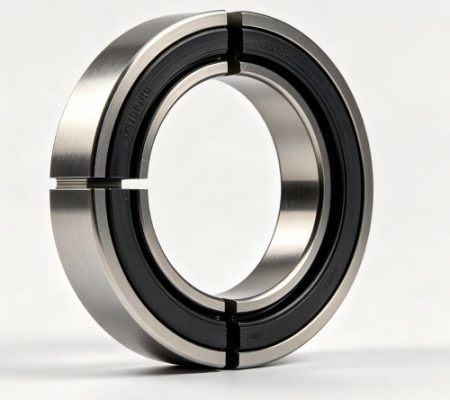
To address this problem, mechanical seals for recovering leaking gas have emerged. Through a two-stage dry gas seal design, even if the main seal fails, the auxiliary seal can still operate safely under full pressure, allowing only a very small amount of media leakage, thereby achieving gas recovery or reducing the environmental impact of leakage. These seals combine non-contact end faces, polymer sealing rings, and an integral structure, maintaining long-term stable operation under high temperature, low temperature, extreme pressure, and high-speed conditions, providing a reliable solution for the safe, economical, and environmentally friendly operation of industrial equipment.
Design Features and Structural Advantages
The dry gas mechanical seal for recovering leaked gas primarily employs a two-stage, tandem end-face design, offering the following advantages:
Non-contact sealing end faces
The sealing end faces do not directly contact each other during operation, reducing friction and wear, improving seal life, and preventing failure due to heat buildup under high-speed operation.
Groove structure and configurability
The mechanical seal uses a groove design, allowing for unidirectional or bidirectional configuration depending on operating conditions, achieving effective control and guidance of leaked gas while adapting to pressure changes in different directions.
Rotating ring outer circumferential covering structure
The outer circumferential covering design of the rotating ring reduces secondary damage in the event of main seal failure, protects the auxiliary seal from direct impact, and maintains the integrity of the entire sealing system.
Advantages of polymer sealing ring material
Polymer sealing rings possess high temperature resistance, pressure resistance, and corrosion resistance, capable of adapting to a wide temperature range of -160℃ to 260℃ and pressure changes of 0~25MPa, thus ensuring long-term stable sealing performance. 5. Integrated Design for Ease of Maintenance
The integrated sealing structure simplifies installation and disassembly, reduces on-site maintenance complexity, improves operational efficiency, and lowers the risk of leakage due to improper installation.
Operating Parameters
The mechanical seal that recovers leaked gas can adapt to various complex operating conditions. Key parameters are as follows:
Temperature Range
-160℃ to 260℃, suitable for refrigeration and high-temperature compression applications.
Pressure Range
0~25MPa, suitable for high-pressure gas delivery systems.
Shaft Diameter and Speed
Suitable for shaft diameters of 25~400 mm, rotational speed ≤180 m/s, meeting the sealing requirements of high-speed compression equipment.
Through precisely matched design parameters, the sealing system maintains stability and safety under different equipment and operating conditions. Even in the event of a minor leak in the main seal, the auxiliary seal can still withstand the working load under full pressure, ensuring that the medium does not leak in large quantities.
Leakage Recovery and Safety Assurance Mechanism
Dry gas seals for recovering leaked gases typically employ a two-stage sealing strategy:
Primary Main Seal
As the core seal, the primary seal is responsible for most of the pressure and media isolation, ensuring zero or minimal leakage under normal operating conditions.
Secondary Safety Seal
When the primary seal fails, the secondary seal can withstand the remaining pressure, allowing only a very small amount of leakage into the auxiliary recovery system, ensuring a safe operating environment and achieving the recovery of leaked gases.
Auxiliary Gas and Isolation Gas System
By rationally arranging the primary sealing gas (A), primary leaked gas (B), secondary leaked gas (C), and isolation gas (D), effective leakage diversion and collection can be achieved, reducing environmental emissions and recovering valuable process gases, thus improving economic efficiency.
This design not only protects the equipment but also meets energy conservation, emission reduction, and environmental protection requirements, making it particularly suitable for sites without nitrogen sources or industrial applications requiring strict recovery of process media.
Application Equipment and Industry Value
Dry gas mechanical seals for recovering leaked gas are widely used in the following equipment:
Refrigeration compressors: Ensuring no leakage of the medium under low temperature and high speed conditions, improving the safety of the refrigeration system.
Pipeline compressors: Achieving safe recovery and management of leaked gas in the transportation of natural gas, nitrogen, or other industrial gases.
By adopting a two-stage sealing design, this type of sealing equipment can achieve environmental and resource protection while ensuring high reliability, meeting the dual requirements of modern industry for energy conservation, environmental protection, and safe operation.
Dry gas mechanical seals for recovering leaked gas, through a two-stage series end face, non-contact operation, high-temperature and corrosion-resistant polymer sealing rings, and an integral design, achieve long-term reliable operation under extreme temperature, pressure, and high-speed conditions. The main seal provides the core isolation function, while the auxiliary seal can safely withstand pressure and recover leaked gas in the event of main seal failure, effectively reducing resource waste and environmental risks. This sealing system not only meets the high operating requirements of equipment such as refrigeration compressors and pipeline compressors but also takes into account energy conservation, emission reduction, and operational safety. By rationally designing auxiliary recovery channels and isolation gas configurations, the safe management and recycling of leaked media can be achieved, providing both economic and environmental benefits for industrial production.