In the oil and gas drilling industry, the Blowout Preventer (BOP) is one of the most critical and essential safety devices in the entire well control system. Its primary task is to quickly seal the wellhead and control the well pressure in the event of abnormal downhole pressure, a well kick, or even a blowout, preventing the uncontrolled ejection of oil and gas. Therefore, the BOP is the “last line of defense” at the drilling site. If it fails, a blowout will not only cause equipment damage and economic losses, but may also trigger fires, explosions, and environmental pollution. Therefore, it is not an exaggeration to call the BOP the core device of the well control system.
What is a Blowout Preventer (BOP)?
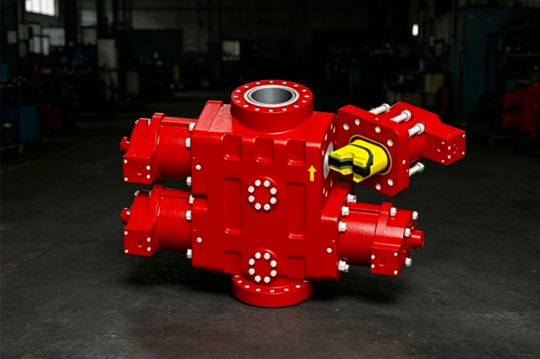
A Blowout Preventer (BOP) is a high-pressure safety control device installed at the wellhead. It is mainly used to control the well pressure during drilling to prevent blowouts. It is typically located between the wellhead casing and the drilling rig and is the most crucial component of the well control system. A “blowout,” simply put, occurs when the pressure in a high-pressure oil and gas reservoir underground becomes uncontrolled, causing a large amount of oil and gas to gush out of the wellhead at high speed. If not controlled in time, it can damage drilling equipment and potentially cause serious safety accidents. The role of a Borehole Operator (BOP) is to quickly shut off the wellhead and “lock” the high-pressure fluid inside the well when a danger occurs. A BOP is not a single device, but a complete well control system, typically including:
· Annular BOP
· Ram BOP
· Shear Ram
· Hydraulic Control System
· Choke and Kill Manifold
Among them, the Annular BOP is suitable for rapid closure of drill strings of different sizes; the Ram BOP achieves high-pressure sealing through a steel ram; and the Shear Ram directly shears the drill pipe and seals the well in extreme cases. The BOP is important because it not only handles “well shut-in” but also manages the pressure of the entire well control system.
How does a BOP work during drilling?
The BOP (Breakpoint Operating System) doesn’t only activate during accidents; it operates throughout the entire drilling process, working in conjunction with the drilling fluid circulation system and pressure monitoring system.
Monitoring During Normal Drilling
During normal drilling, well control personnel continuously monitor mud pit levels, wellhead backflow, and drilling fluid pressure. If abnormal formation pressure or signs of a kick are detected, the well control procedure must be initiated immediately. At this time, the BOP is on standby, but the hydraulic system maintains continuous operating pressure.
Rapid Well Shutdown After a Kick
When well pressure abnormally increases, operators activate the BOP to shut off the wellhead. Depending on the operating conditions, either the annular blowout preventer (BOP) or the gate blowout preventer (BOP) can be shut off.
Annular BOP: Suitable for rapid initial well shut-off.
Gate BOP: Suitable for long-term high-pressure shut-off.
After shutting off, the high-pressure fluid in the well is confined within the wellbore.
Choking and Killing Operations
After well sealing, it’s not simply a matter of “closing off” the well. A choking and killing system is needed to gradually release pressure and circulate high-density drilling fluid into the well to rebalance formation pressure. During this stage, the BOP (Boiler Operator) needs to withstand high pressure for an extended period.
Shear Sealing in Extreme Situations
If well control fails or the drill string cannot be retrieved, the shear gate in the BOP will cut the drill pipe and completely seal the well. This is the last-line safety measure and one of the BOP’s most critical functions.
Why is the BOP a Core Well Control Equipment?
The BOP is considered a core well control equipment not only because it can “seal the well,” but also because it must operate reliably under extreme high pressure, high impact, and high-risk conditions.
High High Pressure Bearing Capacity
BOPs typically need to withstand wellhead pressures ranging from thousands to tens of thousands of psi. Common pressure ratings include 3000 psi, 5000 psi, 10000 psi, and 15000 psi. Higher pressure ratings require more complex equipment structures and more stringent requirements for sealing and materials.
Multi-stage Sealing Structure
The BOP employs a multi-stage sealing structure, including rubber seals, metal sealing surfaces, and a hydraulic locking system. Even if some seals fail, the remaining structures can still maintain well control capabilities. This redundant design is a key feature that distinguishes well control equipment from ordinary valves.
Rapid Response Hydraulic Control System
The BOP relies on a high-pressure hydraulic system to drive the gate and sealing mechanism. High-grade BOPs require well sealing to be completed within seconds to prevent blowout expansion. Therefore, the hydraulic system must not only provide high pressure but also have rapid response capabilities.
Shear Gate as the Last Safety Barrier
The shear gate must not only cut the drill pipe but also immediately seal it after cutting. This places extremely high demands on structural strength and blade design. In offshore drilling platforms, the shear gate is even considered the “last lifeline.”
Long-Term High-Pressure Working Capability
The BOP must not only withstand instantaneous pressure but also operate stably for extended periods after well sealing. This means it needs not only high strength but also good fatigue life and corrosion resistance.
Why must high-grade materials be used in BOPs?
Because BOPs operate in high-pressure, high-impact, and highly corrosive environments, their material requirements are far higher than those of ordinary industrial equipment.
Shell Material:
The main body of the BOP is typically made of high-strength low-alloy steel or forged alloy steel and undergoes heat treatment to ensure sufficient toughness under high pressure. Cracks in the shell can cause the entire well control system to fail.
Gate and Shearing Structure Material:
The gate and shearing blades require extremely high strength and wear resistance. They are typically made of special alloy steel and undergo surface hardening treatment to ensure they can cut high-strength drill pipe.
Sealing Material:
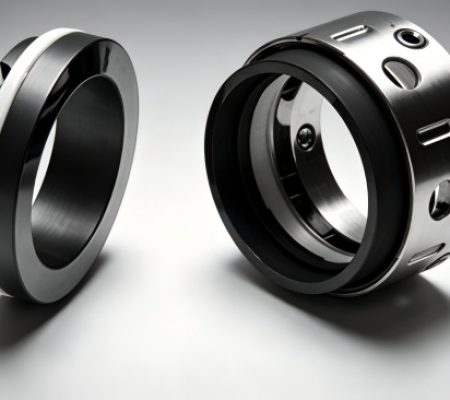
Seals are one of the most sensitive parts of the BOP. Annular blowout preventer cores, gate seals, and auxiliary sealing rings often use elastomer materials such as NBR, HNBR, FKM, and FFKM. Different materials are suitable for different temperature, pressure, and media environments. For example, under high temperature and high pressure environments, ordinary rubber is prone to aging, necessitating the selection of higher-grade heat- and corrosion-resistant materials. Seals typically use:
· Nitrile butadiene rubber (NBR)
· Hydrogenated nitrile butadiene rubber (HNBR)
· Fluororubber (FKM)
Perfluororubber (FFKM) Different materials are suitable for different temperature and media environments.
Corrosion-resistant materials:
Critical moving parts such as gates, pistons, and shear blades require high hardness, high wear resistance, and high fatigue resistance. Common practices include using alloy steel, surface hardening treatments, or special coatings to improve shearing and sealing capabilities. In sulfur-containing oil and gas wells, H₂S can cause sulfide stress corrosion; therefore, many high-grade BOPs (Board of Operations) use sulfur-resistant materials or special coatings.
Hydraulic system materials:
If the downhole environment contains sulfur, acid, or is highly corrosive, sulfur-resistant materials and corrosion-resistant alloys must be considered, such as Inconel-type materials or higher-level corrosion-resistant solutions. This is because once corrosion causes dimensional changes or surface defects, the seal may fail. Therefore, hydraulic valves, tubing, and control modules typically use high-pressure resistant stainless steel to improve the long-term stability of the system.
Frequently Asked Questions
Why can’t a Blowout Preventer (BOP) always fully control a blowout?
Many people believe that installing a BOP guarantees a blowout will not occur. In reality, while the BOP is a core well control device, it is not “omnipotent.” The BOP may fail to function effectively in the following situations:
· Delayed well control decisions
· Hydraulic system failure
· Aging and damage to seals
· Shear gate failing to completely cut the drill pipe
· Exceeding the equipment’s rated pressure range
Furthermore, well control is a complex system engineering project that relies not only on the BOP but also includes drilling fluid density control, pressure monitoring, and personnel operating procedures.
The Blowout Preventer (BOP) is considered a core well control device because it is tasked with “keeping the wellhead in case of danger.” The pressure in underground oil and gas reservoirs is extremely high; if it gets out of control, the consequences can far exceed those of ordinary industrial accidents. The BOP exists to control this high pressure at critical moments. It’s not just a simple valve; it’s a complete high-pressure safety system that must be able to quickly seal the well, withstand immense pressure over long periods, and cut off the drill pipe and maintain a seal in extreme situations. This is why the structure, materials, and control system of a BOP (Breakpoint Operating System) are far more complex than ordinary equipment. Often, people only hear about BOPs in accident news, but in reality, they work silently every day on the drilling site. Truly stable well control relies not only on advanced equipment but also on proper design, standardized operation, regular inspection, and system maintenance.